
Reviewed · SELF-GUIDED TOURS
A Self-Guided Stroll Along Dún Laoghaire’s East Pier
A pier walk can be more than sea air. This one pairs a gentle stroll with VoiceMap audio so you can read Dún Laoghaire’s past as you go. I like that it starts right in town at St Michael’s Church, then keeps steering you toward the water and the stories tied to it.
Two big things I like: the route mixes landmarks you’ll actually want to photograph—like the East Pier Lighthouse—with memorials that add meaning without getting heavy-footed. And I like the practical format: offline access to audio and maps means you’re not stuck hunting for signal near the harbour.
One possible drawback: you supply your own smartphone and headphones. If you like a live guide talking to you, this is self-guided, so you’ll be driving the pace.
In This Review
- Key points you’ll care about
- Why This East Pier Stroll Feels Like Dún Laoghaire, Not Just Dublin Views
- What You Get for $8.99: VoiceMap Offline, Lifetime Access, and Short Walk Value
- St Michael’s Church to Pavilion Theatre: Opening the Walk with Old Community Roots
- King George IV Monument and the RMS Leinster Memorial: When Royal Links Meet Maritime Tragedy
- The Metals Promenade: The Old Railway Turned Into a Walkable Seafront Route
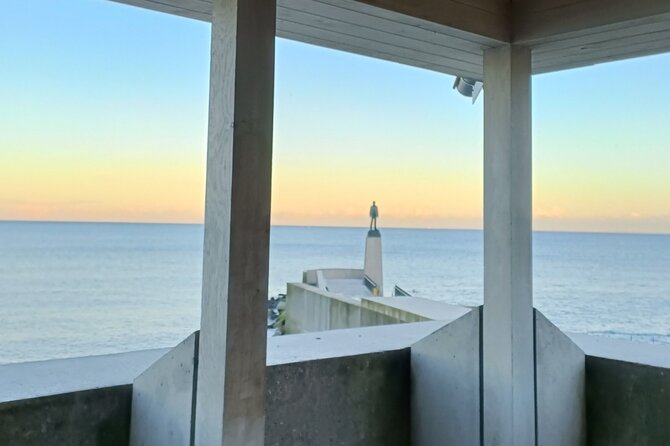
- Dún Laoghaire East Pier and the Lighthouse: Panoramas Plus Harbour History
- Carlisle Pier, Forgotten Irish Memorial, and the East Pier Bandstand Sun Shelter
- The Romanov Eagle on a Crimean War Cannon: A Small Detail with a Big Story
- Roger Casement Statue: Ending in a Place of Irish Revolutionary Memory
- Who This Tour Suits Best (and Who Might Want a Different Style)
- Should You Book This Dún Laoghaire East Pier Stroll?
- FAQ
- What’s the duration of the Dún Laoghaire East Pier stroll?
- How much does it cost?
- Is the tour available in English?
- Do I need my own smartphone and headphones?
- Do I get offline access?
- Where do I start and end?
- Is there a refund if I cancel?
Key points you’ll care about
- Offline audio and maps mean fewer phone worries along the seafront
- Starts at St Michael’s Church and finishes near the Roger Casement statue for a clean walk loop
- RMS Leinster and Forgotten Irish Memorial give the pier an emotional edge
- The Metals promenade repurposes an old railway line into an easy walking route
- Crimean War cannon with Romanov family eagle motif adds a surprising international twist
More guided Dublin outings with a local
- Dublin Highlights and Hidden Gems Guided Walking Tour★ 5.0 · 6,020 reviews
- Dublin to Glendalough, Wicklow and Kilkenny Full Day Guided Tour★ 5.0 · 4,895 reviews
- Dublin Book of Kells, Castle and Molly Malone Statue Guided Tour★ 4.5 · 3,825 reviews
- Dublin Hop-On Hop-Off Bus Tour with Guide and Little Museum Entry★ 4.5 · 3,327 reviews
Why This East Pier Stroll Feels Like Dún Laoghaire, Not Just Dublin Views
Dún Laoghaire has a way of living in layers. You’ll see church stone and modern theatre in the same breathing radius, then you’ll turn toward the harbour and hit a completely different mood. This self-guided walk is built to keep those layers connected, so you don’t just “see sights”—you understand why they’re there.
You’ll also get to experience the pace that suits you. That matters on the coast. Some people want a slow look at monuments. Others want to keep moving toward the lighthouse views. With VoiceMap audio, you control when you stop and when you speed up.
And because the route is short—about 1 hour to 1 hour 15 minutes—it fits into a day that also includes central Dublin. It’s a smart add-on if you want the sea, history, and a bit of quiet without committing to a half-day tour.
What You Get for $8.99: VoiceMap Offline, Lifetime Access, and Short Walk Value
For $8.99 per person, you’re paying for access to a self-guided audio experience through VoiceMap. The value isn’t just the price. It’s the setup: you get lifetime access to the tour in English, plus offline access to audio, maps, and geodata.
That combination matters. When you walk near water, your connection can get spotty. Offline downloads help you keep going at the exact moment you reach a key spot, like the pier memorials, without waiting for your phone to cooperate.
Timing is another value point. At roughly 60–75 minutes, you’re not paying for a long program that feels rushed or padded. This route is designed to move between specific points—church to theatre, monuments to memorials, then pier to lighthouse and back—so you feel like you actually used the time.
One more practical note: this is a private activity, meaning it’s only your group using the experience. And you’re not included for food, drink, transport, or equipment—so plan to bring your own water and a charged phone.
St Michael’s Church to Pavilion Theatre: Opening the Walk with Old Community Roots
Your walk begins at St Michael’s Church on Marine Road in Dún Laoghaire. The church dates from the 1820s, and that early anchor does a lot of work for you. It sets the tone: this isn’t just a seaside promenade with random plaques. It’s a place shaped by a resident community over a long stretch of time.
From there you head toward the Pavilion Theatre, a modern cultural stop that keeps the story from freezing in the past. You’ll get a sense that Dún Laoghaire keeps making space for arts and public life even as it carries older identities.
In practical terms, this first leg is also good for getting oriented. You’re not immediately thrown into a long stretch of coast with no context. You learn where you are first, then you move.
Tip: wear shoes you’re comfortable in for a light-to-moderate coastal walk. The route is easy enough for most people, but you’ll still be on foot for about an hour.
King George IV Monument and the RMS Leinster Memorial: When Royal Links Meet Maritime Tragedy
Next up are two heavy hitters: the King George IV Monument and the RMS Leinster Memorial. Even if you don’t think you’re a “monument person,” they’re worth your attention because they connect different eras of influence.
The King George IV Monument speaks to Dún Laoghaire’s historical connections to the British crown. It’s the kind of marker that can feel distant until you realize it’s right here, shaping how the waterfront town developed and how it was seen.
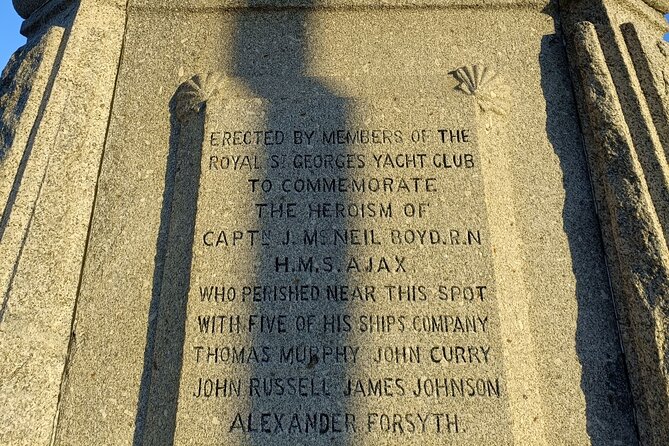
Then comes the RMS Leinster Memorial, which changes the emotional register. This memorial commemorates the sinking of the ship during World War I, paying tribute to lives lost in one of Ireland’s deadliest maritime disasters and marking how profoundly that kind of event touches local communities.
This is one of the best parts of the walk design. Many audio tours sprint through facts. Here, the route gives you a path from royal-era symbolism into wartime remembrance without whiplash.
A handful more Dublin outings we would happily send a friend to
The Metals Promenade: The Old Railway Turned Into a Walkable Seafront Route
One of the most practical segments is following The Metals, remnants of an old railway track transformed into a promenade. That detail matters because it explains why the path feels the way it does: it was built for movement, then repurposed for walkers and views.
As you go, you’re not just crossing from one point to another. You’re stepping onto a piece of infrastructure that helped Dún Laoghaire shift from fishing village roots toward a busy port. That evolution is the story underneath the scenery.
This section is also helpful if you’re the kind of person who likes to time your stops. Since the promenade gives you steady walking and clear visual direction, you can use it to reposition yourself mentally. When you hit the pier proper later, you’ll feel like you’re arriving with context already in your head.
If you’re trying to keep this walk easy and stress-free, this is where you’ll naturally fall into a rhythm.
Dún Laoghaire East Pier and the Lighthouse: Panoramas Plus Harbour History

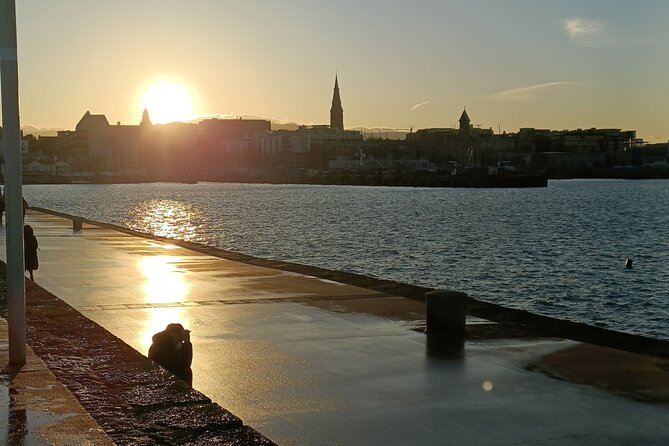
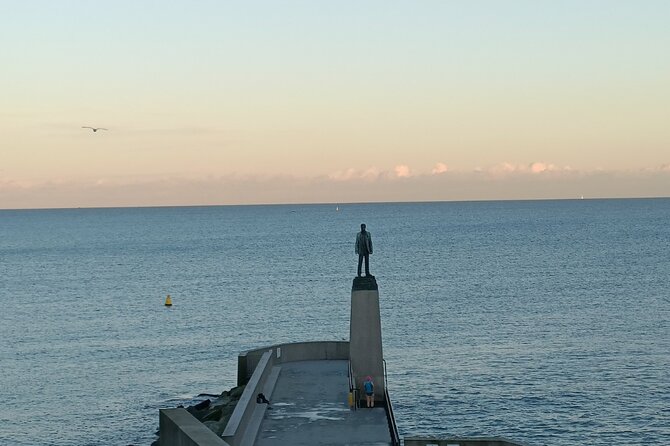
Now you get to the heart of it: the Dún Laoghaire Pier leading toward the East Pier Lighthouse. This is the part you came for if you like sea views and wide horizons. The audio helps you look past the pretty scene and toward the human engineering behind it—how the harbor was constructed and how it played a role in shaping Ireland’s destiny.
That’s a big claim, but the point is straightforward: ports aren’t only about ships. They’re about trade, travel, and the movement of people and goods. When you stand on a pier, you’re physically in the middle of that history.
The lighthouse itself is a visual payoff, and the route gives you a chance to stop without feeling like you’re holding up anyone else. Self-guided is great here. You can pause for photos, then restart your audio when you’re ready.
Practical tip: bring a wind layer if the breeze picks up. The experience doesn’t require special conditions, but coastal air can change fast.
Carlisle Pier, Forgotten Irish Memorial, and the East Pier Bandstand Sun Shelter
As you continue, the walk shifts from lighthouse views to more memorial and architectural details. You’ll explore the significance of Carlisle Pier (dating back to the 1820s) as a maritime witness to how Dún Laoghaire evolved over the centuries.
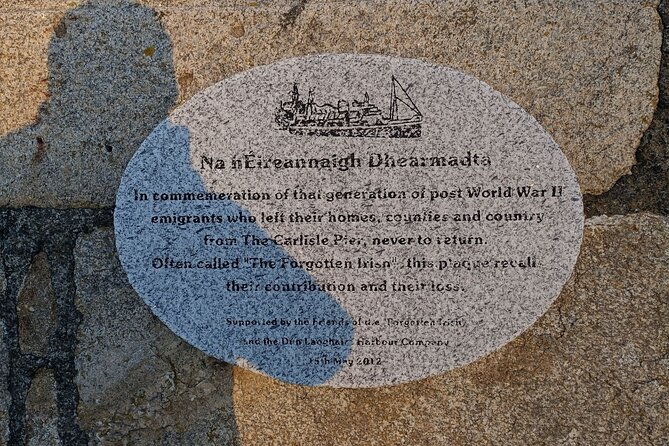
Then comes the Forgotten Irish Memorial. This one honors Irish emigrants and their resilience—capturing the spirit of people who left home seeking opportunities while facing the challenge of building lives far away. Even without knowing anyone personally connected to those departures, you’ll feel how carefully this section is placed along the route. It fits the geography: a town with a port also has a story about leaving.
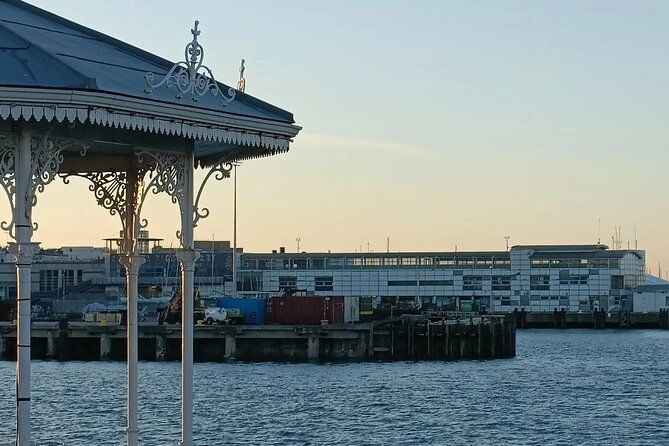
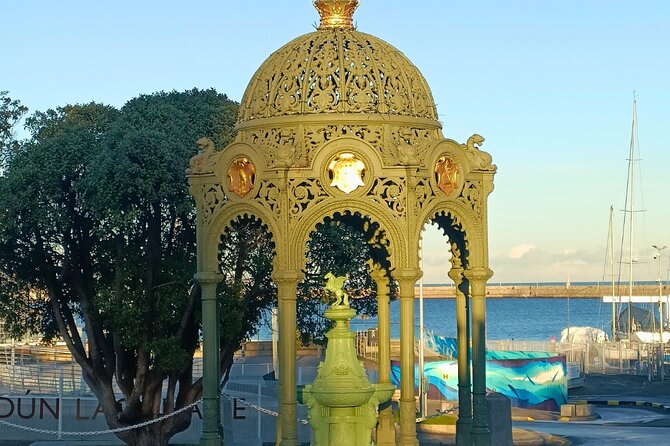
Right near the pier details, you’ll also come across the East Pier Bandstand Sun Shelter. Architectural features like this matter more than you might expect on a memorial-heavy walk. It gives you something lighter to observe, and it reminds you this is still a place for public gatherings and seaside leisure.
This trio—pier history, emigrant remembrance, and a public space—keeps the walk from feeling all doom and no daylight.
The Romanov Eagle on a Crimean War Cannon: A Small Detail with a Big Story
Here’s the kind of stop that makes an audio walk worth it: you’ll spot the eagle motif of the Romanov family on a Crimean War cannon. It’s a visual clue, and the audio connects it to an intriguing tale of a Russian cannon finding its way to Dublin.
You don’t need a history degree to appreciate this moment. What’s fun is how it widens your mental map. One minute you’re in Dún Laoghaire. The next you’re thinking about mid-1800s conflict and how objects outlive their original context.
This is also a good place to slow down. Look at the eagle motif, then listen to the story, then look again. With self-guided audio, that “look-listen-look” rhythm is easy to do.
If you like travel that leaves you with one surprising image to carry home, don’t skip this stop.
Roger Casement Statue: Ending in a Place of Irish Revolutionary Memory
Your tour ends near the Roger Casement statue, which honors the Irish revolutionary. It’s a fitting final note because the walk has already covered royal influence, maritime tragedy, emigration, and international connections. Casement’s memorial adds a local, political thread to the broader story you’ve been hearing.
Then you’re done, and the experience ends back where you started. That loop is actually useful. You can plan your next stop in a way that doesn’t feel like you’re trapped far from where you started.
Afterward, you’ll be near places to eat and drink in the area. The tour doesn’t include food, so this is your chance to reward yourself with something practical. If you want an easy plan, decide your meal before you start walking so you don’t make a last-minute scramble when you’re tired.
Who This Tour Suits Best (and Who Might Want a Different Style)
This is a great match for you if you want a self-guided experience that keeps you moving while explaining what you’re seeing. If you like learning at your own speed—pausing for memorials, lingering near the lighthouse, skipping ahead when you’re ready—you’ll probably enjoy the format.
It’s also a good fit if you want a Dún Laoghaire walk that’s short enough to combine with Dublin. You can do this without burning your whole day.
It may be less ideal if you strongly prefer a live guide, because there’s no guide waiting to answer questions in real time. And it relies on your phone setup, since you’ll need your own smartphone and headphones.
One more consideration: you should expect this to be mostly walking, with the route built around pier and promenade sections.
Should You Book This Dún Laoghaire East Pier Stroll?
If you’re looking for a low-cost way to get more meaning from a coastal walk, I’d book it. $8.99 is a small price for offline audio, offline maps, and lifetime access, plus a route that connects church roots, royal-era landmarks, maritime disasters, emigration memory, and even a Russian cannon story.
I’d skip it only if you don’t want self-guided travel at all, or if you’d rather have someone narrate verbally in person. Also, if your phone battery is unreliable, download the tour audio and maps before you start, so you’re not stressed mid-walk.
Overall, this is one of those simple-sounding experiences that rewards attention. You walk for about an hour, and you leave with a much clearer sense of what made Dún Laoghaire a port town—and what it cost.
FAQ
What’s the duration of the Dún Laoghaire East Pier stroll?
It takes about 1 hour to 1 hour 15 minutes.
How much does it cost?
The price is $8.99 per person.
Is the tour available in English?
Yes, it’s offered in English.
Do I need my own smartphone and headphones?
Yes. Smartphone and headphones are not included.
Do I get offline access?
Yes. You get offline access to audio, maps, and geodata.
Where do I start and end?
Start at St Michael’s Church, Marine Rd, Dún Laoghaire, Co. Dublin, Ireland. The activity ends back at the meeting point.
Is there a refund if I cancel?
No. The experience is non-refundable and cannot be changed for any reason.
More Self-Guided Tours in Dublin




More Guided Dublin Tours






More Tour Reviews in Dublin






Fresh off the cobbles: the latest Dublin reviews
- Dublin Private Airport Transfer to Ireland
★ 4.5 · 3 reviews - Private Chauffeur Service From Dublin Airport to Killarney
★ 5.0 · 3 reviews - Ireland: 3-Day West Coast Explorer Tour
★ 5.0 · 3 reviews - From Dublin: 4-Day Southern and Western Coast Tour
★ 4.3 · 3 reviews - Dublin : Street Art Walking Tour
★ 5.0 · 3 reviews - Spring Tonic Foraging Tour
★ 5.0 · 3 reviews
Self-Guided Tours, compared.
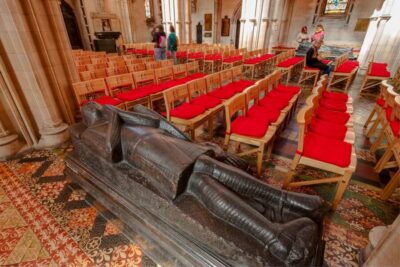 ★ 4.6Christ Church Cathedral Entrance Ticket & Self-Guided TourFrom $14773 reviews
 ★ 4.0Dublin Ghost Hunt Exploration Game and TourFrom $634 reviews
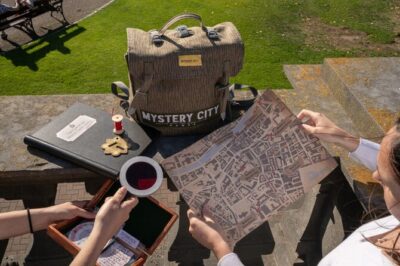 ★ 4.5Private Dublin Treasure Hunt Self Guided TourFrom $3014 reviews
 ★ 4.0Dublin Walking Tour with Audioguide on Your SmartphoneFrom $813 reviews
 ★ 3.5Dublin Self-Guided Murder Mystery Tour by Temple BarFrom $2112 reviews
 ★ 4.0Dublin Old Town: Famous Pubs Exploration Game and TourFrom $87 reviews
 ★ 3.5Self-Guided Scavenger Hunt: Dublin AdventureFrom $126 reviews
 ★ 4.0The Dublin Incident: Alien, Whiskey & Clues Exploration GameFrom $106 reviews
Browse the lists this tour appears in