
Reviewed · DUBLIN
Best of Dublin — Highlights and Hidden Corners
Dublin gets personal on foot, starting with big-city history on O’Connell Street and then moving through Dublin’s iconic landmarks like the General Post Office and Trinity College. This is a highlights-style walk that turns famous names into street-level stories, from the Easter Rising era to the rise of Ireland’s modern capital.
What I like most are the moments you can actually step into. You’ll visit St Mary’s Church (including the interior), where the stained glass and the Renatus Harris-built organ that towers above the bar make it feel oddly alive for such an old building. I also love that your ticket includes discounts at Abbey Theatre, The Church (the bar and restaurant in St Mary’s Church), and Bewley’s Café—so the tour can keep paying you back after the walk.
One possible drawback: the tour is mostly on busy streets, and on louder days you may find it harder to hear every detail from farther back in the group. If you’re sensitive to audio (or you just want zero effort), position yourself closer to the guide and keep your expectations aligned with a highlights tour, not a strict blow-by-blow timeline.
In This Review
- Key things that make this Dublin walk worth your time
- O’Connell Street to the GPO: how one wide road holds Irish turning points
- Henry Street and St Mary’s Church: the surprise you’ll remember
- Quarter Bloom along the Liffey: Viking trade to modern city views
- Temple Bar and the Millennium Bridge: medieval lanes and Handel’s Messiah
- Christ Church Cathedral: the oldest church in the center
- Dublin City Hall to Dublin Castle: Georgian power meets medieval age
- Trinity College finish: your fastest route into Ireland’s academic core
- Price and value: why $27.77 can feel like a win
- Who should book this Dublin highlights walk (and who might want something else)
- Should you book it?
- FAQ
- Where does the tour start and end?
- How long is the Best of Dublin walking tour?
- What language is the tour offered in?
- Is there a mobile ticket?
- Which stops include admission?
- Can I enter Dublin Castle and Christ Church Cathedral during the tour?
- Does the tour include discounts?
- How big are the groups?
- Is the tour mostly outside?
- Is free cancellation available?
Key things that make this Dublin walk worth your time
- O’Connell Street and the GPO: why the General Post Office mattered during the Easter Rising of April 1916
- St Mary’s Church interior stop: stained glass plus a Renatus Harris organ you’ll notice even in a quick visit
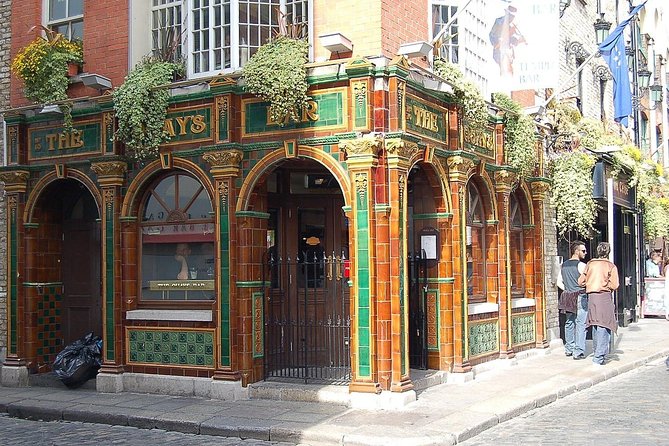
- Temple Bar’s medieval street plan: narrow cobbled lanes and key cultural stop points
- Handel connection at Meeting House Square: the site linked to the first performance of Messiah
- Georgian City Hall to Dublin Castle: from stately façades to an 800-year-old complex
- Trinity College finish near College Green: great place to continue exploring on your own
Still weighing your Dublin days? These are the outings people book first.
- Dublin to Cliffs of Moher, including Wild Atlantic Way and Galway★ 5.0 · 23,331 reviews
- From Dublin: Cliffs of Moher, Burren & Galway City Day Tour★ 4.8 · 18,888 reviews
- Dublin: Guinness Storehouse Entry Ticket★ 4.6 · 16,863 reviews
- Dublin to Cliffs of Moher, Burren, Wild Atlantic Way, Galway Tour★ 5.0 · 12,924 reviews
O’Connell Street to the GPO: how one wide road holds Irish turning points
The tour begins near Dame Street (Stop 1358) in the O’Connell Street area. It’s a good starting point because you’re already in the middle of the city, so the walk quickly starts feeling like orientation instead of a trek.
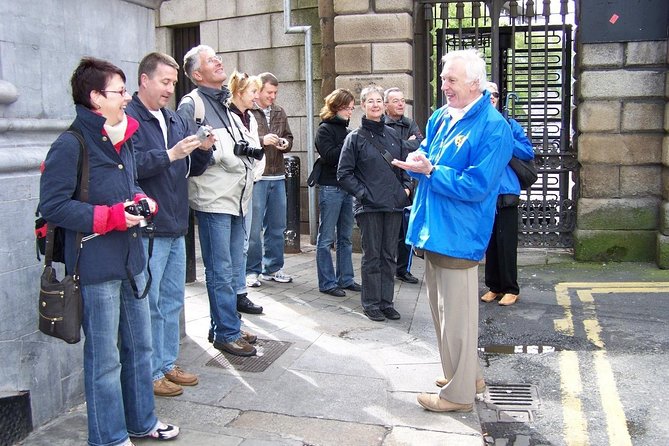
From there, your guide explains why O’Connell Street is one of Europe’s widest streets and how it became part of Dublin’s daily rhythm. The story gets sharper at the General Post Office, which is treated as hugely symbolic in Irish history because rebels occupied the building during the Easter Rising of April 1916.
Tip: stand where you can see the facades clearly, then angle your attention back to the guide when the story shifts. On a street like this, quick eye contact helps you connect what you’re seeing with what you’re hearing.
Henry Street and St Mary’s Church: the surprise you’ll remember
Next comes Henry Street, Dublin’s classic shopping district. It’s a useful transition: you go from monument-level history to the feel of the city as people actually live in it.
Then you reach St Mary’s Church, an early 18th-century church where the tour actually includes admission to go inside. The interior details are the headline—especially the stained glass—and the Renatus Harris-built organ that towers over the bar. St Mary’s has that rare mix of old and used, so instead of feeling like a museum object, it feels like a place with a pulse.
A couple practical notes for your 10-minute window:
- Look up early so you’re not spending the whole stop scanning for the organ later.
- If you’re here with kids or you’re short on time, the guide’s quick focus on the key features makes the stop feel manageable.
Quarter Bloom along the Liffey: Viking trade to modern city views
After Henry Street and St Mary’s, you’ll move through Dublin’s Italian Quarter, also known as Quarter Bloom, on the north banks of the Liffey. This is one of those parts of Dublin where the streets feel like they’re meant for walking and browsing—shops and restaurants, yes, but also proper river views.
The guide connects the river to Dublin’s bigger story, explaining how the Liffey served as a trading lifeline from Viking days onward. That’s a big claim, but it makes the city feel less like random sightseeing and more like a place with a long-running engine.
Practical tip: the river area can be breezy, so a light layer helps. If you’re taking photos, aim for a couple shots that include both buildings and water, since the river is part of the narrative here.
Temple Bar and the Millennium Bridge: medieval lanes and Handel’s Messiah
Your route then heads toward Temple Bar, Dublin’s designated cultural quarter. You’ll pass over the Millennium Bridge first, which is one of those modern crossings that gives you quick, clean angles before you drop into the older street pattern.
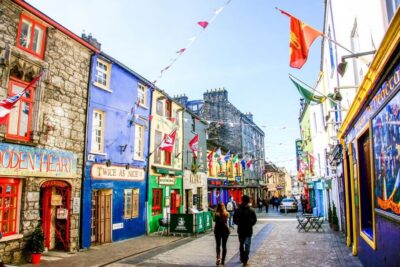
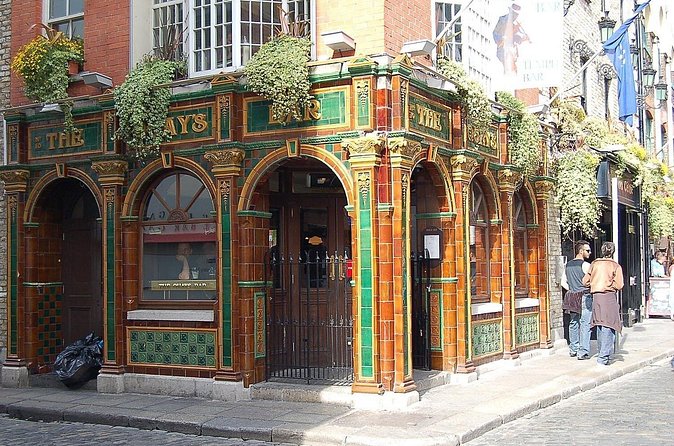
Once you’re in Temple Bar, the tour leans into the feel of the place: narrow cobbled streets with a layout still laid out in a pattern unchanged from medieval times. That’s a big deal because it means you’re walking a street geometry that’s been doing its job for centuries.
Two history-and-culture links are especially memorable here:
- Meeting House Square, described as a cultural gathering point connected to the area’s oldest theatre
- A link to Handel’s Messiah, tied to the site where it was first performed
If Temple Bar is busy in your time slot, don’t treat it like an all-day wandering area. This stop works best as a guided orientation through the lanes—then you can decide later if you want to linger.



Christ Church Cathedral: the oldest church in the center
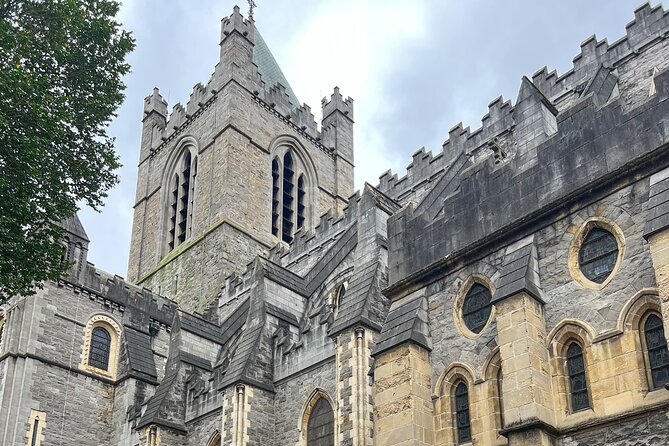
The tour includes a stop at Christ Church Cathedral. The highlight you’ll focus on is its age: it’s described as the oldest church building still standing in the centre of Dublin, with origins first built in 1030.
The tour stop itself is brief, but the cathedral is the kind of place where even a quick look gives context to the surrounding streets. If you want to go deeper, the information you’ll get includes the option for internal visit later (paid admission), after the walking portion.
Tip: if you plan to enter later, keep your timing realistic. This walk ends near Trinity, so you may want to pick one indoor stop that matters most.
Dublin City Hall to Dublin Castle: Georgian power meets medieval age
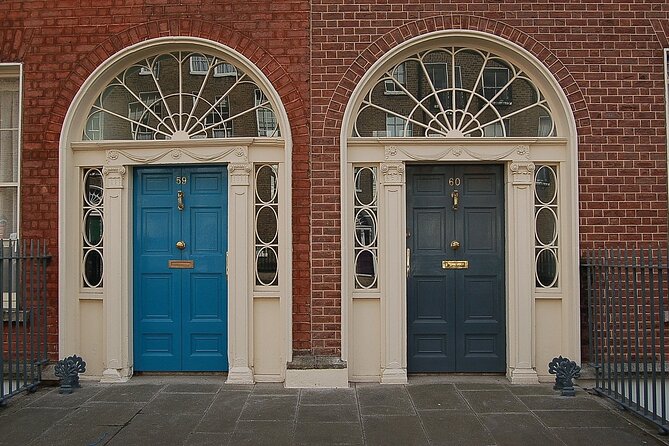
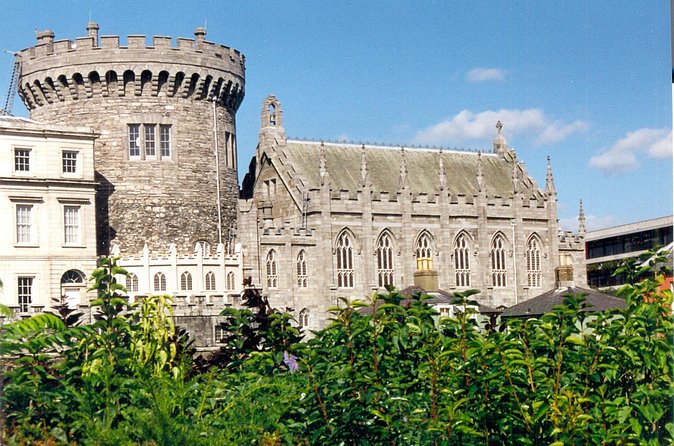
After Temple Bar, the route moves into the Georgian style of central Dublin, with Dublin City Hall called out as a magnificent example of the architecture Dublin is known for. This is the moment where the walk feels like it’s spanning different layers of the city at once.
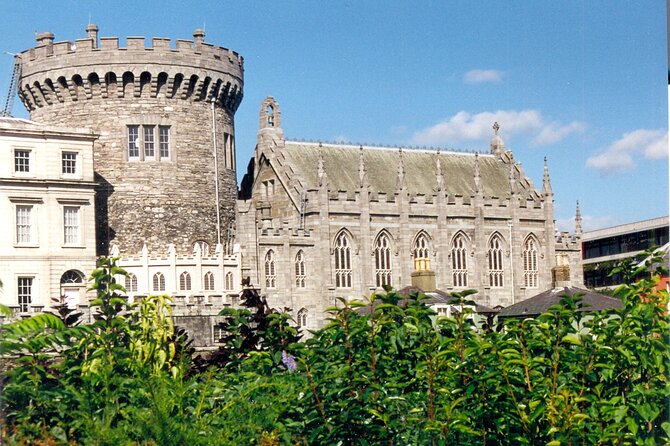
Then you continue to Dublin Castle, described as 800 years old. The guide also points out the former Irish Houses of Parliament, noted as the world’s first purpose-built parliament house. That’s a great idea to hear while you’re still looking at the grounds—because the scale makes the story easier to believe.
The tour finishes close by so you can choose a follow-up: you can take an internal paid tour of the castle later (the information suggests booking online). There’s also a Dublin history exhibition in City Hall mentioned, with one caveat: it’s currently not open on Sundays.
Practical tip: if you want the maximum payoff from this stop, build a little time into your schedule afterward. The exterior views are strong, but the indoor parts are where a lot of visitors feel the story really locks in.
Trinity College finish: your fastest route into Ireland’s academic core
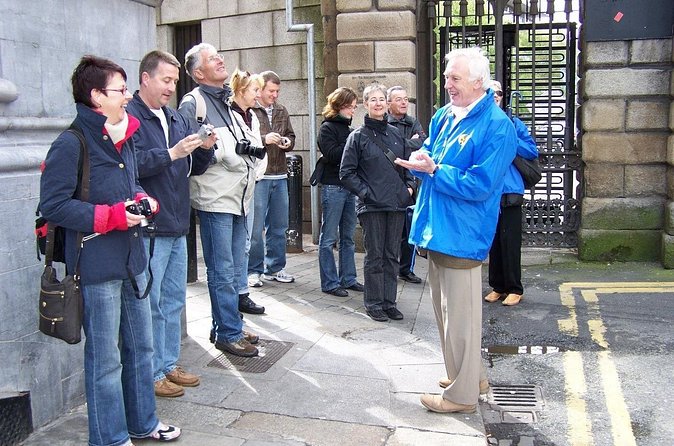
The last stretch brings you to Trinity College Dublin, founded in 1592 and tied to being Ireland’s oldest university. Your tour ends when you say goodbye to the guide, and the finish point is deliberately placed near Trinity and College Green so you can keep exploring at your own pace.
Trinity is all about structure and space: historical buildings set around cobbled quadrangles give you that classic university feel. Even if you don’t go inside right away, the exterior layout is enough to understand why it has such a strong identity.
Tip: if you plan to tour Trinity’s interiors after the walking portion, check timing so you’re not stuck planning around closing hours.
Price and value: why $27.77 can feel like a win
At $27.77 per person for about 2 hours, this works out well if your goal is to see a lot of Dublin in one shot without turning the day into a logistics puzzle. You’re paying for three things that add up: a professional local guide, multiple “you have to see this” sites, and one meaningful interior stop at St Mary’s Church.
The included benefits after the walk help the math too. Your ticket comes with discounts at Abbey Theatre, The Church (the St Mary’s Church bar/restaurant), and Bewley’s Café. If you were already planning on a show or a meal stop, this is basically lowering your total day cost.
Group size also matters. The tour caps at 20 travelers for excellent physical distancing, and it’s described as staying entirely external until deemed risk-free to enter any premises. That can affect how much time you get inside, but it’s a reasonable trade if you prefer safer, flexible sightseeing.
Practical advice that makes a difference: wear comfortable shoes and bring small cash for tips if you want to thank your guide. One of the clearest pieces of advice that comes up around this experience is to not get caught without cash.
Who should book this Dublin highlights walk (and who might want something else)
This tour is a strong fit if you want a quick, smart overview of central Dublin. It’s also great for first-timers who need help connecting major landmarks—like the GPO, Temple Bar, Dublin Castle, and Trinity College—into one coherent story.
It’s also ideal if you like history but don’t want a classroom lecture. Guides on this walk are praised for keeping things clear and entertaining, with stories that place events into the city you’re actually standing in.
The main mismatch risk is for people who want strictly chronological history with deep coverage at every stop. Also, because you’re walking through busy areas, hearing can be an issue if you’re far from the guide and there’s no audio aid.
Should you book it?
I think you should book this if you want your Dublin day to start strong and stay practical. You get a tight route, major sites you’ll recognize, and an included interior visit that doesn’t feel rushed.
I’d skip or supplement it if you prefer slow museum-style pacing or you know you’ll want more time inside specific buildings on your own. In that case, use this as your orientation walk, then plan longer visits to the places that pull you in.
FAQ
Where does the tour start and end?
The tour starts on Dame Street (Stop 1358) in central Dublin, in the O’Connell Street area. It ends close to Trinity College at College Green, Dublin 2, so you can continue exploring on your own.
How long is the Best of Dublin walking tour?
The tour is about 2 hours.
What language is the tour offered in?
The tour is offered in English.
Is there a mobile ticket?
Yes, it’s listed as a mobile ticket.
Which stops include admission?
St Mary’s Church is listed as admission included. Other stops are listed as free for the tour, and internal visits to some sites are described as paid admission if you choose to add them.
Can I enter Dublin Castle and Christ Church Cathedral during the tour?
The tour includes an exterior stop at Dublin Castle with the option to do an internal paid tour afterward. For Christ Church Cathedral, the tour stop is free, and an internal visit is available with paid admission after the tour if you wish.
Does the tour include discounts?
Yes. Your ticket includes discounts at Abbey Theatre, The Church (the bar and restaurant set in St Mary’s Church), and Bewley’s Café.
How big are the groups?
The tour has a maximum of 20 travelers.
Is the tour mostly outside?
It’s described as entirely external until it’s deemed risk-free to enter premises, meaning entry may depend on conditions.
Is free cancellation available?
Yes—free cancellation is available up to 24 hours in advance for a full refund.
More Tour Reviews in Dublin





Fresh off the cobbles: the latest Dublin reviews
- Dublin Private Airport Transfer to Ireland
★ 4.5 · 3 reviews - Private Chauffeur Service From Dublin Airport to Killarney
★ 5.0 · 3 reviews - Ireland: 3-Day West Coast Explorer Tour
★ 5.0 · 3 reviews - From Dublin: 4-Day Southern and Western Coast Tour
★ 4.3 · 3 reviews - Dublin : Street Art Walking Tour
★ 5.0 · 3 reviews - Spring Tonic Foraging Tour
★ 5.0 · 3 reviews