
Reviewed · TOURS
Complete tour of Dublin in Italian
Dublin’s legends, explained in your language. What makes this tour work so well is the Italian-speaking guide who turns landmarks into clear stories you can actually follow, plus the small, human anecdotes that connect the city’s past to how people live now. I like the short stops with free entry that let you sample a lot without paying for attractions, and you get a practical walking-route through key spots. One drawback to plan for: the pacing is brisk, with many stops lasting only about 5–20 minutes, so you’ll want to be okay with quick highlights rather than long visits.
You’ll also get real logistics support. The tour runs about 3 hours, keeps groups to a maximum of 30, and uses a mobile ticket, which makes it easy on travel days. It starts at the Molly Malone Statue (Suffolk St) and ends in Temple Bar, so your walk naturally finishes where you can keep the evening going.
In This Review
- Key things to know before you go
- A Dublin walking tour in Italian that keeps your day on track
- The route from Molly Malone Statue to Temple Bar at a smart pace
- Temple Bar: the nightlife district, explained without the noise
- Christ Church Cathedral: oldest Protestant roots and strange Dublin legends
- Dublin Castle and Victoria Gardens: Vikings, Normans, and the power of “outside views”
- Molly Malone Statue: legend you can touch, not just read
- Dublinia: how Viking-founded Dublin shapes everything
- St Patrick’s Cathedral: legends, history, and the man behind the name
- Ha’penny Bridge: the small bridge with a big story
- Trinity College Dublin: the oldest university angle and truth-vs-legend vibes
- Price and logistics: is $29.03 good value?
- Who this walking tour suits best
- Guides can make the stories human
- A few smart tips to make the most of the 3 hours
- Should you book this Dublin tour in Italian?
- FAQ
- How long is the complete Dublin tour in Italian?
- Where does the tour start?
- Where does the tour end?
- Is the tour actually in Italian?
- Are entrance tickets included?
- Is there time to use the bathroom?
- Do I need a printed ticket?
- Is coffee or tea included?
- What group size should I expect?
- What is the cancellation policy?
Key things to know before you go
- Italian guide = fewer language headaches so you don’t miss the details
- Free-entry viewpoints at major landmarks to keep costs low
- A route built for first-timers from Molly Malone to Temple Bar
- Photo and video time plus a bathroom break so you’re not rushing the whole way
- Local recommendations for music and food without overspending
- Max 30 people which helps the guide actually address questions
Still weighing your Dublin days? These are the outings people book first.
- Dublin to Cliffs of Moher, including Wild Atlantic Way and Galway★ 5.0 · 23,331 reviews
- From Dublin: Cliffs of Moher, Burren & Galway City Day Tour★ 4.8 · 18,888 reviews
- Dublin: Guinness Storehouse Entry Ticket★ 4.6 · 16,863 reviews
- Dublin to Cliffs of Moher, Burren, Wild Atlantic Way, Galway Tour★ 5.0 · 12,924 reviews
A Dublin walking tour in Italian that keeps your day on track
If you’re in Dublin for the first time, the biggest challenge is usually this: you see the buildings, but the meaning stays fuzzy. This tour is designed to solve that with Italian explanations at each stop, so the city doesn’t feel like a random pile of sights. You get a guided storyline across multiple eras, from medieval-ish Dublin to Viking and Norman connections.
I also like the “complete” feel. You cover famous names—Temple Bar, Trinity College, St Patrick’s Cathedral—yet you’re not stuck only in the most obvious tourist lanes. The route also includes spots that help you understand Dublin’s identity, not just its postcard angles. That balance matters if you want the city to make sense by the end of the walk.
Finally, it’s built around convenience. The tour uses a mobile ticket, starts near public transport, and includes small support touches like time for photos and a bathroom break. It’s a good choice when you want structure without feeling trapped.
The route from Molly Malone Statue to Temple Bar at a smart pace
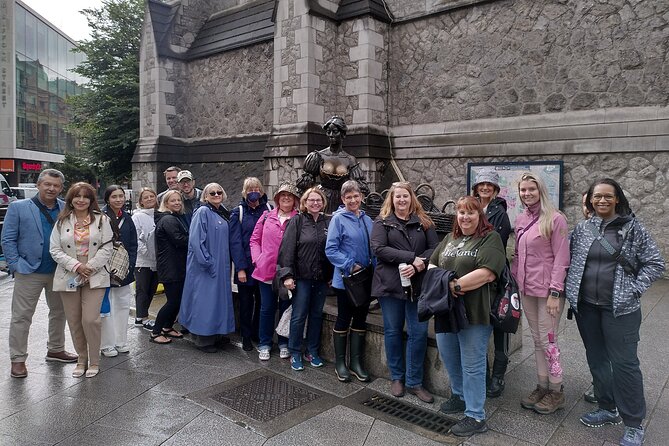
The tour begins at the Molly Malone Statue on Suffolk St (Dublin 2). Starting here is a smart move because it’s a recognizable landmark right in the city center, and it sets the tone: Dublin’s legends are part of the walking experience, not just the background.
From there, you move through a compact sequence of stops that read like a guided introduction to Dublin’s character. You’ll spend time around the nightlife area of Temple Bar, then shift into religious and civic history with Christ Church Cathedral and Dublin Castle. After that, the tour turns toward stories and symbols—Molly Malone herself—then onto Dublinia (with its Viking link) and St Patrick’s Cathedral.
It ends in Temple Bar, which is exactly where many people want to be after a guided walk. Even if you’re not planning a big night out, the timing helps: you can regroup, grab a bite, or keep wandering while the city feels freshly explained.
Temple Bar: the nightlife district, explained without the noise
The first stop is Temple Bar, where the tour points you toward Dublin’s nightlife district. Even if you’re visiting in the daytime, this is a great place to get oriented because the neighborhood’s identity is tied to music, pubs, and evening energy.
Here’s what I like about starting with Temple Bar: you immediately connect a real modern Dublin vibe with the historical storyline you’ll hear later. It helps your brain switch from sightseeing mode to “place-based understanding,” which is what makes walking tours actually useful. You’ll also get time to take in the streets and capture photos without being rushed into the next stop.
Practical tip: wear shoes that handle cobblestones or uneven paving. This tour is built for walking, and Temple Bar is exactly the kind of area where the ground can feel less smooth than you expect.
Christ Church Cathedral: oldest Protestant roots and strange Dublin legends
Next up is Christ Church Cathedral. The tour focuses on the cathedral’s history and legends, and you’ll view it from the outside. That matters because you get the story without needing to plan for a longer indoor visit.
This stop is all about context. Dublin has layers—religious, political, and cultural—and Christ Church is one of those anchors. You’ll learn about the cathedral as the oldest Protestant cathedral in Dublin and hear the legends and the strangest anecdotes connected to it. Even from the outside, you can understand why this kind of site becomes a city symbol.
Time is short here (about 20 minutes), so don’t expect a deep architectural study. Expect more of a narrative highlight. If you’re the type who loves hearing why a place matters, this fits your style.


Dublin Castle and Victoria Gardens: Vikings, Normans, and the power of “outside views”
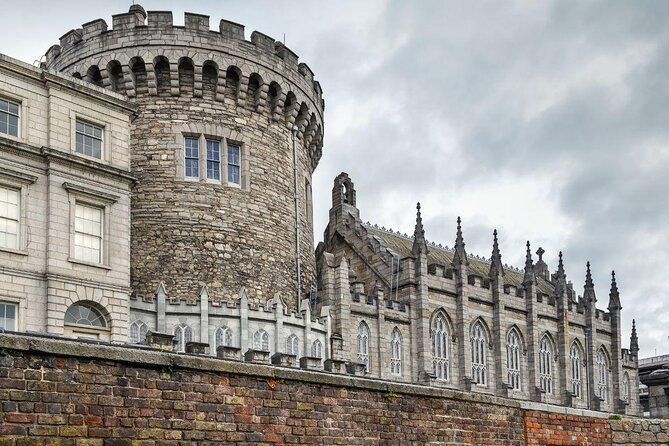
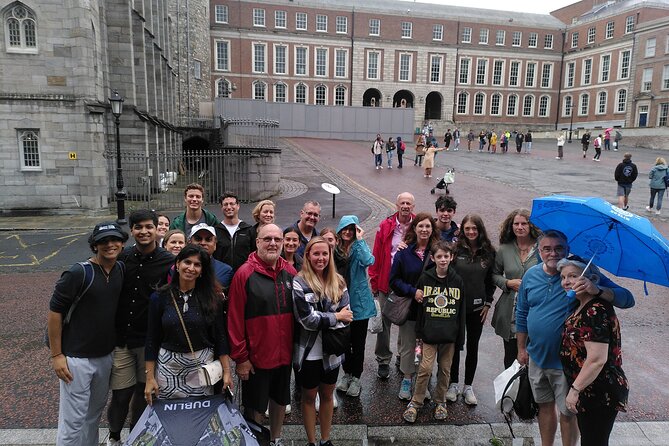
At Dublin Castle, the tour keeps it practical: you’ll visit from the outside and also take in Victoria Gardens from outside. The storytelling connects the site to both Normans and Vikings, which is a fun pairing because it frames Dublin as a crossroads rather than a single straight timeline.
Why I think this stop is valuable: castles are often explained in vague ways, but connecting Norman and Viking influence gives you a cleaner sense of why Dublin’s early identity developed as it did. You’ll be standing in a place that still carries that weight even if you don’t go inside.
A small consideration: since it’s outside, weather can be a factor. Dublin can be unpredictable, so pack a light layer and keep a rain plan in mind. The upside is you’ll likely feel more flexible since you’re not tied to an indoor schedule.
Molly Malone Statue: legend you can touch, not just read
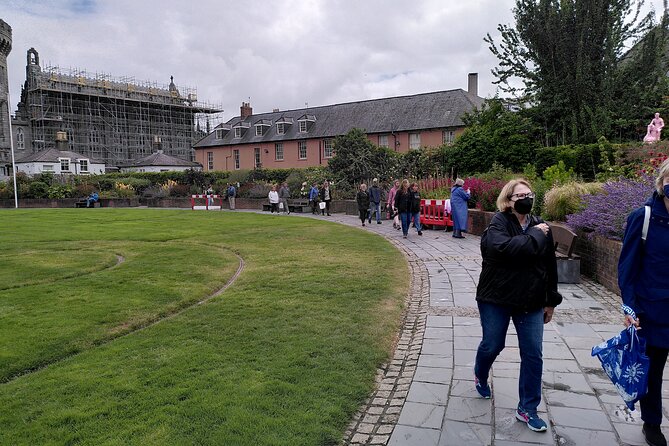
Then you reach the Molly Malone Statue, with a quick stop focused on the history and legend of Ireland’s most famous girl. This is one of those Dublin moments where the city blends song, memory, and street-level mythology.
The tour’s timing here is around 10 minutes. That’s long enough to get the gist of the story and take photos, but short enough that it doesn’t break the flow. I like this because it gives you a human-sized chapter after larger institutions like cathedrals and castles.
If you’re curious about Irish pub songs and the way folklore travels through everyday life, this stop is a satisfying payoff. You’ll leave with a clearer sense of why Molly Malone shows up so often in Dublin culture.
Dublinia: how Viking-founded Dublin shapes everything
Dublinia is the next stop, with a focus on how Dublin’s history connects deeply with the Vikings who founded it. Even with only around 10 minutes, the tour uses this place to explain a major theme: Dublin’s identity isn’t just medieval romance; it’s also rooted in settlement and early power.
This is a good time to reset your brain from legends and symbols back into historical cause-and-effect. You’ll hear the Viking link framed in a way that helps you recognize that theme elsewhere as you walk.
One thing to consider: the stop is brief, so if you’re hoping for a full museum experience, plan to come back later on your own. As part of a walking tour, Dublinia functions more like an idea-connector than a full deep study.
St Patrick’s Cathedral: legends, history, and the man behind the name
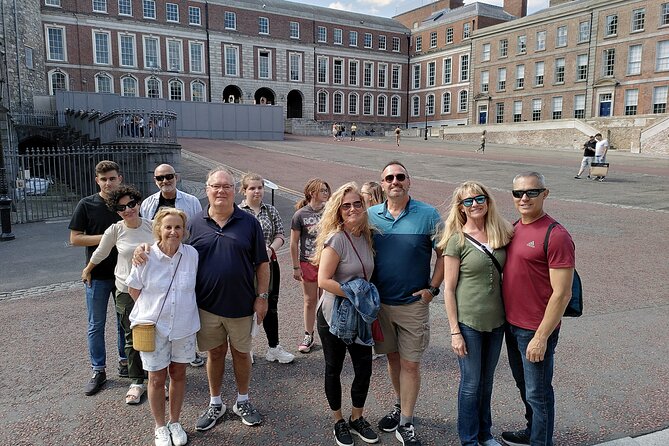
At St Patrick’s Cathedral, the tour teaches the history and legends connected to St Patrick and the cathedral dedicated to him. Like Christ Church, this is a story-first stop, and it pairs well with the earlier religious landmark because it shows Dublin’s spiritual identity through different angles.
Even when you don’t go deep into details, these stops help you understand how cities build meaning around people and dates. St Patrick’s name is everywhere, but the tour gives you a clearer sense of why that matters for Dublin as a place.
Time here is around 10 minutes, so think of it as a fast orientation. If you want to linger, you’ll probably want to return later when you’re not on a group schedule.
Ha’penny Bridge: the small bridge with a big story
Next is Ha’penny Bridge, with a short stop focused on what makes it unique. The tour keeps it around 5 minutes, which is perfect if your goal is to learn the key idea and then move on.
Bridges are often overlooked because they’re quick to glance at. But a focused mini-stop like this can turn a “just a bridge” moment into something you remember. It’s also an easy spot for photos, since you can capture the bridge and nearby streets from a couple of angles quickly.
Practical tip: pause and look at the river/bridge view for a few seconds before snapping pictures. You’ll get more from the guide’s explanation when you’re actually seeing what they’re pointing to.
Trinity College Dublin: the oldest university angle and truth-vs-legend vibes
The tour finishes with Trinity College Dublin. The focus here is on the idea that it’s the oldest university in Ireland, or maybe, plus a playful theme: how many things in Ireland sit somewhere between truth and legend. This is a fun way to end a walking tour because it gives you a cultural lens you can carry into the rest of your trip.
Time is about 10 minutes, so you won’t get a full campus tour. But you can get the main takeaway: Dublin’s identity lives in stories, and some of the biggest ones come with a wink.
I also appreciate the mental reset here. After cathedrals, bridges, and medieval-era connections, you end at an institution of learning. It makes the whole walk feel like a guided arc: from place legends to cultural memory to education and myth.
Price and logistics: is $29.03 good value?
At about $29.03 per person, this tour is priced for value if you care about explanation more than museum time. You’re paying for an Italian-speaking professional guide, a route that covers multiple iconic places, and included support like a bathroom break and time for photos and videos.
Another value point: the tour includes free admission for the stops listed (Temple Bar, Christ Church Cathedral, Dublin Castle/Victoria Gardens, Molly Malone Statue, Dublinia, St Patrick’s Cathedral, Ha’penny Bridge, Trinity College). Even if you don’t care about saving money, free-entry stops help you avoid decision fatigue while traveling.
Logistics also matter. The tour uses a mobile ticket, runs about 3 hours, and caps at 30 people. That combo usually means less waiting around and more time learning.
A small consideration is what you’ll get at the ends of the schedule. Since it’s a walking tour with short timed stops, you’ll likely feel the most satisfied if you’re here to get your bearings and understand the city’s stories. If you want long indoor visits, you’ll need extra time on your own afterward.
Who this walking tour suits best
This is a strong fit if you:
- want Italian narration and don’t want to rely on your own translation skills
- enjoy learning the “why” behind famous landmarks
- like walking city centers in a structured route
- plan to end near nightlife and keep exploring after the tour ends
It also works well for people who want a first-day orientation. By the time you reach Temple Bar, you’ll have a better sense of where you are and what you’re seeing, so your remaining hours feel more intentional.
If you prefer museums, long stays, or quiet corners, you might want a different style of tour. The pacing is part of the concept, and it’s intentionally efficient.
Guides can make the stories human
One of the best parts of this tour approach is the personality behind the explanations. For example, Elisa has been highlighted as super prepared and very helpful for people who want to walk and discover Dublin. Another guide, Giulio, is described as knowledgeable and patient, and he even shared a good sweet near the Liberties area during the experience.
Those are small details, but they matter. When the guide can connect landmarks to real stories and respond to the group, the tour feels like an exchange rather than a script.
You’ll also get guidance on what to do next. The tour includes recommendations for places to listen to music and eat or drink, with advice aimed at avoiding getting overcharged.
A few smart tips to make the most of the 3 hours
- Bring a smartphone with enough battery for photos and video.
- Pack comfy shoes. This is a walking route with city-center surfaces.
- If you have dietary needs, save dinner decisions for after the tour when the guide’s suggestions have pointed you in the right direction.
- Keep expectations realistic: short stops mean quick insights, not full museum visits.
And if you’re traveling in Italy-speaking company, this kind of tour is also a nice way to keep everyone engaged. No one has to sit out because they can’t follow the language.
Should you book this Dublin tour in Italian?
I’d book it if you want a clear, language-supported introduction to Dublin’s major sights in about 3 hours, with free-entry stops and a guide who keeps the city’s stories easy to understand. The route makes sense for first timers, and the Temple Bar finish is a practical bonus if you’re planning an evening out.
I’d skip it or pair it with additional time if you want long indoor visits or deep museum hours. This walk is built for momentum and context, not for settling in for hours at any single attraction.
If your priority is understanding Dublin fast, in Italian, and seeing the city as a connected story, this tour looks like a strong match.
FAQ
How long is the complete Dublin tour in Italian?
It lasts about 3 hours.
Where does the tour start?
It starts at the Molly Malone Statue, Suffolk St, Dublin 2, D02 KX03, Ireland.
Where does the tour end?
It ends in Temple Bar, Dublin.
Is the tour actually in Italian?
Yes. It is an inside Dublin walking tour in Italian with a professional guide.
Are entrance tickets included?
All the listed stops have admission marked as free, and the tour includes the time needed for photos and videos.
Is there time to use the bathroom?
Yes, the tour includes a break so you can use the bathroom if needed.
Do I need a printed ticket?
No. It uses a mobile ticket.
Is coffee or tea included?
No, coffee and/or tea are not included.
What group size should I expect?
The tour has a maximum of 30 travelers.
What is the cancellation policy?
It is non-refundable and cannot be changed for any reason.
More Tours in Dublin






More Tour Reviews in Dublin



Fresh off the cobbles: the latest Dublin reviews
- Dublin Private Airport Transfer to Ireland
★ 4.5 · 3 reviews - Private Chauffeur Service From Dublin Airport to Killarney
★ 5.0 · 3 reviews - Ireland: 3-Day West Coast Explorer Tour
★ 5.0 · 3 reviews - From Dublin: 4-Day Southern and Western Coast Tour
★ 4.3 · 3 reviews - Dublin : Street Art Walking Tour
★ 5.0 · 3 reviews - Spring Tonic Foraging Tour
★ 5.0 · 3 reviews
Tours, compared.
 ★ 4.8From Dublin: Cliffs of Moher, Burren & Galway City Day TourFrom $8918,888 reviews
 ★ 5.0Dublin to Cliffs of Moher, Burren, Wild Atlantic Way, Galway TourFrom $9412,924 reviews
 ★ 4.8Giants Causeway, Dark Hedges, Dunluce & Belfast TourFrom $1128,843 reviews
 ★ 5.0Kilkenny, Wicklow Mountains & Glendalough Day Tour from DublinFrom $487,897 reviews
 ★ 4.8From Dublin: Wicklow Mountains, Glendalough & Kilkenny TourFrom $456,235 reviews
 ★ 5.0Dublin Highlights and Hidden Gems Guided Walking TourFrom $296,020 reviews
 ★ 5.0Dublin to Glendalough, Wicklow and Kilkenny Full Day Guided TourFrom $484,895 reviews
 ★ 4.7Jameson Whiskey Distillery Tour with TastingsFrom $354,859 reviews