
Reviewed · TOURS
The Dublin True Crime Tour
Dublin’s dark past walks right beside you. This 2-hour guided walk turns well-known streets and buildings into true-crime stories about Ireland’s past. I love that it keeps you moving through the city, so the facts land in context instead of feeling like a lecture.
What really works for me is the 2-hour walking pace. You get a concentrated route that hits major Dublin landmarks (with free stops along the way), so you maximize your time without sprinting all over town.
One consideration: the experience is only as smooth as the telling. If you’re sensitive to pacing, a couple of write-ups flagged that story flow can feel uneven when a guide seems distracted or isn’t at their best, and if you expect mostly Victorian-era chaos, you may feel the timing leans elsewhere.
In This Review
- Key Highlights Worth Your Attention
- Why Dublin’s Landmarks Make True Crime Feel Real
- Price and Timing: The 4:00 pm Two-Hour Window
- Meeting Point to Finish Line: Plan Your Evening Route
- Small Group Energy: What Changes When There Are Fewer People
- Stop 1: Bank of Ireland and the Heist/Tiger Kidnapping Story
- Stop 2: Trinity College Dublin and Old Murders with Punishment
- Stop 3: Molly Malone Statue and Graverobbers/Courtesans
- Stop 4: Dublin Castle and the Irish Crown Jewels Heist
- Stop 5: Dubh Linn Gardens, Veronica Guerin, and a Chester Beatty Curator Story
- Stop 6: Christ Church Cathedral and St. Lawrence Afterlife Adventures
- What Kind of True Crime Stories You’ll Get
- Who This Tour Is Best For
- Weather, Comfort, and How to Get the Most Out of It
- Should You Book the Dublin True Crime Tour?
- FAQ
- How long is the Dublin True Crime Tour?
- What does it cost?
- Where does the tour start and end?
- What time does it start?
- Is the tour in English?
- Do I need a printed ticket?
- How big is the group?
- Is the tour accessible to most people?
- Does the tour allow service animals?
- What happens if the weather is poor?
Key Highlights Worth Your Attention
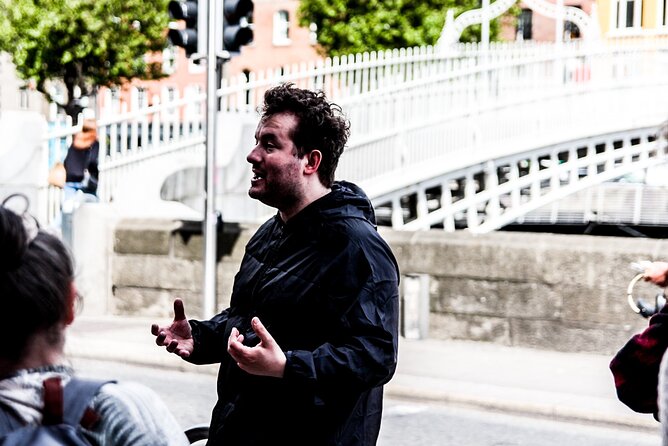
- Small-group format (max 19) that keeps the mood personal and question-friendly
- Landmark-by-landmark storytelling at Bank of Ireland, Trinity College Dublin, and Dublin Castle
- A mix of crime types from heists and grave-related scandals to memorials and executions
- Good value at $16.90 per person for a focused, 2-hour guided walk
- A 4:00 pm start that fits nicely into an afternoon exploring Dublin
- Mobile ticket and English-language tour for an easy, low-friction outing
Still weighing your Dublin days? These are the outings people book first.
- Dublin to Cliffs of Moher, including Wild Atlantic Way and Galway★ 5.0 · 23,331 reviews
- From Dublin: Cliffs of Moher, Burren & Galway City Day Tour★ 4.8 · 18,888 reviews
- Dublin: Guinness Storehouse Entry Ticket★ 4.6 · 16,863 reviews
- Dublin to Cliffs of Moher, Burren, Wild Atlantic Way, Galway Tour★ 5.0 · 12,924 reviews
Why Dublin’s Landmarks Make True Crime Feel Real
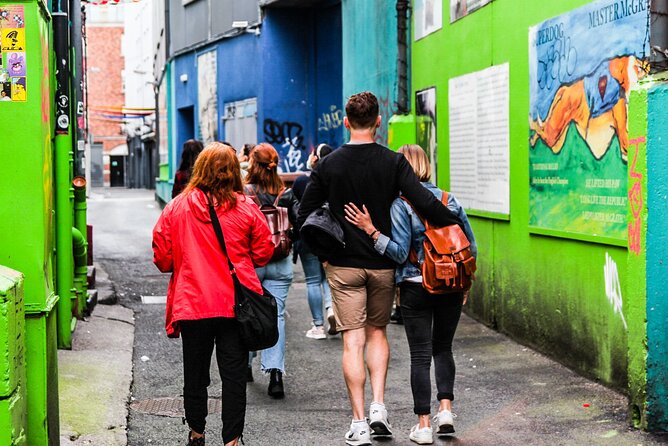
True crime works best when it’s tied to places you can see. This tour does that in a practical way: you don’t just learn names and dates, you stand where the story was happening, then hear what people believed, feared, and punished. Dublin’s center is built for walking, and the route threads through landmark after landmark—so you get both a sightseeing loop and a story loop.
I also like the tone it aims for. It’s not about gore. It’s about what crimes meant to ordinary life, how communities responded, and why certain cases became part of Dublin’s public memory. That balance helps if you want the grim side without it turning into shock-for-shock’s-sake.
Finally, the small-group cap matters. When a tour stays under 20 people, the guide can pace the walk and keep the group from stretching out. That usually means you spend more time listening and less time waiting at corners.
Price and Timing: The 4:00 pm Two-Hour Window
At $16.90 per person, this tour is priced like a snack-sized decision rather than a big budget commitment. For me, the value comes from the format: a guided walk that’s long enough to feel like a real experience (about 2 hours) but not so long that it eats your whole day. You’re also not paying extra for admission at the stops listed, which keeps the cost simple.
The start time is 4:00 pm at the meeting point near College Green and Temple Bar (exact address: 1 College Green, Temple Bar, Dublin, D02 YT92). That timing is smart. It gives you a chunk of daylight to explore before the walk, then you’re done early enough to grab dinner without feeling rushed.
English is the tour language, and you’ll receive a mobile ticket after booking. The tour runs with a minimum number of travelers, so if the number isn’t met, you’ll be offered a different date/experience or a refund—worth keeping in mind when you’re traveling in peak vs. quiet seasons.
Meeting Point to Finish Line: Plan Your Evening Route
You start at 1 College Green, Temple Bar (D02 YT92). The tour ends at St Audoen’s Catholic Church, High St, Merchants Quay. That end point is handy: it’s near the sort of lively central Dublin streets where you can keep walking after the tour, or hop on public transport.
Because it’s near public transportation and designed for most travelers, you don’t need special planning beyond arriving a few minutes early. Still, do yourself a favor: go with closed-toe shoes. True crime tours often mean quick stops, turns, and short walks between story points.
Weather matters too. The tour requires good weather, and if it’s canceled due to poor conditions, you’ll be offered another date or a full refund. In practice, that means you should check forecasts that day, not just your week-ahead planning.
Small Group Energy: What Changes When There Are Fewer People
A maximum of 19 travelers keeps the vibe from turning into a large-auditorium thing. In a group this size, you can usually hear the guide without craning your neck, and questions don’t get swallowed by the crowd.
In the best moments, this format makes the stories feel more personal—like you’re sharing Dublin’s shadow side with a small circle instead of being one voice in a herd. The route also stays manageable, with paced stops at landmarks rather than long stretches where people start tuning out.
Still, one fair warning: story clarity is everything for a tour built on facts and plot points. If the guide seems distracted or rushed, the experience can feel disjointed. That’s not a dealbreaker for the overall concept, but it’s something to factor in if you prefer highly structured storytelling.


Stop 1: Bank of Ireland and the Heist/Tiger Kidnapping Story
Your first major landmark is the Bank of Ireland, where you’ll hear a story tied to Ireland’s biggest heist and a “tiger kidnapping” angle. Even if you don’t know anything going in, this is a strong opener because banks are easy to picture: security, money, and the shock of criminals getting past systems.
What I like about starting here is that the crime theme locks in fast. You’re in the heart of Dublin’s civic and financial area, which makes the idea of crime-as-public-shock feel immediate. The guide’s job is to connect the case to the setting—why this location mattered and how people would’ve reacted at the time.
Practical tip: arrive calm and ready to listen. Early in the tour, your brain is still loading names and details, so it helps to focus from the first stop rather than chat with your group.
Stop 2: Trinity College Dublin and Old Murders with Punishment
Next comes Trinity College Dublin, where you’ll hear about old murders connected to the college and how the murderers were punished. This stop works because Trinity isn’t just pretty architecture—it’s part of how Dublin’s learned world and its justice system show up in story form.
I find it especially useful when true crime includes consequences. Knowing that there were real punishments helps you understand the mindset behind the period’s law and community expectations. It also keeps the discussion from becoming purely sensational; the tour frames crime as something that disrupted trust and order.
One drawback to consider: if you’re chasing a very specific era—like heavy Victorian focus—this tour may not match your expectations. The storyline choices vary, and the mix is meant to cover a broader range of Dublin’s past crimes rather than one tight century.
Stop 3: Molly Malone Statue and Graverobbers/Courtesans
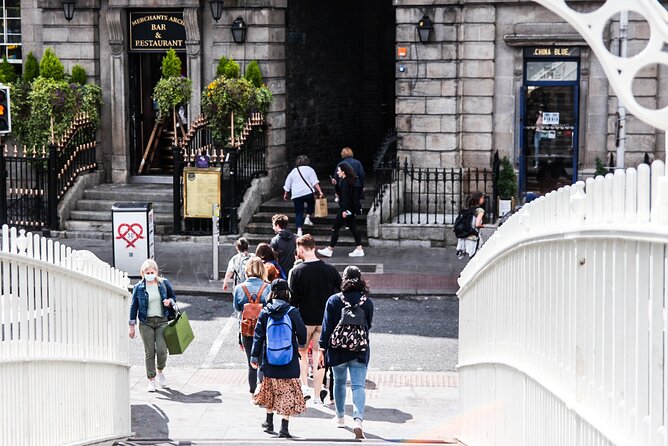
After the academic setting, you pivot to the Molly Malone statue, where you’ll learn about 18th-century Dublin themes tied to graverobbers and courtesans. This stop is a clever change of pace. It takes you away from institutions and into the kind of underground economy that flourished around the edges of respectable life.
What you learn here matters because crime wasn’t always just about stolen money or dramatic street violence. Sometimes the scandal was about bodies, medicine, reputation, and who got blamed when something went wrong. Even if you’re not a medical-history person, the story helps you see how Dublin’s social rules created pressure—and how some people exploited it.
This also tends to be a great stop for photos, since statues and public monuments are easy to frame in a way that doesn’t block your view of the guide. Still, watch for crowded sidewalk moments around popular photo spots.
Stop 4: Dublin Castle and the Irish Crown Jewels Heist
Then you reach Dublin Castle, where you’ll hear the tale of the Irish Crown Jewels heist and the types of punishment that could follow from this kind of crime. Castle stories carry built-in drama: power, authority, and the high-stakes world where punishment is meant to deter.
I like that the tour doesn’t treat heists as movie plots. It frames them in terms of justice—how punishment was described and understood, and how a place like a castle shaped public perception. Standing near the seat of authority makes it easier to grasp why such cases mattered beyond the stolen item.
Practical note: keep your questions for this area if you can. People often have lots of curiosity about how justice worked in the past, and this stop naturally invites it.
Stop 5: Dubh Linn Gardens, Veronica Guerin, and a Chester Beatty Curator Story
At Dubh Linn Gardens, you’ll visit the Veronica Guerin memorial and hear the story of a sneaky curator connected with the Chester Beatty. This is a standout part of the walk because it bridges Dublin’s darker stories across time: you’re not only looking at old crime, you’re also seeing how memory and memorials keep certain names in the public conversation.
Memorial stops can sometimes feel solemn in a way that shuts down conversation. Here, the guide’s job is to connect the emotional weight of the memorial with the narrative themes of the tour. When it’s done well, you get both reflection and storytelling.
The Chester Beatty angle adds a twist: it’s a reminder that “crime” in Dublin’s story landscape doesn’t always mean a weapon or a getaway car. Sometimes it’s about access, handling, and the shady parts of collecting and custodianship.
Stop 6: Christ Church Cathedral and St. Lawrence Afterlife Adventures
Your final stop is Christ Church Cathedral, where you’ll hear about the Hear of St. Lawrence and its postmortem adventures. Even if the wording sounds odd at first, cathedral relic stories are exactly the kind of thread that turns a religious landmark into a true crime-style narrative—because relics sparked human behavior: belief, politics, theft, and public spectacle.
This ending often lands well because it circles back to the theme of custody. Who had authority over what mattered? What happened when sacred objects became entangled with human motives? It gives the tour a memorable finish rather than just stopping at another street corner.
Practical tip: plan a little buffer after the walk. Cathedral areas can be busy, and you may want time to linger without feeling like you have to rush to your next reservation.
What Kind of True Crime Stories You’ll Get
This tour is designed around murder, mystery, and madness, but the mix isn’t limited to one type of crime. You’ll hear about major heists, executions and punishments, body-related scandals tied to graverobbers, and even cathedral relic lore. That variety is a strength because Dublin’s crime stories aren’t one-note.
If you’re a true crime fan, you’ll likely enjoy how the guide connects places to plot. If you’re more of a history traveler who wants darker context to go with sightseeing, this also works. The route is built from landmarks you’ll recognize, so you don’t need prior knowledge to follow along.
What I’d watch for: your era preferences. One disappointment in the mix was the expectation of a heavier Victorian slant. If that’s your main craving, treat this tour as broader Dublin crime storytelling rather than a single-era deep dive.
Who This Tour Is Best For
You’ll probably love it if:
- You like walking tours where the route has a theme, not just trivia
- You’re curious about how famous cases became part of Dublin’s public memory
- You want a small-group experience that keeps the atmosphere easy to manage
You might skip it if:
- You hate tours that are story-heavy and detail-focused (true crime needs attention)
- You want only one crime era—like strictly Victorian stories—without surprises
Weather, Comfort, and How to Get the Most Out of It
This is a walking format, and it depends on good weather. Even when conditions are decent, treat it like a city stroll with story stops. Wear shoes you can walk in for a couple hours and a layer you can handle as the afternoon shifts into evening.
If rain threatens, consider bringing a compact umbrella or rain jacket. And if you’re visiting in a season when it feels quieter, that can be a bonus for sound and pacing—your group stays smaller.
Should You Book the Dublin True Crime Tour?
For most people, I think this is an easy yes—especially if you enjoy getting out of the standard sightseeing rhythm. The proof is in the overall satisfaction numbers: it’s rated 4.9/5 with 96% recommending it. Add in the small group cap of 19, the landmark-focused route, and the fair price at $16.90, and you get a lot of guided value for your time.
If your expectations are very narrow (say, you only want Victorian murders), readjust them slightly before you go. And if you’re picky about story clarity, aim to attend when the day is calm and the weather is good. Under those conditions, this tour is one of the more memorable ways to see Dublin after 4:00 pm—grim, yes, but also smart, place-based, and genuinely fun.
FAQ
How long is the Dublin True Crime Tour?
It runs for about 2 hours.
What does it cost?
The price is $16.90 per person.
Where does the tour start and end?
It starts at 1 College Green, Temple Bar, Dublin, D02 YT92, Ireland, and ends at St Audoen’s Catholic Church, High St, Merchants Quay, Dublin, Ireland.
What time does it start?
The tour starts at 4:00 pm.
Is the tour in English?
Yes, it’s offered in English.
Do I need a printed ticket?
No. It uses a mobile ticket.
How big is the group?
The tour has a maximum of 19 travelers.
Is the tour accessible to most people?
Most travelers can participate.
Does the tour allow service animals?
Yes, service animals are allowed.
What happens if the weather is poor?
The tour requires good weather. If it’s canceled due to poor weather, you’ll be offered a different date or a full refund.
More Tours in Dublin



More Tour Reviews in Dublin



Fresh off the cobbles: the latest Dublin reviews
- Dublin Private Airport Transfer to Ireland
★ 4.5 · 3 reviews - Private Chauffeur Service From Dublin Airport to Killarney
★ 5.0 · 3 reviews - Ireland: 3-Day West Coast Explorer Tour
★ 5.0 · 3 reviews - From Dublin: 4-Day Southern and Western Coast Tour
★ 4.3 · 3 reviews - Dublin : Street Art Walking Tour
★ 5.0 · 3 reviews - Spring Tonic Foraging Tour
★ 5.0 · 3 reviews
Tours, compared.
 ★ 4.8From Dublin: Cliffs of Moher, Burren & Galway City Day TourFrom $8918,888 reviews
 ★ 5.0Dublin to Cliffs of Moher, Burren, Wild Atlantic Way, Galway TourFrom $9412,924 reviews
 ★ 4.8Giants Causeway, Dark Hedges, Dunluce & Belfast TourFrom $1128,843 reviews
 ★ 5.0Kilkenny, Wicklow Mountains & Glendalough Day Tour from DublinFrom $487,897 reviews
 ★ 4.8From Dublin: Wicklow Mountains, Glendalough & Kilkenny TourFrom $456,235 reviews
 ★ 5.0Dublin Highlights and Hidden Gems Guided Walking TourFrom $296,020 reviews
 ★ 5.0Dublin to Glendalough, Wicklow and Kilkenny Full Day Guided TourFrom $484,895 reviews
 ★ 4.7Jameson Whiskey Distillery Tour with TastingsFrom $354,859 reviews