
Reviewed · BOYNE VALLEY & NEWGRANGE
Full-Day Irelands Ancient Boyne Valley Private Guided Tour
Tara and the tombs, minus the crowd crush. This full-day private guided tour from Dublin hits the Boyne Valley’s biggest ceremonial sites while keeping things human-sized, with a guide like Michael Foxx who explains what you’re looking at in a way that actually clicks. I also love that each stop includes free admission, so your time goes to the meaning and the views—not ticket lines.
The main thing to consider is you’ll have a full 8-hour day and lunch isn’t included, so plan for food and comfortable walking.
In This Review
- The Route: Four Sites, One Story of Kings and Stone
- Hill of Tara: Kingship Rituals, the Fort of the Kings, and the Lia Fáil
- Loughcrew Cairns: 5,000-Year-Old Stones and the Slieve na Caillaigh Legend
- Dowth Passage Tomb: Winter Solstice Alignment You Can Actually Appreciate
- Fourknocks Passage Tomb: Cold Hills, Cassiopeia, and a Smarter-than-You-Think Star Link
- Why This Private Format Feels Better Than the Big-Day Chaos
- Price and Value: What $898.70 Covers for Up to 3
- Timing, Walking, and What to Bring for an 8-Hour Stone-and-Sky Day
- Book It or Skip It? My Take
- FAQ
- What time does the tour start, and how long does it take?
- Is pickup included?
- Are admissions included for the sites?
- Is lunch included?
- How many people are in the group?
- What language is the tour offered in?
- What’s the cancellation policy?
The Route: Four Sites, One Story of Kings and Stone
This tour is built around the same idea I look for when I’m on a tight schedule: fewer checkboxes, more understanding. You’ll start in Dublin at 8:30am and spend about 8 hours traveling and exploring. It’s private, so it’s just your group (up to 3 people), and you’re riding in an air-conditioned vehicle with bottled water included.
The smart part is the pacing. The stops aren’t random. They connect Irish kingship rituals (Hill of Tara) to ancient burial and astronomical alignments (Dowth, Fourknocks, and the stone monuments of Loughcrew). It’s a day where the landscape matters—but mostly because it lines up with people, power, and time.
If you want a calmer alternative to big, packed tours, this format helps. You can ask questions, pause when something catches your eye, and move at a rhythm that doesn’t feel rushed.
The ancient Boyne Valley, a few more ways in
- Celtic Boyne Valley & Ancient Sites Day Tour From Dublin★ 4.5 · 865 reviews
- Dublin: Boyne Valley with Newgrange and Bru Na Boinne Entry★ 4.7 · 635 reviews
- From Dublin: Celtic Boyne Valley and Ancient Sites Tour★ 4.5 · 618 reviews
- Dublin to Newgrange, Monasterboice Small Group Guided Tours★ 4.5 · 500 reviews
Hill of Tara: Kingship Rituals, the Fort of the Kings, and the Lia Fáil
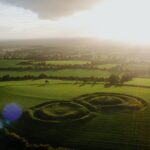
Hill of Tara is the kind of place where you immediately understand why people called it sacred ground. On the summit, you’ll find the Fort of the Kings, an Iron Age royal enclosure tied to ceremonial kingship. Inside the enclosure are two interlinked earthworks: Cormac’s House and the Royal Seat—like stepping into a designed political stage from long ago.
In the center of the Royal Seat sits a standing stone called the Lia Fáil, known as the Stone of Destiny. The legend is dramatic: when the true king stood at the stone, it would let out a screech said to be heard all over Ireland. Even if you treat the story as myth, the symbolism is powerful. You’re looking at a site where authority is tied to sacred meaning, not just power.
Why this stop is worth your time
This isn’t just a hill with ruins. It’s a statement about how leadership was imagined—ritual first, politics second. It also sets the tone for the rest of the day: later on, you’ll see monuments built to mark cycles of the year and the heavens.
Practical note: there’s walking involved up to the summit area, so wear shoes you trust on uneven ground and take your time.
Loughcrew Cairns: 5,000-Year-Old Stones and the Slieve na Caillaigh Legend
Loughcrew Cairns are spread across the hills, and the scale hits differently once you’re there. This is a Stone Age site dating back around 5,000 years, with monuments scattered through the terrain. The Irish name is Slieve na Caillaigh, which translates as mountain of the hag.
And yes, there’s a legend. In the story, a giant hag striding across the land drops her cargo of large stones from her apron, creating the cairns as she goes. Whether you love myths or roll your eyes at them, legends like this do something useful: they put a human voice onto otherwise silent stones.
How a guide helps here
A private guide matters at Loughcrew because the cairns can feel scattered if you’re just following signage. With context, you start seeing patterns—how the site sits in the hills, how the monuments connect to older ways of marking space, and why people treated these places as more than just rocks stacked in a field.
This stop is typically about one hour, which is enough time to take in the setting without turning it into a rushed sprint.
Dowth Passage Tomb: Winter Solstice Alignment You Can Actually Appreciate
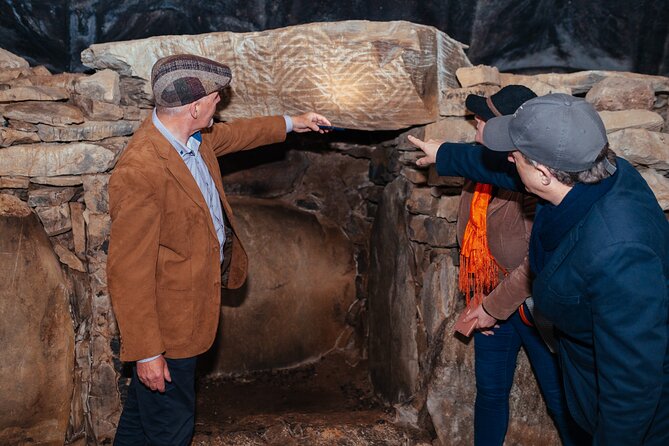
Dowth is one of the three principal tombs in the Brú na Bóinne World Heritage Site, and it deserves more attention than it usually gets. It may be less famous than some neighbors, but size-wise it’s comparable to both Newgrange and Knowth, which tells you the scale of ambition behind these burial monuments.
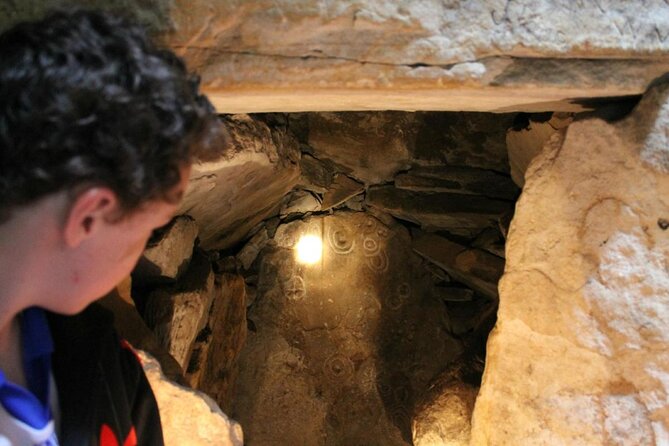
The standout detail is the winter solstice alignment. During the December solstice season, setting sunlight can penetrate the passage tomb and illuminate three stones within the central chamber. That’s the kind of design that’s hard to forget: it means these builders weren’t just burying people. They were building a structure that interacts with the year.
What to watch for
Even if you’re not visiting exactly on the solstice day, the point is still clear. You’re standing in a space engineered around light, not random burial architecture. When you understand that alignment, Dowth stops being a ruin and becomes a machine for meaning.
This stop also runs around one hour, giving you time to take the tomb’s structure in without feeling like the tour is rushing you onward.
Fourknocks Passage Tomb: Cold Hills, Cassiopeia, and a Smarter-than-You-Think Star Link
Fourknocks (near the village of Ardcath in County Meath) is the kind of stop that feels made for people who like details. The name comes from the Irish Fuair Cnoic, meaning cold hills. Like the other big passage tombs in the region, it dates back roughly 5,000 years.
Unlike locations that have a straightforward solar alignment, Fourknocks is described as being too far north for the same kind of direct solar effect. Still, the tomb aligns with the winter solstice sunrise direction towards Newgrange—and there’s another intriguing layer. In Stone Age times, it’s thought the passage tomb was aligned with the helical rising of the W-shaped constellation Cassiopeia. That may also help explain the dominance of W-shaped zig-zag engravings you can find connected to the site’s design language.
Why this matters for your understanding
This stop is a reminder that people were tracking cycles in more than one way: daylight, seasonal timing, and star patterns. It’s not just that they built monuments. They built monuments that matched what they were watching in the sky.
If you like astronomy-by-observation as part of archaeology, Fourknocks is one of the most satisfying stops in the day.
More guided Dublin outings with a local


Why This Private Format Feels Better Than the Big-Day Chaos
A private tour is often sold with the usual perks, but here’s what changes in real life. Instead of joining a queue of strangers shuffling through iconic places, you’re working with your own group’s pace and your guide’s explanation style. That means you can spend more time on the parts that make sense to you, whether that’s the kingship symbolism at Tara or the light-and-star alignments at the tombs.
This is also where the guide reputation comes in. A guide such as Michael Foxx is singled out for being professional and for making the day feel worth it—especially if your original plan was to focus on one major site and ended up needing a smarter rearrangement.
Think of it as value through time
The ticket part is nice (admission is free at each stop), but the real value is time management. An “icon-only” day can leave you wishing you’d seen more while you were already there. This route gives you multiple passage tombs and major ceremonial sites without turning your day into a nonstop bus-tour blur.
Price and Value: What $898.70 Covers for Up to 3
At $898.70 per group (up to 3 people), you’re paying for a private day built around transportation and a guide, not just admissions. If you’re traveling solo, it can feel steep—but that’s the private-touring price you’re choosing. If you’re traveling as two or three, the math changes fast because you’re splitting the cost while keeping the same calm, private pacing.
Here’s the value breakdown that actually matters to you:
- Private transportation in an A/C vehicle for the full route
- Bottled water included
- A guide who can explain what you’re seeing as you go
- Free admission at each stop, which reduces the number of surprise costs during the day
- Flexibility that comes with private timing, not a fixed crowd schedule
The one tradeoff: lunch isn’t included. That’s easy to plan around, but it is still a factor. If you’re trying to keep your total day cost low, you’ll want to bring snacks or plan a meal on your own before or after the tour.
Timing, Walking, and What to Bring for an 8-Hour Stone-and-Sky Day
This tour starts at 8:30am, which is a blessing and a headache. It’s a blessing because you’re out early, and early often means less stress. It’s a headache because you’ll want a solid breakfast and a plan for hunger by mid-afternoon.
You should also treat this as a moderate physical day. The tour asks for moderate physical fitness, which usually means some walking on paths and uneven ground, plus climbing up to viewpoints like Tara and moving through outdoor sites.
What to pack:
- Comfortable, grippy shoes
- A light layer for changing weather
- A small snack or extra water if you’re snacky (water is included, but lunch isn’t)
- A charged phone/camera (you’ll want to capture the setting)
Book It or Skip It? My Take
I’d book this tour if you want a private day that hits the core of the Boyne Valley experience: Hill of Tara, Loughcrew Cairns, Dowth, and Fourknocks—plus the explanations that connect them. It’s especially good if you’ve heard that the biggest single sites can turn into a stressful grind. The structure here helps you see more without feeling trapped in crowds.
I’d think twice if you’re traveling with very limited mobility or if you hate long sightseeing days with no included meal. In that case, you may want a shorter option.
If you fit the moderate-walking category and you’re traveling with up to two others, this is one of the cleaner ways to spend a day near Dublin: efficient routing, free admissions, and a guide who helps the stones mean something.
FAQ
What time does the tour start, and how long does it take?
The tour starts at 8:30am and runs for about 8 hours.
Is pickup included?
Yes. Pickup is offered. If you’re being picked up from an apartment or AirBnB, you’ll need to provide the full address including the Eircode.
Are admissions included for the sites?
Yes. Admission tickets are listed as free for each stop.
Is lunch included?
No. Lunch isn’t included, so you’ll want to plan your own food during the day.
How many people are in the group?
It’s a private tour. Only your group participates, up to 3 people.
What language is the tour offered in?
The tour is offered in English.
What’s the cancellation policy?
You can cancel for a full refund up to 24 hours before the experience’s start time.
If you cancel less than 24 hours before the start time, the amount you paid won’t be refunded.
More Tours in Dublin




More Tour Reviews in Dublin

Into the Boyne Valley


Fresh off the cobbles: the latest Dublin reviews
- Dublin Private Airport Transfer to Ireland
★ 4.5 · 3 reviews - Private Chauffeur Service From Dublin Airport to Killarney
★ 5.0 · 3 reviews - Ireland: 3-Day West Coast Explorer Tour
★ 5.0 · 3 reviews - From Dublin: 4-Day Southern and Western Coast Tour
★ 4.3 · 3 reviews - Dublin : Street Art Walking Tour
★ 5.0 · 3 reviews - Spring Tonic Foraging Tour
★ 5.0 · 3 reviews
Boyne Valley & Newgrange, compared.
 ★ 4.5Celtic Boyne Valley & Ancient Sites Day Tour From DublinFrom $84865 reviews
 ★ 4.7Boyne Valley with Newgrange and Bru Na Boinne EntryFrom $96635 reviews
 ★ 4.5From Dublin: Celtic Boyne Valley and Ancient Sites TourFrom $74618 reviews
 ★ 4.5Dublin to Newgrange, Monasterboice Small Group Guided ToursFrom $102500 reviews
 ★ 5.06 hour Half-Day Award Winning Private Tour of the Boyne ValleyFrom $67575 reviews
 ★ 4.1From Dublin: Belfast, Monasterboice & Birthplace of Titanic52 reviews
 ★ 5.0Private Tour of Newgrange and The Hill of TaraFrom $78034 reviews
 ★ 5.0Private Luxury Tour of Newgrange and The Hill of TaraFrom $1,02021 reviews
Browse the lists this tour appears in