
Reviewed · HISTORICAL TOURS
Bike Tour Along The Historic Waterways Of Dublin
Pedal through Dublin’s forgotten edges. I love the stretch along Dublin Bay on a newly completed cycle lane, and I also love how Ben brings the city’s parks and landmarks to life with clear, practical history. One thing to consider: some bikes can feel a bit old, and the seat comfort may not be ideal for a long day.
This is a private bike tour built for real movement—less sitting in traffic, more seeing the city from the inside lanes. You’ll get a safety helmet and high-visibility vest, and you’ll be cycling in an urban environment with frequent stops and short breaks to hop off, look around, and listen.
At $198.25 per person for a 5–8 hour route, it’s not a cheap impulse buy, but it can be good value because the bike and safety gear are included, and many stops have no extra admission. If you want a low-effort day with maximum variety—from nature reserves to major stadiums and Kilmainham—you’ll likely enjoy this more than a standard hop-on tour.
In This Review
- Key highlights you’ll feel right away
- Entering the route: Capel St start and how the day flows
- Dublin Bay cycle lane: history while the sea air hits
- Bull Island: the 200-year-old sea wall and a cafe with a story
- Guinness-family park lanes to Croke Park’s 83,000 seats
- Glasnevin Cemetery: one of the day’s most memorable guided stops
- John Kavanagh The Gravediggers: lunch time with local personality
- Tolka Valley Park and the enclosed park with red deer
- River Liffey and the Irish National War Memorial Gardens
- Kilmainham Gaol outside views, then Royal Hospital Kilmainham
- Croppies Acre and the Dublin skyline between institutions
- Price and what you really get for $198.25
- Who should book this Dublin waterways bike tour
- Should you book it?
- FAQ
- How long is the bike tour along Dublin’s historic waterways?
- Where does the tour start, and is pickup available?
- Is this tour private?
- Is lunch included?
- Are admission tickets included for Glasnevin and Kilmainham Gaol?
- What if the weather is poor?
Key highlights you’ll feel right away
A newly completed cycle lane along Dublin Bay with transport-infrastructure stories and sea air
Bull Island’s sea-wall cafe scene and the nature reserve formed by accident
Croke Park and the GAA story under one of Europe’s biggest stadiums
Glasnevin Cemetery guided tour time for quirky characters and serious history
Kilmainham area viewpoints and memorial stops along the Liffey and at Croppies Acre
More Dublin rides on two wheels
- Cycle Dublin – Bike & ebike Tours★ 5.0 · 748 reviews
- Dublin Panoramic e-Bike Tour with Howth Adventures★ 5.0 · 544 reviews
- Dublin: Bike & E-Bike Tour with a Local Guide★ 4.6 · 477 reviews
- E-Bike & Bike Tour with a Local Guide in Dublin★ 5.0 · 412 reviews
Entering the route: Capel St start and how the day flows
The tour meets at 37 Capel St in North City. If you’re staying within 1 km of the start, you can arrange a meeting spot near your accommodation—your guide can meet you up to 20 minutes before the scheduled start and walk you to the beginning point. That small detail matters. It reduces the stress of finding the exact start area in the morning rush.
Plan on a 5 to 8 hour day, depending on pacing and how long you linger at the stops. The pattern is straightforward: you ride between sites, then you pause for a story, a view, or a quick break. Some stops are short—often 5 to 10 minutes—while Glasnevin Cemetery gets a longer guided visit.
You’ll be cycling in Dublin proper, so you should have a reasonable fitness level and feel comfortable riding a bike through city traffic patterns, bike lanes, and intersections. The tour provides a helmet and high-visibility vest, which is exactly what you want when you’re spending hours moving through the city.
Dublin Bay cycle lane: history while the sea air hits
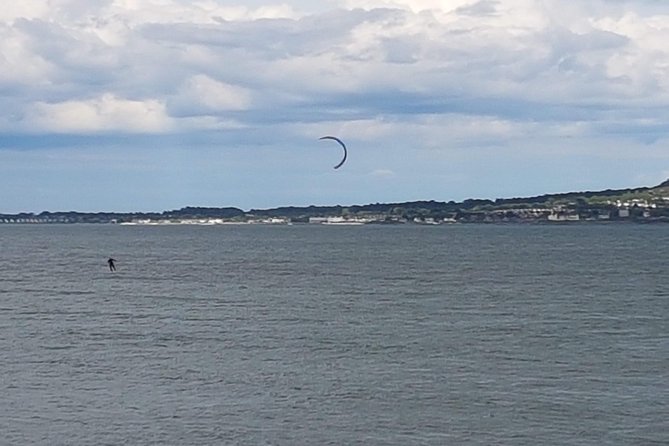
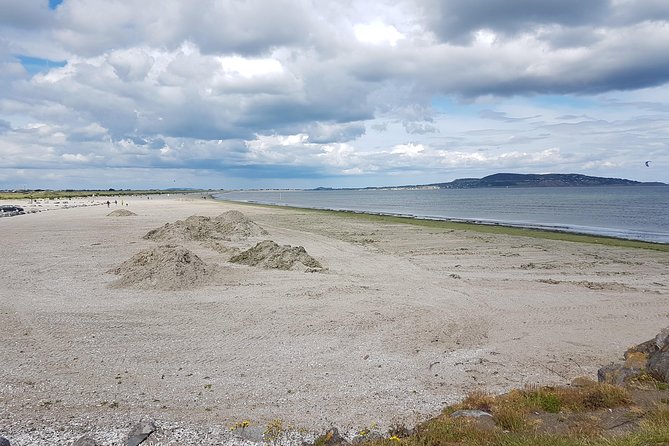
You start heading out along a newly completed cycle lane. This is one of those routes where the road design becomes part of the story. Your guide talks about the fascinating history of transport infrastructure here while you take in views of Dublin Bay.
Even if you’re not a history buff, this section works because it’s visual. You can look out toward the water, feel the breeze, and watch how the city’s movement systems shape where people go and how neighborhoods connect. It’s also a mental reset. Instead of staring at a tour bus window, you get to actually ride the route.
If you’re the type who likes photos, this is where you’ll want to slow down (as safely as you can) and take a few. The sea air also helps make the ride feel less like a chore and more like a proper day out.
Bull Island: the 200-year-old sea wall and a cafe with a story
Next up is Bull Island. This stop is built around a simple pleasure: sit down with a cuppa and a snack. The cafe sits on a sea wall that dates back about 200 years, and the history tied to it is fun in a slightly surprising way.
Your guide explains that the sea wall was instigated by Captain Bligh—yes, the Captain Bligh associated with Mutiny on the Bounty. You also learn how one of Ireland’s major nature reserves was accidentally formed. That accidental element is one of those details you remember later, because it flips the usual “someone planned this” assumption.
You get about 30 minutes here, and it’s a great moment to check in with your energy level. If you’ve been pedaling hard, this is where you can loosen up. If you need a caffeine hit, it’s also a nice option before the rest of the day starts piling on the landmarks.
A drawback to note: it’s a short break, not a long lunch. If you’re hungry later, you’ll need to plan for food during the tour (and lunch isn’t included).
Guinness-family park lanes to Croke Park’s 83,000 seats
After Bull Island, the ride continues through an elegant park associated with the Guinness family. You’ll cruise along tree-lined laneways at a relaxed pace, with time to look around rather than just keep moving.
This is a good example of what makes the tour different from a pure “must-see list.” You’re not only taking in the famous city names. You’re also seeing the green spaces and paths that make Dublin feel like Dublin.
Then you reach Croke Park Stadium. You’ll park and stand beneath the stadium’s 83,000 capacity—described as the third largest in Europe. More importantly, you don’t just get the size lesson. You hear the history of the Gaelic Athletic Association as the lifeblood of Irish communities, right back to its foundation nearly a century and a half ago.
There’s also a darker thread to the story: the nearly forgotten man who arguably did more than any to kickstart and shape the organization. That combination—sport, identity, and a human story that should matter—adds real weight to a place that can otherwise feel like just a sports venue.
This stop is about 15 minutes, so you get enough to feel the scale and hear the key stories, but you won’t be stuck standing around too long.
More of Dublin's history on foot
Glasnevin Cemetery: one of the day’s most memorable guided stops
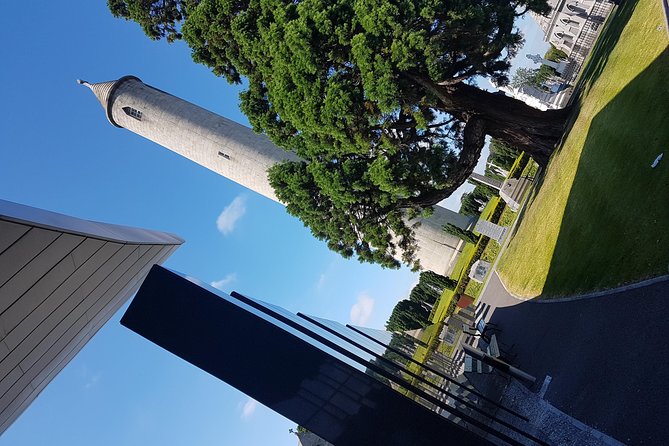
Glasnevin is where the tour slows down in a meaningful way. You join a public tour and spend about 1 hour 30 minutes inside Ireland’s National Cemetery.
Expect a mix of fanous, quirky, and sombre characters. This is not just walking among stones. It’s a guided experience where individual lives and odd details are brought forward—then placed against the larger context of Ireland’s past.
The big practical point: the admission ticket for Glasnevin isn’t included, so you should budget for that added cost. It’s also the one stop in the day where you might be standing still for a longer stretch, so it helps if you’re comfortable with that kind of pacing.
If you like history that feels personal—names, stories, and small details—this is likely to be a highlight. If you prefer purely scenic stops, you can still appreciate it, but you’ll want to go in ready to listen.
John Kavanagh The Gravediggers: lunch time with local personality
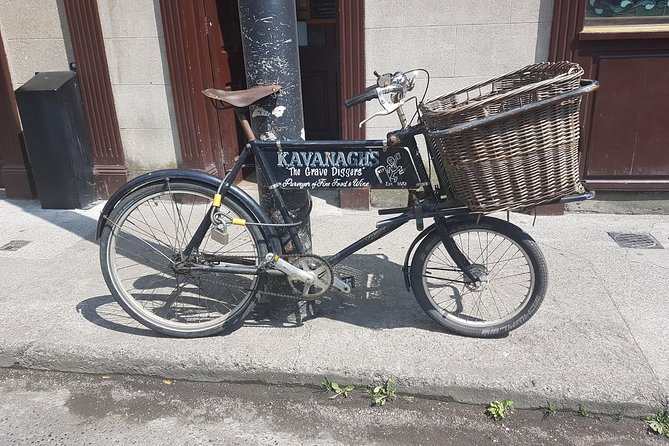
From Glasnevin, the tour moves to John Kavanagh The Gravediggers. You’ll have about 45 minutes here for a hearty lunch at the pub named after the hard-working folks who frequented it since it opened in 1833.
Lunch is not included, but this stop is helpful because it removes a common travel problem: finding something that fits your timing. You don’t have to hunt. You also get a classic Dublin pub setting tied to local history.
One small consideration: you’ll want to eat like you’re fueling for more cycling, not like you’re taking a nap. Choose something that won’t weigh you down, and leave room for the rest of the day’s stops.
Tolka Valley Park and the enclosed park with red deer
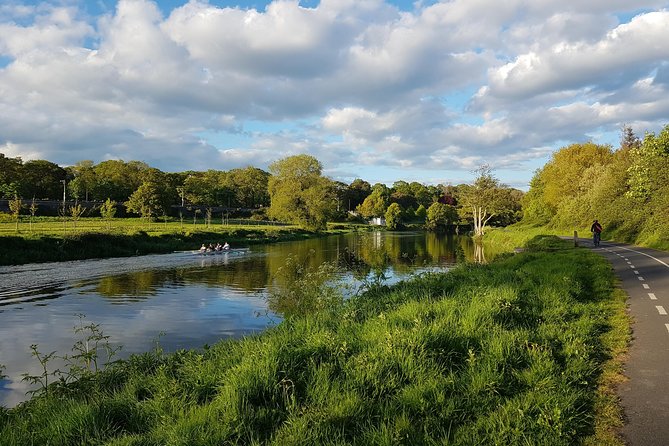
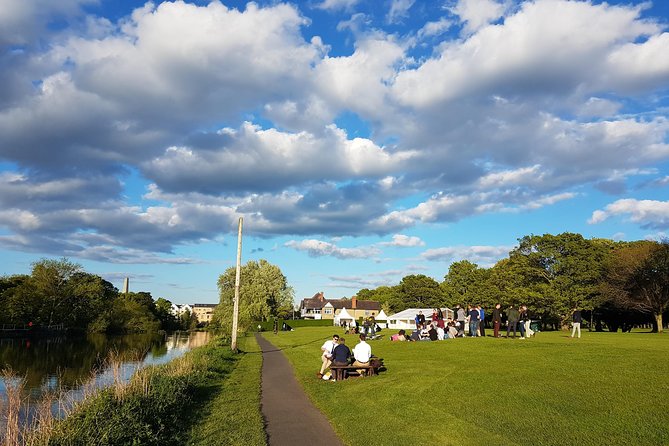
After lunch, you head toward Tolka Valley Park. This is described as a cycle path through lush green foliage, and it’s recently constructed. If you’re tired of straight-city riding, this section can feel like a breather.
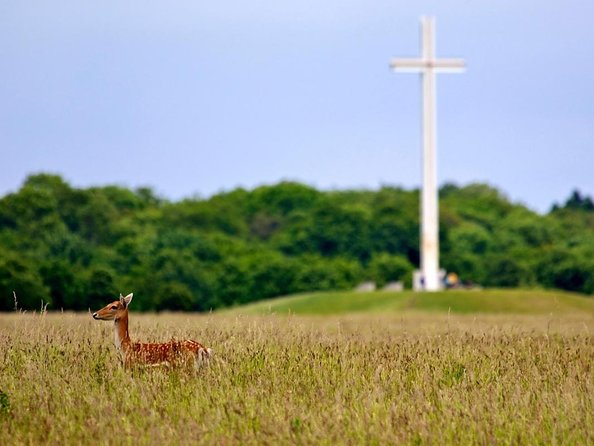
Then you enter the larger enclosed park tied to red deer. The tour focuses on the start of the park in 1662, when red deer were introduced—and the fact that they still roam there today. That’s a rare detail in a capital city: wildlife that isn’t just a zoo exhibit, but part of how the space functions.
Even though the stops here aren’t long, they change the tone of the day. You go from stadium and cemetery intensity to open-space riding. This can be a lifesaver if you get mentally tired of constant landmark stops.
River Liffey and the Irish National War Memorial Gardens
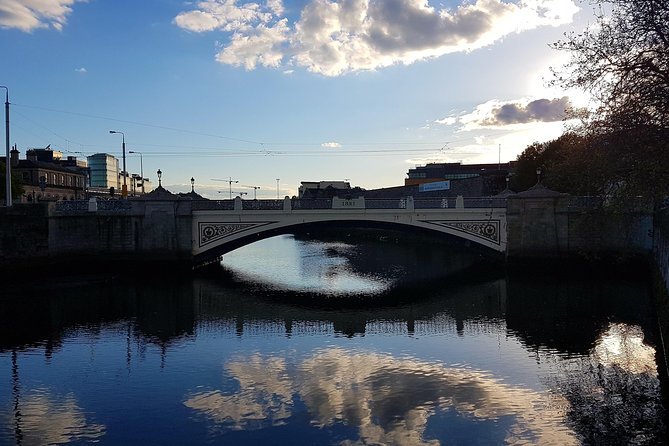
Next is the Irish National War Memorial Gardens. You cycle along a path by Dublin’s River Liffey, and you might even watch rowers pulling in on the river—another example of how the route gives you glimpses of daily life, not only sightseeing.
Here, you stop to salute 49,400 Irishmen who fought in World War 1—often forgotten or worse, in times past. Your guide shares a lesser-known story about an Irish Nationalist who escaped execution through cunning and guile, plus the significance of the two swans.
That swan detail is the kind of thing that makes a memorial visit feel less like reading a plaque and more like understanding a design choice, a symbol, and a story that was meant to be carried.
This stop is short (about 10 minutes), but it lands because it’s themed. It gives the day emotional texture, not only sight-seeing.
Kilmainham Gaol outside views, then Royal Hospital Kilmainham
The next stops bring you into the Kilmainham area. First, you have a brief stop outside Kilmainham Gaol, an 18th-century prison and now a major visitor attraction in Dublin.
You’ll hear the story of its different uses over time—from public executions through the Great Famine era, and the executions of leaders of the 1916 Rising. Kilmainham Gaol’s admission ticket isn’t included, and the tour doesn’t claim full entry here. Still, even a quick outside narrative can help you understand why so many people treat this area with a heavy sense of history.
Then comes Royal Hospital Kilmainham. Here, you get a picturesque view over public gardens that are replicas of the original laid out in the 17th century. Next to it is what was once a military hospital and is now the Irish Museum of Modern Art.
This pairing works well because it shows continuity. You’re moving from prison history to a place designed for care and structure, and now used for modern art. If you like architecture and how space changes jobs over time, this part can feel satisfying even if you don’t go inside.
Croppies Acre and the Dublin skyline between institutions
Your final stop is Croppies Acre Memorial Park. The tour describes it as a mass burial grave for victims of the 1798 Rebellion, based on legend.
You’ll also notice how the location plays visually against major neighbors: Collins Barracks National Museum on one side and the Guinness Brewery on the other. This is a clever ending point because it frames how Dublin’s different eras sit side by side.
You’ll spend only about 5 minutes here, so the goal is to take in the setting, absorb the story, and then finish the loop back at the original meeting point.
Price and what you really get for $198.25
$198.25 per person for a 5 to 8 hour private bike tour sounds like real money, so it’s fair to ask what makes it worth it.
Here’s where the value comes from:
- You get a bicycle plus a helmet and high-visibility vest included.
- Many major stops are set up so you don’t pay extra at every location (Croke Park, Bull Island cafe time, war memorial gardens, and multiple park stops are free).
- The route is built to move you across the city without having to do the tiring logistics of separate rides, parking, and getting from one site to the next.
What costs extra is also clear: lunch isn’t included, and tickets for Glasnevin Cemetery and Kilmainham Gaol aren’t included. So if you’re watching your total day budget, factor those in early.
Is it expensive? It can be. But if you want a guide who can tie together parks, stadiums, cemeteries, memorial gardens, and Kilmainham in one continuous ride—and you want to avoid sitting in traffic—this pricing starts to look more like you’re buying convenience plus expert storytelling.
Who should book this Dublin waterways bike tour
This is a great match if you:
- like biking and can handle an urban ride for several hours
- want a day that mixes nature, sports, and serious history
- appreciate a guide who explains not just what you’re seeing, but why those places matter
It’s less ideal if:
- you struggle with cycling in traffic environments
- you’re very sensitive to seat comfort on long rides
- you prefer a tour that is mostly entry-ticket sightseeing rather than a blend of riding and short guided stops
If you’re going with friends, remember it’s private. That can help you keep a steady pace and ask questions without feeling like you’re in someone else’s schedule.
Should you book it?
I think you should book this if you want Dublin in motion—waterways, parks, stadium scale, and Kilmainham context—without spending your day trapped in buses. The route is well paced for variety, and the stop choices give you emotional balance: sea air at Bull Island, community stories at Croke Park, reflective moments at Glasnevin and the war memorial gardens, and the heavy-but-important Kilmainham area.
Just do two things before you go: wear comfortable clothes for biking, and mentally plan for added costs at Glasnevin and Kilmainham Gaol plus lunch. Also, if bike seat comfort is a deal-breaker for you, bring that up in advance or be ready for the fact that this tour’s bike comfort varies.
FAQ
How long is the bike tour along Dublin’s historic waterways?
The tour runs about 5 to 8 hours, depending on how the day moves and the timing of each stop.
Where does the tour start, and is pickup available?
The meeting point is 37 Capel St, North City, Dublin, D01 X2E5, Ireland. If your accommodation is within 1 km of the start, your guide can meet you up to 20 minutes before the scheduled start and walk with you to the start location.
Is this tour private?
Yes. It’s a private tour/activity, meaning only your group participates.
Is lunch included?
No. Lunch isn’t included, though there is a lunch stop built into the day at John Kavanagh The Gravediggers with time to eat.
Are admission tickets included for Glasnevin and Kilmainham Gaol?
No. Admission tickets are not included for Glasnevin Cemetery and for Kilmainham Gaol. Other stops in the route are listed as free.
What if the weather is poor?
This experience requires good weather. If it’s canceled due to poor weather, you’ll be offered a different date or a full refund.
If you’d like, tell me your group size and when you’re traveling, and I can help you decide how to budget for lunch and the two ticketed sites.
More Dublin Bike Tours

More Tours in Dublin

More Tour Reviews in Dublin


Fresh off the cobbles: the latest Dublin reviews
- Dublin Private Airport Transfer to Ireland
★ 4.5 · 3 reviews - Private Chauffeur Service From Dublin Airport to Killarney
★ 5.0 · 3 reviews - Ireland: 3-Day West Coast Explorer Tour
★ 5.0 · 3 reviews - From Dublin: 4-Day Southern and Western Coast Tour
★ 4.3 · 3 reviews - Dublin : Street Art Walking Tour
★ 5.0 · 3 reviews - Spring Tonic Foraging Tour
★ 5.0 · 3 reviews
Historical Tours, compared.
 ★ 5.0Dublin Historical Centre Food Tour with 8 Food Tastings & DrinksFrom $1251,718 reviews
 ★ 5.02-Hour Historical Walking Tour from DublinFrom $22875 reviews
 ★ 4.7Historical 2-Hour Guided Walking Tour of DublinFrom $22865 reviews
 ★ 4.5Dublin to Cork, Blarney Castle & Cóbh Heritage Centre by trainFrom $195510 reviews
 ★ 4.8Jeanie Johnston Tall Ship Irish Famine History TourFrom $16431 reviews
Wicklow’s Historic Gaol Day TourFrom $14355 reviews
★ 4.8Jeanie Johnston Tall Ship Irish Famine History TourFrom $16431 reviews
Wicklow’s Historic Gaol Day TourFrom $14355 reviews
 ★ 4.3Dublin’s Haunted History Walking TourFrom $31345 reviews
 ★ 5.0Deliciously Dublin: The Artisan Donut Walking & History TourFrom $70329 reviews
Browse the lists this tour appears in