
Reviewed · HISTORICAL TOURS
2-Hour Historical Walking Tour from Dublin
Dublin’s streets pack centuries into a short walk. This 2-hour history tour gives you a guided timeline of how the city became what it is, from Trinity College through Viking Dublin, rebellions, and British rule, ending at Christ Church. Two things I really like: the guides are all history postgraduates and the stories stay practical enough to help you navigate the city later. One thing to consider: if you’re not in the mood for politics and deep historical context, the narration can feel dense—even though the guides are great at explaining it.
You’ll meet your guide by the Henry Grattan Monument on College Green, opposite Trinity College, and then move stop to stop at an easy walking pace. The group stays small (max 25), so you can actually listen and ask questions when something clicks. Plan on using good walking shoes and dressing for Irish weather—rain does not cancel the tour, it just tests your umbrella skills.
Key points I’d flag before you go
- Small group, big context: capped at 25 people, which helps the guide keep the flow.
- History-postgraduate guides: you’ll get informed, structured stories rather than random facts.
- A route you’ll reuse later: you pass major landmarks so you can return on your own.
- Book of Kells is not included: you’ll see Trinity, but that specific ticket is on you.
- Weather and focus matter: the tour is straightforward, but the content is best followed closely.
In This Review
- Price and Logistics: a fair deal for an in-depth intro
- Meet Your Guide at Grattan Monument: where the tour actually starts
- Stop 1: Trinity College Dublin and the Book of Kells question
- Stop 2: Bank of Ireland and the story behind neo-classical power
- Stop 3: Temple Bar’s repurposed lanes
- Stop 4: Wood Quay Amphitheatre and Viking Dublin
- Stop 5: Four Courts and the start of the Civil War in 1922
- Stop 6: Christ Church Cathedral from 1030 to Strongbow
- Stop 7: City Hall and Daniel O’Connell, the Liberator
- Stop 8: Dublin Castle and the name Dublin itself
- What the guides are like: stories that stay easy to follow
- How much walking and how weather affects your day
- Who this tour suits best (and who might want a lighter option)
- Should you book the 2-Hour Historical Walking Tour from Dublin?
- FAQ
- How long is the Dublin historical walking tour?
- How much does the tour cost?
- Where do I meet the guide?
- Where does the tour end?
- Is the tour in English?
- How many people are in a group?
- Is the Book of Kells entry included?
- Do I need a ticket on my phone?
- What physical level should I expect?
- Can I bring a service animal?
- What is the cancellation policy?
Price and Logistics: a fair deal for an in-depth intro
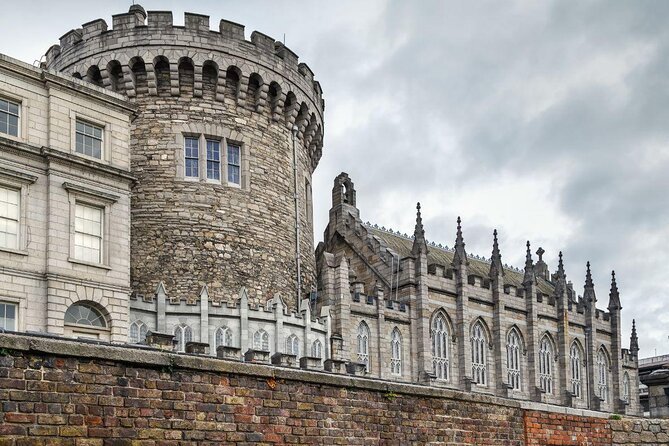
At $22.98 per person for about two hours, this tour is priced like a budget-friendly “get oriented fast” option, not a premium museum day. The value comes from two places: you’re paying for a guide who’s specifically trained in history, and you’re walking between several of Dublin’s most important sites without paying for most stop access.
The tour also makes sense when your schedule is tight. You’ll spend roughly two hours with the guide and then have the rest of your day free—perfect if you want time for Temple Bar, a pub meal, or just roaming without a plan. On average, it’s booked around 21 days in advance, so if you’re traveling in peak times, I’d grab a spot sooner rather than later.
Logistically, you’ll use a mobile ticket, and confirmation is provided at booking. The tour is in English and is close to public transportation. Service animals are allowed, and the physical level is described as moderate—so comfortable walking shoes matter, but this isn’t described as a punishing hike.
One more practical note: the itinerary ends at Christ Church Cathedral (Christchurch Pl, Wood Quay area). That’s a nice finish point because it’s central and easy to continue your day from there.
More Dublin walks at an easy pace
- Dublin Highlights and Hidden Gems Guided Walking Tour★ 5.0 · 6,020 reviews
- Dublin: Highlights and Hidden Gems Walking Tour★ 4.9 · 2,140 reviews
- 1916 Rebellion Walking Tour★ 5.0 · 1,605 reviews
- 90 Minute Dublin Walking tour and Sightseeing tips★ 5.0 · 916 reviews
Meet Your Guide at Grattan Monument: where the tour actually starts
The starting point is simple once you know the landmark: Henry Grattan Monument on College Green, Dublin. The guide begins opposite Trinity College Dublin, meeting near the Grattan statue outside the front gate area (College Green side).
This matters because Dublin has multiple entrances and lots of foot traffic. If you arrive a little early, you’ll feel less rushed scanning faces. Also, if the weather’s nasty, you’ll want a few minutes to regroup under shelter before the tour begins.
The most helpful thing you can do is plan to stand close to the statue area rather than hunt for your guide farther down the street. When tours start at major sights like Trinity, “opposite the front gate” can get interpreted differently—being by the monument keeps you on the safe side.
Stop 1: Trinity College Dublin and the Book of Kells question
Your first stop is Trinity College Dublin, anchored at the campus’s history and its most famous artifact: the Book of Kells. You’ll learn why Trinity matters in Irish education (it dates to 1592) and how the Book of Kells became a symbol of cultural identity.
A key detail: entry to the Book of Kells is not included. So think of this as a guided primer at Trinity—context and storytelling included, but that particular ticket is on your own. The upside is that you’re not forced into a long museum-style wait during your walking tour. You get the narrative first, then you can decide later if you want to spend extra time inside.
Even if you’ve seen photos of the Book of Kells, this kind of opening stop is useful because it frames what you’ll notice during your next visit. The guide helps you connect the artifact to the wider story of Ireland’s past rather than treating it like a standalone spectacle.
Stop 2: Bank of Ireland and the story behind neo-classical power
Next up is the Bank of Ireland, a building with a surprisingly political past. The site was originally Ireland’s colonial parliament, built in 1729, and it was abolished by the Act of Union in 1800.
What I like about this stop is how the tour turns architecture into a clue. You don’t just admire a façade—you learn why this era mattered, especially through the lens of what people describe as Protestant Ascendancy in the 18th century. In other words, you start seeing buildings as evidence. Dublin isn’t only streets and churches; it’s power systems written in stone.
The stop itself is short (around 10 minutes), which keeps the walking tour moving. You’ll likely get one clear takeaway: this city’s “formal” buildings often have complicated origins.
Stop 3: Temple Bar’s repurposed lanes
Temple Bar is next, and it’s one of those places where tourists often land without knowing why the neighborhood exists in its current form. Here, you get the origin story: the area was once earmarked for demolition, then repurposed as Dublin’s Cultural Quarter in the 1990s.
That’s a neat reminder that neighborhoods are social projects. Places like this don’t just appear—they’re planned, marketed, protected, or rebuilt depending on the priorities of a given era.
The walking time is brief (around 10 minutes), so don’t expect a full deep history lesson here. Instead, treat it as a framing stop. After the tour, you’ll recognize the neighborhood’s transformation and can roam more intentionally.
More of Dublin's history on foot
Stop 4: Wood Quay Amphitheatre and Viking Dublin
At Wood Quay Amphitheatre, the tour shifts from visible architecture to layers of buried history. Wood Quay is tied to archaeological excavation in the 1980s that uncovered evidence of a Viking city founded in AD 840.
This is the kind of stop that changes how you look at a place. Once you hear that Vikings established the city’s roots in the 9th century, Dublin’s map feels more connected. You stop thinking of the city as only “medieval and later” and start picturing older streets under your feet.
The stop is brief (around 10 minutes), but it’s powerful because the guide uses the evidence to help you picture what life could have been like. It’s also a strong “bridge” from early history into the later centuries that shaped modern Dublin.
Stop 5: Four Courts and the start of the Civil War in 1922
At Four Courts, you’re in Ireland’s legal headquarters, but the story on your route isn’t about courts as a concept—it’s about courts in a moment of violence. The tour points to June 1922, when a Civil War started between those who supported and those who opposed the Treaty of December 1921, which had ended the War of Independence (1919–1921).
This is one of the stops where the tour’s tone can feel more intense. If you like politics (or even if you’re just curious why things changed), you’ll probably find the framing helpful. If you prefer a lighter walk focused mostly on culture and daily life, this section is where you might feel the content gets heavier.
The stop lasts about 20 minutes, which gives the guide time to connect the dots instead of dumping facts and moving on. It’s also a good example of why this tour can be better at the start of your trip than later: once you understand the political timeline, you’ll recognize it showing up again in museums, landmarks, and even street names.
Stop 6: Christ Church Cathedral from 1030 to Strongbow
Christ Church Cathedral is Dublin’s oldest cathedral, dating back to 1030. Your guide also covers the rebuild in stone in the 1170s by Strongbow, who played a major role in the original English invasion of the 1170s.
This is a stop that connects religion, conquest, and long-term change. You’re not just visiting an old building—you’re seeing how major powers reshaped institutions and landscapes over centuries.
The tour time here is about 10 minutes. That’s enough to learn the main timeline and understand why the cathedral is more than a pretty landmark. You’ll also likely be able to explain to yourself later why it sits where it does in Dublin’s story of shifting control.
Stop 7: City Hall and Daniel O’Connell, the Liberator
Next is City Hall, where the focus is a statue of Daniel O’Connell, described as Dublin’s first Catholic Lord Mayor (1840). The guide connects O’Connell to his campaign for Catholic Emancipation in 1829, which helped end anti-Catholic laws—earning him the nickname The Liberator.
This is one of the stops where I think the tour’s pacing helps. The narration gives you a political figure, a clear goal, and a concrete result. It’s easier to hold onto a person-and-outcome story than a list of dates.
The stop is about 10 minutes. Still, the message sticks: Dublin’s story isn’t only about invasions and battles; it’s also about legal equality and who got to participate in public life.
Stop 8: Dublin Castle and the name Dublin itself
The final stop is Dublin Castle. It was originally built by King John in 1204 and served as the seat of British administration until 1922.
Then comes a fun, big-picture detail: the tour explains the Dubh Linn, or Black Pool, from which Dublin’s name comes. That ties your walk to the city’s earliest naming and geography—how a specific place can turn into a whole identity.
The time here is about 10 minutes, so it’s a finish that feels like a close to a chapter rather than a final deep dive. Still, it’s a strong ending point because you leave with both political context (British administration until 1922) and a grounded origin story (Dubh Linn / Black Pool).
What the guides are like: stories that stay easy to follow
One of the biggest reasons this tour earns such strong marks is delivery. The guides are all history postgraduates, and it shows in the way they structure the route like a timeline.
From guide names shared through past experiences—Eoin, Jodie, Jody, Caolan, Daragh, John D., and Colm—you can see the pattern: the guides tend to be entertaining without turning the content into fluff. Several people highlight a clear, easy-to-hear voice and the ability to keep a group engaged even when the weather is freezing or rainy.
There’s also a consistent theme: the humor and small stories help you digest heavier politics. Some stops are straightforward; others are the kind of history that can feel dense if you don’t slow down and listen. But when the guide does it well, the complexity turns into a storyline you can follow—plus it makes later museum visits feel less overwhelming.
How much walking and how weather affects your day
The tour lasts around two hours and includes real city walking between stops. That’s long enough to matter for comfort, but short enough that it doesn’t dominate your schedule. The experience is described as requiring moderate physical fitness, and several comments point out it’s not a sprint—just a steady walk.
The weather in Dublin can shift fast, so wear layers and expect wind or rain. If it’s cold, you’ll want gloves or at least something warm enough to keep your attention on the guide instead of your own shivering.
One more practical tip: this is the kind of tour where listening matters. If you tune out during the more political sections, you’ll miss why later stops make sense.
Who this tour suits best (and who might want a lighter option)
This tour is a strong match if you:
- Want an organized, historical map of Dublin and Ireland’s major turning points
- Like politics, religion, invasions, and the way power changes cities
- Enjoy learning from a guide with serious training, not just casual commentary
- Want a start-of-trip orientation so you can return to sites later
It might feel less ideal if you prefer:
- A mostly cultural walking tour with minimal political context
- A slower pace with lots of free time at each stop
- A lighter overview that avoids timelines and complicated historical relationships
Also, it’s described as probably not tailored for very young children, since you’ll be hearing detailed historical explanations for the full stretch.
Should you book the 2-Hour Historical Walking Tour from Dublin?
Book it if you want to understand Dublin beyond postcards. For $22.98, you get a small-group walking route, a history-trained guide, and the kind of context that makes landmarks click later in your trip. It’s also a good first-day activity because the route helps you orient yourself quickly.
Skip it (or swap to a lighter option) if you hate politics in your sightseeing. This tour is historical and it leans into the difficult parts of Ireland’s past. Done right, that’s exactly what makes it memorable.
If you’re the type who enjoys connecting the dots—Vikings to medieval change, colonial parliament to independence, and legal headquarters to Civil War—you’ll probably love this walk. Just bring warm clothes, good shoes, and your full attention for a couple of hours.
FAQ
How long is the Dublin historical walking tour?
It runs for about 2 hours.
How much does the tour cost?
The price is $22.98 per person.
Where do I meet the guide?
Meet at the Henry Grattan Monument on College Green, Dublin, Ireland, opposite the front gate of Trinity College.
Where does the tour end?
The tour ends at Christ Church Cathedral on Christchruch Pl, Wood Quay, Dublin (D08 TF98).
Is the tour in English?
Yes, it’s offered in English.
How many people are in a group?
The tour has a maximum of 25 travelers.
Is the Book of Kells entry included?
No. Entry to the Book of Kells is not included.
Do I need a ticket on my phone?
You’ll receive a mobile ticket.
What physical level should I expect?
You should have a moderate physical fitness level. It involves walking between multiple stops.
Can I bring a service animal?
Yes, service animals are allowed.
What is the cancellation policy?
You can cancel for free up to 24 hours in advance for a full refund. If you cancel less than 24 hours before the start time, the amount paid is not refunded.
More Dublin Walking Tours





More Tours in Dublin





More Tour Reviews in Dublin



Fresh off the cobbles: the latest Dublin reviews
- Dublin Private Airport Transfer to Ireland
★ 4.5 · 3 reviews - Private Chauffeur Service From Dublin Airport to Killarney
★ 5.0 · 3 reviews - Ireland: 3-Day West Coast Explorer Tour
★ 5.0 · 3 reviews - From Dublin: 4-Day Southern and Western Coast Tour
★ 4.3 · 3 reviews - Dublin : Street Art Walking Tour
★ 5.0 · 3 reviews - Spring Tonic Foraging Tour
★ 5.0 · 3 reviews
Historical Tours, compared.
 ★ 5.0Dublin Historical Centre Food Tour with 8 Food Tastings & DrinksFrom $1251,718 reviews
 ★ 4.7Historical 2-Hour Guided Walking Tour of DublinFrom $22865 reviews
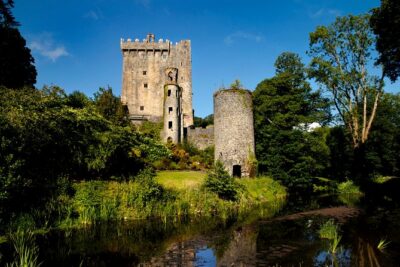 ★ 4.5Dublin to Cork, Blarney Castle & Cóbh Heritage Centre by trainFrom $195510 reviews
 ★ 4.8Jeanie Johnston Tall Ship Irish Famine History TourFrom $16431 reviews
Wicklow’s Historic Gaol Day TourFrom $14355 reviews
★ 4.8Jeanie Johnston Tall Ship Irish Famine History TourFrom $16431 reviews
Wicklow’s Historic Gaol Day TourFrom $14355 reviews
 ★ 4.3Dublin’s Haunted History Walking TourFrom $31345 reviews
 ★ 5.0Deliciously Dublin: The Artisan Donut Walking & History TourFrom $70329 reviews
 ★ 4.5Hidden Dublin: Haunted History Walking Tour v2.0 2026From $30188 reviews
Browse the lists this tour appears in