
Reviewed · IRISH MUSIC & DANCE
Dublin Traditional Irish Music Walking Tour with Live Performance
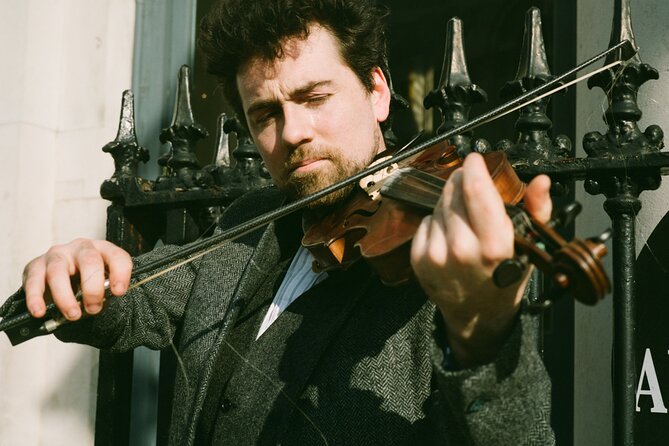
Irish songs turn Dublin streets into a timeline. This 2-hour walk strings live traditional music to major sights, with an acclaimed Irish musician explaining what you’re seeing as they sing folk ballads. I especially like how the route links iconic stops like Temple Bar and Christ Church Cathedral to smaller historic lanes you’d miss on your own.
The only real drawback to plan for is sound and meeting-point confusion. Temple Bar is crowded, streets are noisy, and if you end up in the wrong group or too far back, you may struggle to hear the lyrics clearly.
On the plus side, the pace is friendly: short stops (about 10 minutes each), a small group (max 20), and lots of photo moments of Dublin’s church spires, castle steps, and river views.
In This Review
- Key moments that make this tour click
- Why a music-led walk changes Dublin fast
- Price and timing: what you’re really paying for
- Meeting at Temple Bar: get your bearings in 5 minutes
- Smock Alley Theatre (1662): Ireland’s oldest theatre, right in Temple Bar
- Grattan Bridge and the River Liffey: picture-perfect, and still story-driven
- Fishamble Street: Vikings, Handel, and Dublin’s earliest performance pulse
- Christ Church Cathedral: medieval Dublin with the songs turned darker
- Dublin Castle area and the famous steps: seeing power up close
- St Patrick’s Cathedral finish: a calm landing after the stories
- What the live performance feels like (and how to enjoy it more)
- Who should book this tour?
- Should you book the Dublin Traditional Irish Music Walking Tour?
- FAQ
- FAQ
- Where is the meeting point for the Dublin Traditional Irish Music Walking Tour?
- How long is the tour?
- What is the price per person?
- Do I need a paper ticket or can I use a mobile ticket?
- What landmarks are included on the route?
- Is there a cost to enter any stops?
- How big is the group?
- Is it suitable for most people?
- Where does the tour end?
Key moments that make this tour click
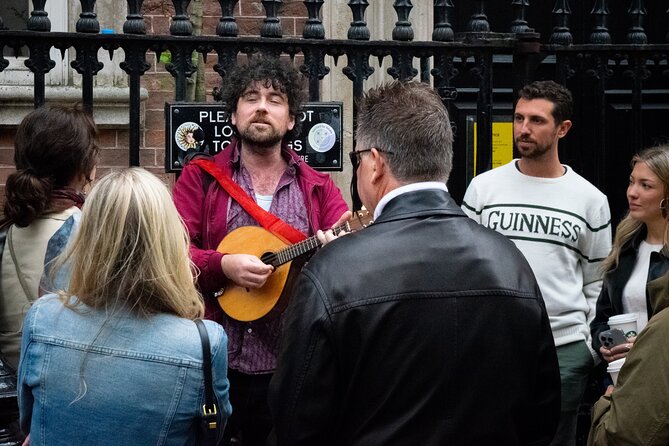
- Live folk music tied to each stop, not music in the background
- Temple Bar start at 3 Crown Alley, right in the center of the action
- Smock Alley Theatre 1662, Ireland’s oldest theatre, with a free admission ticket
- Fishamble Street details, including the Viking settlement story and the first performance of Handel’s Messiah
- Cathedral “darker side” storytelling through song at Christ Church Cathedral
- Finish at St Patrick’s Cathedral, with the walk ending in St Patrick’s Park
More trad sessions and Irish dance nights
- Belvedere Irish Night Show, Dance and Traditional 3-Course Dinner★ 4.5 · 1,171 reviews
- The Irish Dance Party in Dublin★ 5.0 · 918 reviews
- Dublin: Music and Dance Show at The Irish House Party★ 4.8 · 744 reviews
- Dublin: Irish Music and Dance Show with Dance Lesson★ 4.7 · 567 reviews
Why a music-led walk changes Dublin fast
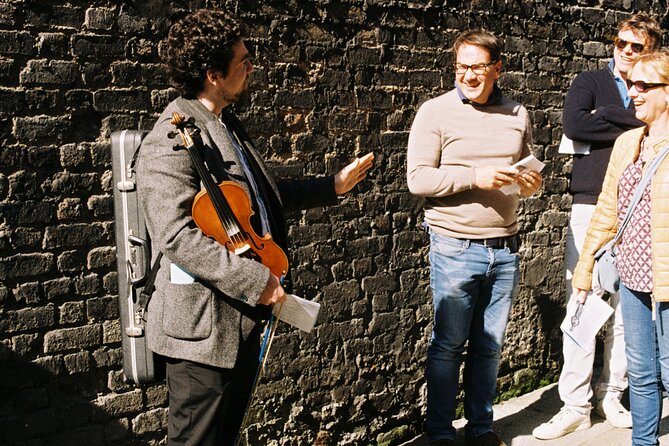
Most walking tours tell you what a building is. This one tells you why people cared—using songs, poems, and stories that connect the setting to real social life, not just dates on a plaque.
That matters in Dublin. The city is all layers at once: medieval streets beside Georgian facades, church towers beside pub doors, and river views that still shape where people gather. When you hear a traditional tune at the exact spot where the story belongs, the place becomes easier to understand. You’re not just sightseeing; you’re getting a soundtrack for the city.
And the guide is the engine. Feedback often praises Irish musician-led tours where the guide is funny, musical, and comfortable answering follow-up questions. Names that show up in past experiences include Ciarán, Dylan, Shaun, and Sean—each credited with connecting songs to Dublin’s stories rather than treating music as a separate act.
Price and timing: what you’re really paying for
At $27.81 for about two hours, this isn’t a “grab a quick photo and go” add-on. You’re paying for two things you can’t DIY easily: a guided route across historic landmarks and a live performance that’s built into the walking schedule.
Two practical reasons it feels good value:
- You get multiple major sights in a compact window: Temple Bar, Christ Church Cathedral, Dublin Castle area, and St Patrick’s Cathedral.
- The music is part of the method, so you’re not just listening while you walk—you’re often hearing the song as the story lands.
It’s also typically booked about 32 days in advance on average, which usually means it runs often enough that you can plan ahead without panic. And since the tour is capped at 20 people, it’s designed to keep the performance close enough to matter.
Meeting at Temple Bar: get your bearings in 5 minutes
The tour starts at 3 Crown Alley, Temple Bar, Dublin (D02 CX67) at 1:00 pm. That’s a busy, central area, and that’s the point: you’re right where visitors and locals already flow.
Here’s how I’d handle the one possible snag: arrive a little early and confirm you’re with the correct group. One past experience described a mix-up where two different tours met at the same general area, and the result was waiting without hearing the music. You can prevent most of that stress by doing two simple things:
- Look for the guide and the instrument right at the meeting point.
- If groups seem to be splitting, ask directly which one is the Irish music walking tour.
Once you’re with the right group, the flow kicks in quickly—short walks, fast context, and frequent “look up here” moments.
Smock Alley Theatre (1662): Ireland’s oldest theatre, right in Temple Bar
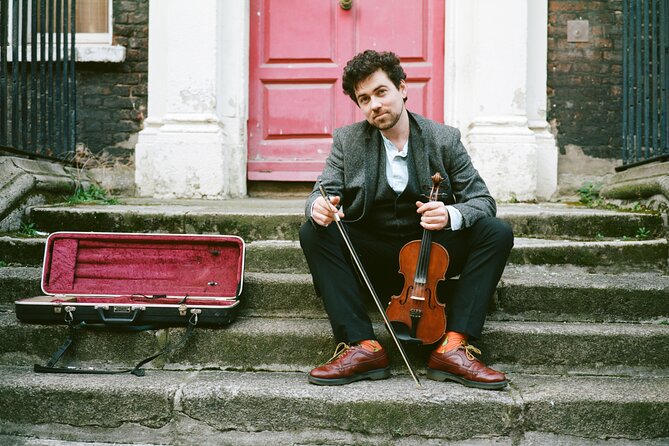
The first stop is Smock Alley Theatre (1662) for about 10 minutes. It’s described as Ireland’s oldest theatre and it sits in the heart of Temple Bar, which means you get an immediate sense of Dublin’s long performance tradition.
What’s especially useful here is that you’re not just walking past an old building—you’re getting a performance lens. If you’re the type who loves how art and society interact, this opening makes the rest of the tour click, because the guide is already thinking in terms of song, stage, and storytelling.
Admission is noted as free with an admission ticket at this stop, so you don’t need to budget extra. The time is short, though—so don’t expect a full theatre tour. This is more about getting your bearings and letting the guide set the tone.
More Dublin walks at an easy pace
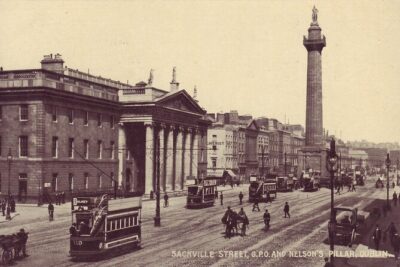
Grattan Bridge and the River Liffey: picture-perfect, and still story-driven
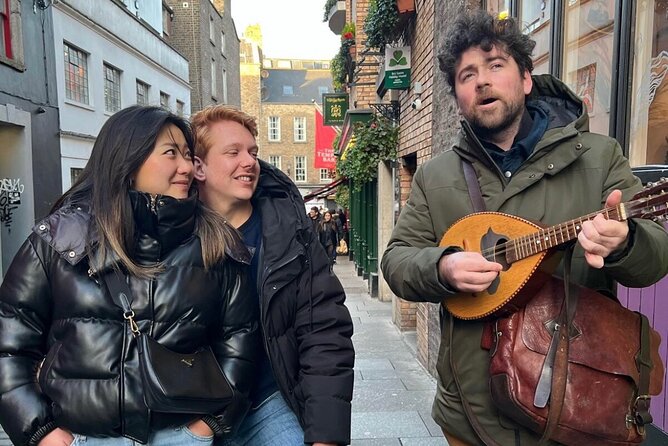
Next you’ll walk to Grattan Bridge, another 10-minute stop. The bridge is known for being picturesque and connected to the flow between Capel Street and Parliament Street, and it’s adorned with seahorse lanterns.
This stop matters because the river is Dublin’s oldest “organizing feature.” Even when you’re dealing with medieval lanes, the Liffey is the geographic reason certain areas grew and certain streets became corridors of movement.
It’s also a great photo moment. If your phone camera is ready, grab a few shots here. The light over water can be great, and the bridge design gives you something more interesting than the usual skyline view.
Fishamble Street: Vikings, Handel, and Dublin’s earliest performance pulse
Then you’ll head to Fishamble Street, often described as Dublin’s oldest street. The stop is about 10 minutes, and it comes with two big historical hooks:
- It was once home to the largest Viking settlement found outside Scandinavia.
- It’s famed as the site of the first ever performance of Handel’s Messiah.
That combination is more than trivia. It shows how Dublin’s “performance DNA” has stretched across eras and cultures. Vikings show up in one breath, and in the next, you’re hearing about Handel’s Messiah—meaning this street isn’t just old; it’s repeatedly been a stage for major public moments.
In a tour like this, the value is that the guide often links those facts back to why songs mattered in everyday life—community identity, religion, politics, and public gatherings. If you like hearing the “why” behind the “what,” this is a highlight.
A small practical note: street noise can be an issue around Temple Bar and nearby lanes. If you want to catch the lyrics clearly, try to stand where the group is naturally tighter and closer to the guide.
Christ Church Cathedral: medieval Dublin with the songs turned darker
The centerpiece for many people is Christ Church Cathedral, listed as the heart of medieval Dublin. The stop lasts about 10 minutes and is described as exploring some of the cathedral’s darker side through song.
This is where the tour’s format really shines. A cathedral can feel like a museum stop if you’re not careful. Here, the guide uses music as a way to connect atmosphere to meaning—why certain stories stuck, how power and community shaped what people sang, and how the building carried more than just worship.
Also, the area around the cathedral gives you layered views: medieval structure and later Victorian splendor in the same frame. That helps you photograph with context rather than snapping a single pretty spire.
If you tend to enjoy “stories with mood,” this one is worth showing up for. Even if you’re not a music superfan, you’ll likely appreciate the way songs can sharpen the emotional tone of the architecture.
Dublin Castle area and the famous steps: seeing power up close
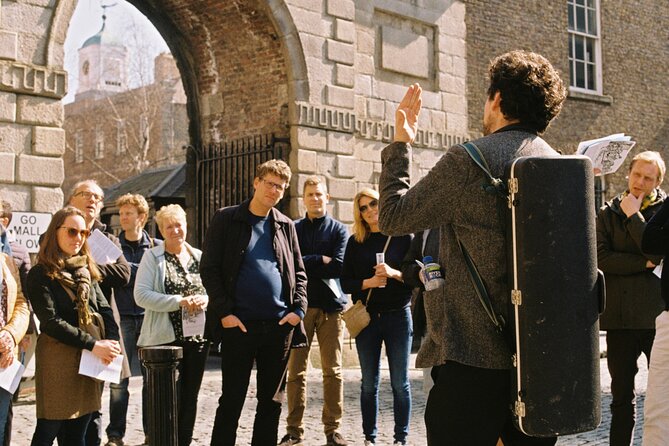
Next up is a walk-by of Dublin Castle, about 10 minutes. You’ll swing by the Ship Street Gate area for a look at some of the city’s most famous steps.
This stop is less about extended entry and more about sightlines. Castle steps are a Dublin symbol for a reason: the idea of authority, ceremonies, and public life. And because the guide is linking history through performance, you tend to see the castle not just as a monument, but as a place where events and public life unfolded.
It’s also a nice contrast to the cathedral. Churches often represent spiritual community and tradition, while castle grounds point to governance and control. The guide’s song choices usually help stitch that contrast together so it feels like one story, not separate stops.
St Patrick’s Cathedral finish: a calm landing after the stories
The tour ends at St Patrick’s Cathedral, with the finish in St Patrick’s Park adjacent to the cathedral. The final stop is about 10 minutes, and the pacing here generally feels like a wrap-up.
This ending works because it gives you a “landing zone” after a walking stretch of tight streets, bridge views, and heavier themes. Even if you’re tired, you get to stop near one of Dublin’s best-known church landmarks and let the last song land before you head off to your next plan—usually a pub, meal, or another self-guided walk.
If you want to keep the momentum going, use the finish point as a starting line for exploring nearby streets on your own. You’ll have context in your head now, which makes the city feel less like a blur.
What the live performance feels like (and how to enjoy it more)
The best reviews keep returning to the same ingredients: humor, strong connection between song and story, and a guide who performs like they mean it. People often mention that guides sing traditional songs in ways that reinforce what they’re saying—stories in one breath, lyrics in the next.
Some tours also include interactive moments, including group sing-alongs and even some dancing cues in the spirit of traditional music. One past experience notes that a person initially didn’t feel like participating at the start, then ended up joining in by the end. Translation for you: the tour seems to offer a social experience without forcing you to do anything extreme.
To make sure you catch the music clearly, here are practical moves:
- Stand closer to the guide during songs, especially at busy streets.
- If you struggle with hearing, choose a side spot where sound carries better within the group.
- Don’t wait until the song starts to move; you want a comfortable position before the guide begins.
And yes, there can be occasional hiccups. One experience described a guide arriving late and starting later than expected. Those situations seem rare, but if your schedule is tight, plan buffer time for a late start by a few minutes.
Who should book this tour?
This is a great match if you want Dublin to feel like a living place, not a checklist. I’d point you here if you:
- Love traditional music or want a first taste of it tied to real locations
- Prefer guided context over reading plaques alone
- Like small-group walking tours where the guide can actually interact with people
- Want a compact route that still includes big hitters like Christ Church Cathedral and St Patrick’s Cathedral
It’s also a strong choice for your first Dublin visit. The route centers on well-known landmarks while still pulling you through the lanes that make the city feel real.
Should you book the Dublin Traditional Irish Music Walking Tour?
Book it if you want story + song in one package and you’re okay with a little street noise being part of the experience. The value is in the live performance shaping how you understand each stop, from Smock Alley Theatre to the cathedral finish.
Skip or think twice if you’re very sensitive to hearing lyrics in loud outdoor settings, or if you’re the kind of person who prefers silent sightseeing and minimal crowd interaction. Also, because there’s been at least one real mix-up reported around Temple Bar meeting logistics, give yourself a few extra minutes and make sure you’re with the correct music tour group.
If you’re flexible, this is the kind of Dublin activity that can turn into a highlight—especially if you enjoy the idea of learning a city through its songs, not just its stone.
FAQ
FAQ
Where is the meeting point for the Dublin Traditional Irish Music Walking Tour?
The tour starts at 3 Crown Alley, Temple Bar, Dublin, D02 CX67, Ireland, and the start time is 1:00 pm.
How long is the tour?
The duration is about 2 hours.
What is the price per person?
The price listed is $27.81 per person.
Do I need a paper ticket or can I use a mobile ticket?
You use a mobile ticket.
What landmarks are included on the route?
You’ll stop at Smock Alley Theatre (1662), Grattan Bridge, Fishamble Street, Christ Church Cathedral, an area by Dublin Castle (Ship Street Gate), and you finish at St Patrick’s Cathedral/St Patrick’s Close.
Is there a cost to enter any stops?
Smock Alley Theatre (1662) notes admission ticket access as free. The other listed stops are time for viewing/exploration while walking the route.
How big is the group?
The tour has a maximum of 20 travelers.
Is it suitable for most people?
The tour states that most travelers can participate.
Where does the tour end?
The tour ends at St Patrick’s Cathedral, St Patrick’s Close, Dublin, D08 H6X3, Ireland.
More Tours in Dublin






More Tour Reviews in Dublin



Trad Music and Irish Dance




Fresh off the cobbles: the latest Dublin reviews
- Dublin Private Airport Transfer to Ireland
★ 4.5 · 3 reviews - Private Chauffeur Service From Dublin Airport to Killarney
★ 5.0 · 3 reviews - Ireland: 3-Day West Coast Explorer Tour
★ 5.0 · 3 reviews - From Dublin: 4-Day Southern and Western Coast Tour
★ 4.3 · 3 reviews - Dublin : Street Art Walking Tour
★ 5.0 · 3 reviews - Spring Tonic Foraging Tour
★ 5.0 · 3 reviews
Irish Music & Dance, compared.
 ★ 4.5Dublin Irish House Party Live Show, Dinner Option AvailableFrom $421,246 reviews
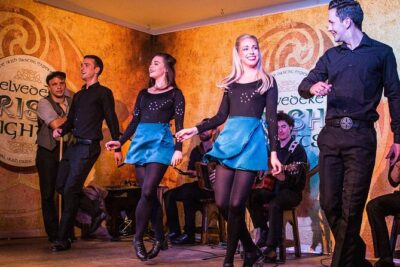 ★ 4.5Belvedere Irish Night Show, Dance and Traditional 3-Course DinnerFrom $561,171 reviews
 ★ 5.0The Irish Dance Party in DublinFrom $30918 reviews
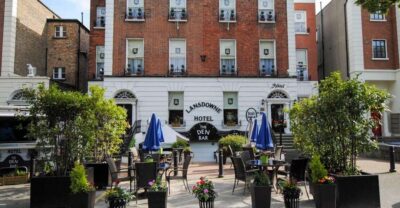 ★ 4.8Music and Dance Show at The Irish House PartyFrom $34744 reviews
 ★ 4.7Irish Music and Dance Show with Dance LessonFrom $28567 reviews
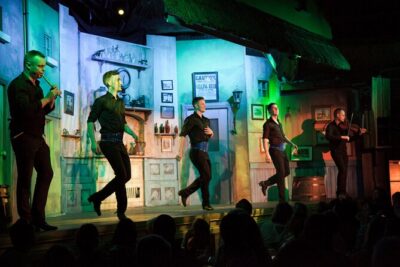 ★ 4.5Skip the Line: Irish Night Show Including 4-Course Dinner TicketFrom $102216 reviews
 ★ 4.7Irish Night Show at the Merry Ploughboy PubFrom $39208 reviews
 ★ 4.8Irish Music Walking Tour with Live PerformanceFrom $27137 reviews
Browse the lists this tour appears in