
Reviewed · HISTORICAL TOURS
Interactive Guided Tour of Printing History
A world-changing invention fits into one very human hour. At the National Print Museum in Dublin, you get the story of printing alongside real hands-on work, from old presses to making your own printed souvenir. It’s not a passive museum crawl; it’s interactive and a bit messy in a good way.
What I love most is the focus on hands-on printing rather than just staring at machines behind glass. You’ll also get a guided run through Ireland’s printed legacy, including an original 1916 Proclamation, plus the chance to compose your name in type and print a personalised poster to take home. That combination makes it feel worth your time.
One drawback to consider: the tour is only about 1 hour, so you’ll need to keep an eye on the clock if you want extra time to linger, read every label, or test every demo at a slower pace.
In This Review
- Key things to know before you go
- Printing in Dublin: what happens in about one hour
- National Print Museum: a working-feeling place, not a warehouse of objects
- Stop 1 at the heart of it: Gutenberg, the 1916 Proclamation, and why type mattered
- Hands-on printing: composing your name and making the poster
- Why the take-home poster is more than a souvenir
- Guides, delivery, and the energy of the small group
- Price and value: what $7.20 really buys you
- When to book and how to plan your day around it
- Nearby extras: cafe breaks and gift shop shopping
- Who should book this interactive printing tour
- Should you book this interactive printing tour?
- FAQ
- How long is the interactive printing history tour?
- Where does the tour start?
- What language is the tour offered in?
- How big are the groups?
- Do I get a ticket and do I receive it digitally?
- What can I expect to do during the tour?
- What is the cancellation window?
Key things to know before you go
- Working collection, not hands-off glass: you can interact with the printing setup during the tour.
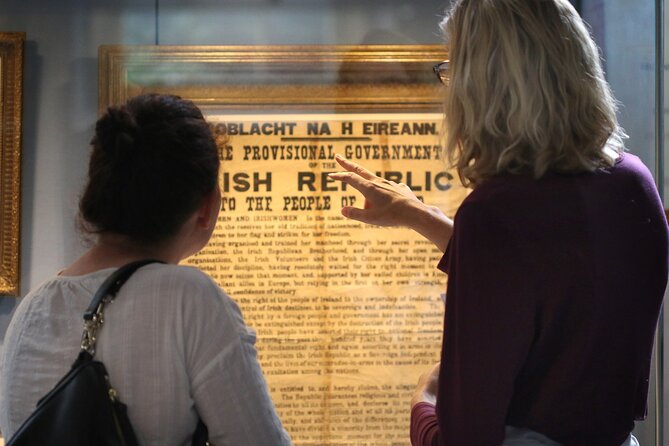
- A real centerpiece document: you’ll see an original 1916 Proclamation tied to Ireland’s history.
- Make-your-own souvenir: you’ll print a personalised poster from composed type.
- Small group size: capped at 10 travelers, so questions don’t get lost.
- Historically paced demos: you’ll see how printing worked across the last few centuries.
- Ink-on-your-hands energy: expect a playful, hands-first experience (not a quiet lecture).
More guided Dublin outings with a local
- Dublin Highlights and Hidden Gems Guided Walking Tour★ 5.0 · 6,020 reviews
- Dublin to Glendalough, Wicklow and Kilkenny Full Day Guided Tour★ 5.0 · 4,895 reviews
- Dublin Book of Kells, Castle and Molly Malone Statue Guided Tour★ 4.5 · 3,825 reviews
- Dublin Hop-On Hop-Off Bus Tour with Guide and Little Museum Entry★ 4.5 · 3,327 reviews
Printing in Dublin: what happens in about one hour
This tour is built like a tight lesson with a practical payoff. In roughly 1 hour, you’ll move through the big ideas of printing history and then switch gears to actual typesetting and printing. The point isn’t to turn you into a printer by the end. The point is to help you feel what changed when printing became repeatable, fast, and spreadable.
You’ll start with the origins—Johannes Gutenberg’s invention of the printing press in 1439—and then follow the chain of impact into Ireland’s own story. You’ll also learn why printing isn’t just about books and art. It’s about politics, communication, and power: who gets to publish, what gets copied, and how fast ideas move.
The tour format is friendly for first-timers. Most people can participate, and it’s scheduled in English. If you like museums that ask you to do something, not just look, this fits well.
National Print Museum: a working-feeling place, not a warehouse of objects
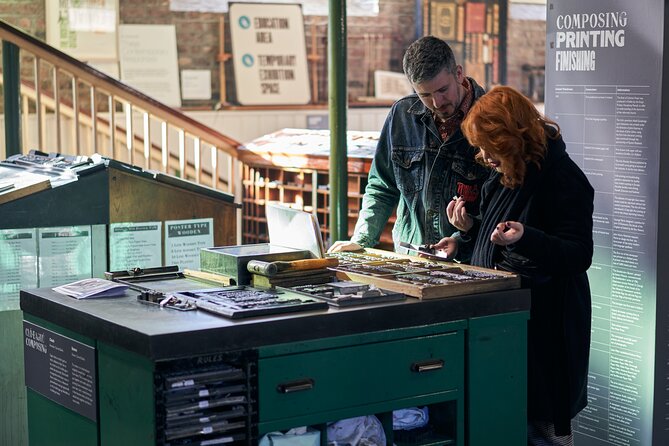
The National Print Museum has a layout that supports learning by doing. Instead of most exhibits being shut behind barriers, the museum is set up so the printing process feels “alive” during your visit. You’re shown and then encouraged to interact, which is a huge difference from typical museum tours.
You’ll also get visual support along the way—there are video demonstrations of different presses—so you can connect the physical actions with what you’re seeing. That helps a lot if you’ve never seen letterpress methods before. You’re not trying to guess how the parts work while the tour is moving; you’re guided step by step.
And the atmosphere matters for families, too. The experience has enough rhythm and humor that kids usually stay engaged, while adults get the history and mechanics.
Stop 1 at the heart of it: Gutenberg, the 1916 Proclamation, and why type mattered
The main stop is the National Print Museum itself, and the center of gravity is the story of printing’s impact. You begin with Gutenberg’s 1439 breakthrough, and the tour doesn’t treat it as a distant, textbook fact. It frames printing as a world change: once you can mass-produce text, ideas stop being rare.
Then you shift into Ireland’s printed record. A major highlight is seeing an original 1916 Proclamation—described as Ireland’s most important historical printed document. The tour also explains how an artifact like this came to be, focusing on the real process behind production rather than just the fact that it exists.
You’ll also learn how printing was carried out through much of the past few centuries. This is the part that helps your brain connect “printing” to practical outcomes: how documents spread, how standardisation happens, and how the same words can show up again and again.
Hands-on printing: composing your name and making the poster
The most memorable part is the hands-on session. You’ll get to compose your own name in type and then print a personalised poster. That means you’re not just watching ink go onto paper—you’re participating in the transformation from letters-in-hand to an actual printed output.
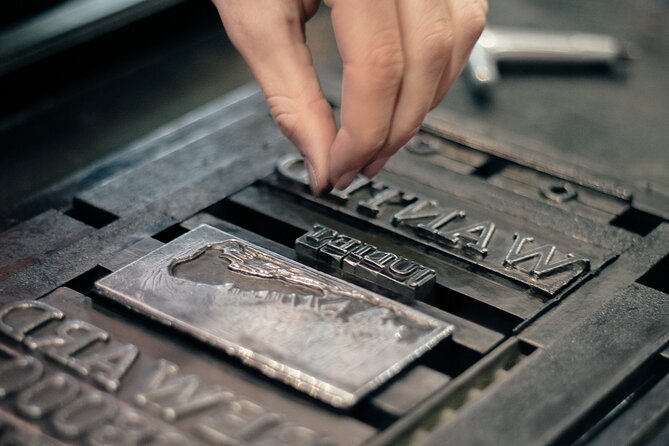
In plain terms, you’ll see the logic of movable type: letters are placed, arranged, and locked into a format. Then ink is applied and transferred to paper through the press mechanism. It’s a small, controlled version of a much bigger historical system.
In some sessions, you may also get to try equipment like a perforating machine. That sort of add-on activity is perfect for kids and curious adults, because it breaks the experience into multiple “I did that” moments instead of one long demonstration.
If you’re coming with someone who thinks museums are boring, this is the wedge. People tend to light up when they’re holding the letters and pulling the final print.
More of Dublin's history on foot
Why the take-home poster is more than a souvenir
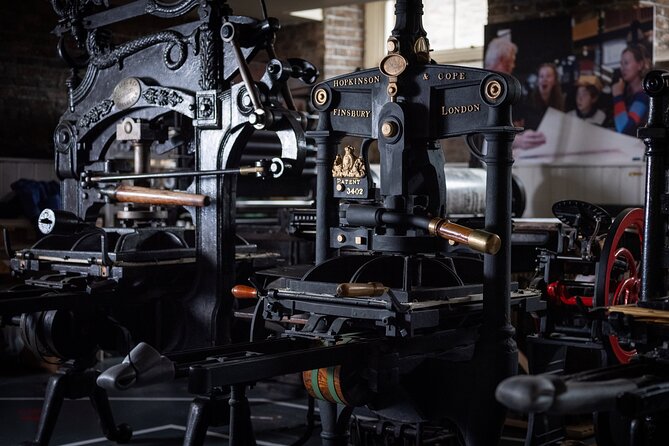
Yes, you’ll leave with something you printed yourself. But the bigger value is what it teaches you about why printing mattered in the first place.
When you print your name, you feel the constraint: type needs to be arranged correctly, the ink needs to be handled properly, and the transfer relies on consistent pressure and alignment. That gives you a new appreciation for historical documents—especially printed political statements like the 1916 Proclamation—where accuracy and readability mattered.
It also makes the history stick. You’re more likely to remember Gutenberg’s 1439 when you’ve physically placed type and watched the result appear. This is why the tour is especially strong for people who learn best by doing.
And if you’re travelling with family, it’s a win that keeps the day from turning into a “walk past things” mission. The poster becomes a proof of participation.
Guides, delivery, and the energy of the small group
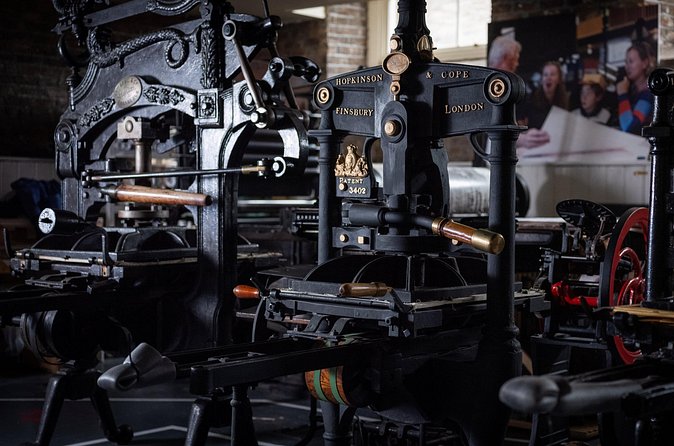
One reason this tour lands at an unusually high rating is how guides bring it to life. The experience is designed for small groups, max 10 travelers, which helps the pace stay interactive. In that size, questions can actually get answered, and the guide can adjust to the attention span in the room.
The guide experience can be different depending on who leads your session. Ann and Anne are names that come up, along with Ciarán/Ciaran as a particularly entertaining guide. There’s also mention of Jacinda for favorite typefaces—so if you’re the kind of person who gets excited about lettering and design, you’ll probably enjoy that angle too.
Even if you don’t go deep into the mechanics, you’ll still come away with context: phrases connected to printing, a sense of how common sayings formed through typesetting culture, and a clearer view of how communication technology reshaped society.
Price and value: what $7.20 really buys you
At $7.20 per person for about one hour, the value is in the combination. You’re paying for:
- A guided walkthrough of printing history tied to real Irish documents
- Access to a working-style museum experience (not just viewing)
- Actual time spent printing your own personalised poster
Many “history” museum tours focus on commentary and skip the participation. Here, the participation is the point, and that makes the time feel productive. You’re not trapped in a lecture. You leave with something you made, plus a better sense of how printing worked as an industrial process—not just an art form.
If you’re trying to pick one small-group activity in Dublin that offers both story and hands-on work, this is a strong contender.
When to book and how to plan your day around it
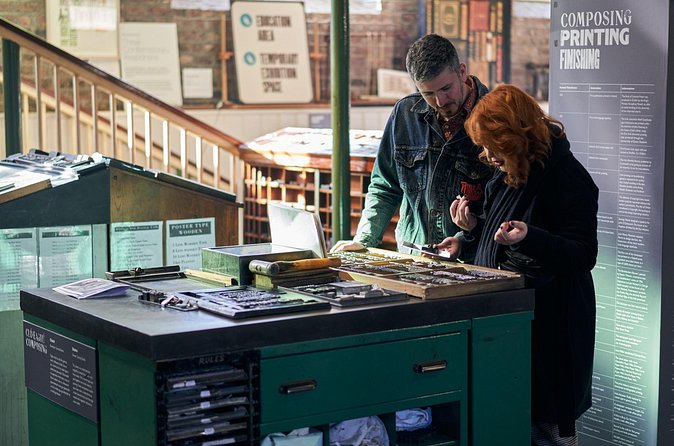
This tour tends to get booked about 5 days in advance on average, so I’d plan to secure a slot sooner rather than later—especially if you’re travelling on a busier schedule.
Try to schedule it when you have enough time afterward to decompress and look at the parts of the museum you didn’t fully absorb during the guided hour. The tour is short, so you may want extra minutes with the exhibits afterward if something catches your eye.
If you’re going with kids, aim for a time when they’re not already exhausted. The hands-on work helps, but the pace is still a tour pace. And if you care about printing supplies, fonts, or the mechanics of presses, arrive ready with questions—this is the kind of place where a good question can lead to a better explanation.
Nearby extras: cafe breaks and gift shop shopping
If you need a pause, there’s a cafe by the museum that’s mentioned positively in the experience write-ups. That’s useful if you’re staying nearby or building a family afternoon. You can grab something before or after your tour without turning it into a separate quest.
The gift shop is another practical stop. The printing theme means you’ll often find presents that feel more specific than generic souvenirs. If you printed your own poster, shopping for a couple of extra items can round out the day nicely.
Who should book this interactive printing tour
This tour works best when you want more than a standard museum walk.
It’s a great fit for:
- Families who need a museum activity that keeps hands busy
- People who like history but prefer learning through action
- Book lovers and literature fans who want to connect texts to real production
- Anyone curious about how old communication tech shaped politics and culture
It may not be ideal if you:
- Want a long, slow tour with lots of free time per exhibit
- Prefer strictly quiet spaces with no hands-on activities
- Need a very low-mess experience (printing can be ink-friendly)
Should you book this interactive printing tour?
If you’re in Dublin and you like the idea of learning printing history through actual typesetting and a finished souvenir, I’d book it. The combination of the 1916 Proclamation viewing, the Gutenberg origin story, and the chance to print your name makes the hour feel efficient and satisfying for both adults and kids.
Pick this tour over a purely observational museum visit when you want something memorable you can hold in your hands. And with the small group size, you’ll get a better shot at real interaction instead of being swept along.
If you’re unsure, ask yourself one question: do you enjoy museum experiences where you do a task, not just watch? If the answer is yes, this is a very sensible choice.
FAQ
How long is the interactive printing history tour?
It runs for about 1 hour.
Where does the tour start?
The meeting point is the National Print Museum, Haddington Rd, Dublin, D04 E0C9, Ireland.
What language is the tour offered in?
The tour is offered in English.
How big are the groups?
The tour has a maximum of 10 travelers.
Do I get a ticket and do I receive it digitally?
Yes. The tour uses a mobile ticket.
What can I expect to do during the tour?
You’ll learn the history of printing and then do hands-on work, including composing your name in type and printing a personalised poster to take home.
What is the cancellation window?
You can cancel for a full refund up to 24 hours before the experience starts.
More Guided Dublin Tours

More Tours in Dublin




More Tour Reviews in Dublin



Fresh off the cobbles: the latest Dublin reviews
- Dublin Private Airport Transfer to Ireland
★ 4.5 · 3 reviews - Private Chauffeur Service From Dublin Airport to Killarney
★ 5.0 · 3 reviews - Ireland: 3-Day West Coast Explorer Tour
★ 5.0 · 3 reviews - From Dublin: 4-Day Southern and Western Coast Tour
★ 4.3 · 3 reviews - Dublin : Street Art Walking Tour
★ 5.0 · 3 reviews - Spring Tonic Foraging Tour
★ 5.0 · 3 reviews
Historical Tours, compared.
 ★ 5.0Dublin Historical Centre Food Tour with 8 Food Tastings & DrinksFrom $1251,718 reviews
 ★ 5.02-Hour Historical Walking Tour from DublinFrom $22875 reviews
 ★ 4.7Historical 2-Hour Guided Walking Tour of DublinFrom $22865 reviews
 ★ 4.5Dublin to Cork, Blarney Castle & Cóbh Heritage Centre by trainFrom $195510 reviews
 ★ 4.8Jeanie Johnston Tall Ship Irish Famine History TourFrom $16431 reviews
Wicklow’s Historic Gaol Day TourFrom $14355 reviews
★ 4.8Jeanie Johnston Tall Ship Irish Famine History TourFrom $16431 reviews
Wicklow’s Historic Gaol Day TourFrom $14355 reviews
 ★ 4.3Dublin’s Haunted History Walking TourFrom $31345 reviews
 ★ 5.0Deliciously Dublin: The Artisan Donut Walking & History TourFrom $70329 reviews
Browse the lists this tour appears in