
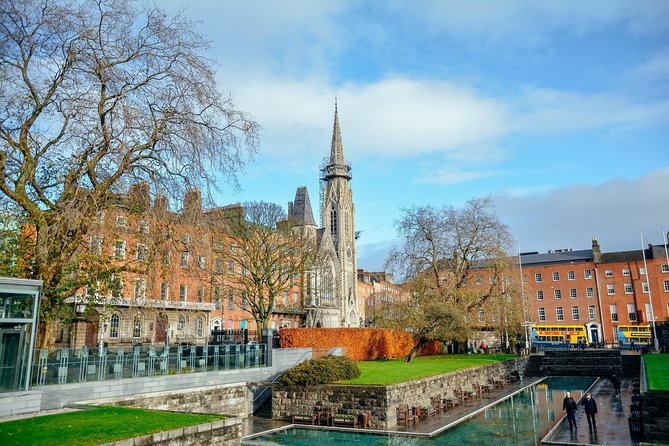
Reviewed · KILMAINHAM & 1916 HISTORY
The History of Dublin With Locals: 1916 Easter Rising PRIVATE Tour
Dublin’s 1916 story comes alive on foot. I like that this is a private tour, so you set the pace and can ask follow-up questions instead of being herded along. You’ll spend the first part looking at the General Post Office, then move to a solemn memorial space that puts the Rising’s human cost in focus.
One thing to keep in mind: the route can vary a bit based on your guide’s choices, and some additional sites may depend on access and opening times. If you have one must-see stop (especially any extra buildings), it’s smart to ask your guide what will definitely be included.
In This Review
- Key things I’d plan around before you go
- Why Dublin’s 1916 Walking Route Feels Personal
- Meeting at Custom House Quay, then walking into central Dublin
- Stop 1: The General Post Office (GPO) and why it anchors the story
- Stop 2: The Garden of Remembrance at Parnell Square
- Extra stops: what changes when your guide chooses the route
- The private guide effect: pace, questions, and real street-level stories
- Walking logistics that will save you time and comfort
- Value for $135.16: what you get and where it might not be enough
- Who should book this 1916 Easter Rising private tour
- FAQ
- Is this tour private or part of a group?
- How long does the tour last?
- Where do I meet the guide, and where does the tour end?
- What are the main stops on the route?
- Is admission included for the stops?
- Do I need to arrange my own transportation to the meeting point?
- How much walking is involved, and is it suitable for everyone?
- What language is the tour offered in?
- Is the tour carbon offset or sustainable in some way?
- What if I need to cancel?
- Should you book this private 1916 Easter Rising Dublin tour?
Key things I’d plan around before you go

- Private, just you and a local guide: less rushing, more chances to ask why things happened.
- GPO first, then reflection: you start at the Rising’s headquarters site and move to a memorial garden.
- Free entry stops early in the walk: the GPO and Garden of Remembrance admissions are listed as free.
- A route that can flex: you may see extra stops beyond the core two, but it’s not guaranteed to be identical every time.
- Real walking for 3.5 hours: plan for comfort shoes and a steady pace (moderate fitness level).
- Sustainability included: the tour is CO2 neutral with emissions offset.
The 1916 story, told a few more ways
- Dublin Private Highlights & History of 1916 Easter Rising Tour★ 5.0 · 154 reviews
- The History of Dublin With Locals: 1916 Easter Rising PRIVATE Tour★ 5.0 · 73 reviews
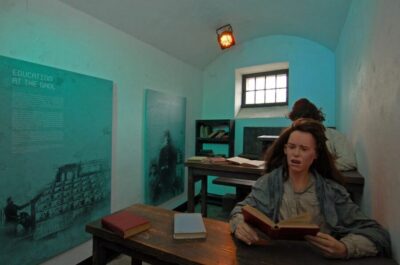
- Wicklow Historic Gaol: 1-Hour Tour★ 4.4 · 56 reviews
- Day Tour from Dublin to Wicklow: Cliffs, Heritage, Wildlife, Gaol★ 5.0 · 7 reviews
Why Dublin’s 1916 Walking Route Feels Personal
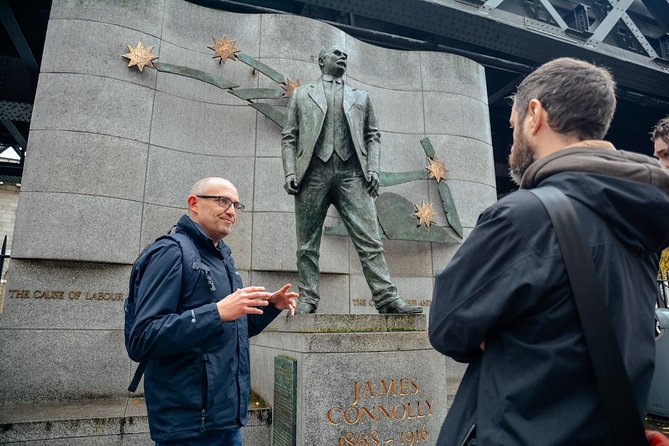
Dublin in 1916 wasn’t some distant chapter in a textbook. On this tour, you’re looking at the actual streets and institutions where the Rising unfolded and where its memory lives today.
I like that the experience isn’t just about names and dates. It’s about reading the city as evidence—why the GPO mattered, what kind of symbolism a memorial garden carries, and how the built environment keeps the story visible long after the fighting stopped.
Also, the private format changes how you experience history. When you can ask your own questions in the moment, you understand the city faster—and you notice more.
Meeting at Custom House Quay, then walking into central Dublin
Your tour starts at Custom House Quay (North Wall) and ends near Collins Barracks on Benburb St. That end point is useful if you’re continuing your day in that part of town, but it also means you won’t just circle back to where you began.
There’s no hotel pickup or drop-off, so you’ll want to be comfortable getting yourself to the meeting point. The good news: the meeting area is listed as near public transportation, so you can keep things simple.
Plan for a 3 hours 30 minutes experience with a moderate walking demand. One past visitor mentioned it covered around 4.5 miles, so even if your exact route differs, you should still pack for a proper city-walk.
Stop 1: The General Post Office (GPO) and why it anchors the story
The first major stop is An Post, the General Post Office—and yes, it’s one of Dublin’s most important buildings for this topic. You’ll spend about 20 minutes here, and the admission is listed as free.
This is not just a handsome old post office. It served as the headquarters of the leaders of the Easter Rising, which instantly turns it from “historic building” into “operational center.”
What to pay attention to while you’re there:
- The way it reads as a major public building—meant for crowds, communication, and authority.
- The Georgian architecture angle: it’s described as the last of the great Georgian public buildings erected in the capital. That detail helps you frame the Rising in the context of early-20th-century Ireland, not as some fantasy in a ruined past.
- How your guide connects the building’s role to the bigger political story—often the questions you ask will steer what you notice.
Practical tip: since the GPO is a core stop, make sure you’re at the meeting point on time. This is one of those locations where a few minutes of delay can mean you lose some of the guided explanation.
Stop 2: The Garden of Remembrance at Parnell Square
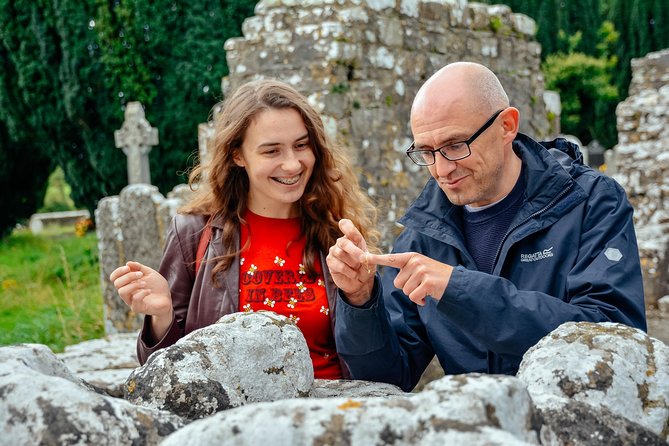
Next up is the Garden of Remembrance, about 25 minutes and also listed as free.
This isn’t a “tourist photo stop.” It’s a memorial garden dedicated to the memory of all those who gave their lives in the cause of Irish Freedom. It also has a specific geographic story: it sits in the northern fifth of the former Rotunda Gardens within Parnell Square, a Georgian square at the northern end of O’Connell Street.
Why this stop matters: after you’ve seen the Rising’s public and political stage (the GPO), you get the human and emotional counterweight. Memorial spaces don’t just commemorate. They shape how later generations interpret events—who they honor, and what they think the events meant.
If you’re the kind of traveler who likes to pause and think (even for a few minutes), you’ll probably value this part more than you expect. It’s a natural reset during a walking tour that can otherwise feel like constant information.
A handful more Dublin outings we would happily send a friend to




Extra stops: what changes when your guide chooses the route

After the two core landmarks, your route may include additional stops. The exact sites can vary depending on your host and their chosen path.
That flexibility can be a strength—because the best guides tend to adjust the walk to your interests and your stamina. Some guides are also good at weaving in context by pointing out what’s easy to miss: street corners, building facades, and small reminders that connect back to the Rising.
That said, here’s the practical caution: if your heart is set on a specific extra site, don’t assume it’s guaranteed. One traveler had a disappointment when a planned location wasn’t visited due to an itinerary change, and another noted that cemetery hours caused a mismatch. So if there’s a particular place you really want, I recommend asking your guide upfront what will be included and what might depend on access or timing.
The private guide effect: pace, questions, and real street-level stories
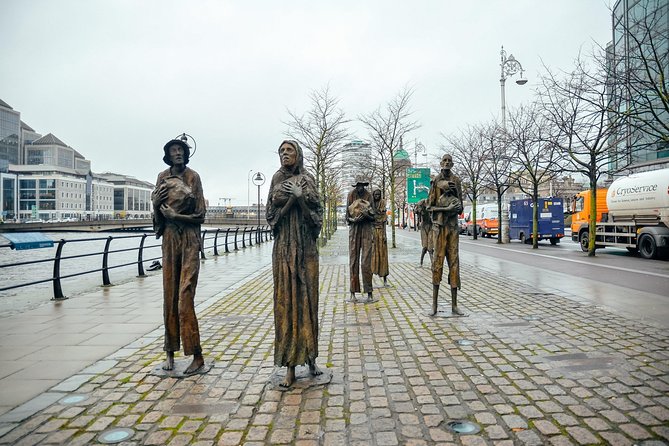
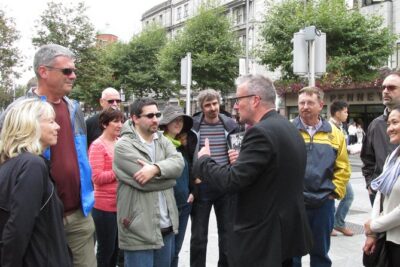
This is a private tour—only you and your local guide. That matters more than you might think, especially for a topic as intense as 1916.
In the experiences described, the strongest guides share a few patterns:
- They keep the pacing comfortable. One guide was patient with a slower walking partner and didn’t turn the tour into a sprint.
- They answer questions instead of giving rehearsed monologues. Visitors repeatedly emphasized how easy it was to ask things and get clear answers.
- They tailor the walk to interests. Some tours included extra context beyond the Rising itself, helping first-timers understand what they’re looking at as they move.
Guide names that came up often include Keelan, Eamon, Ruairi, Hugh, Edward, Marius, Derek, and Derrick. One visitor specifically credited Eamon with using pictures to bring the story to life and with being helpful about local transit (like how to use the Luas afterward). Another highlighted Keelan’s ability to keep the group engaged and handle questions well.
If you’re traveling with kids, this kind of “Q&A friendly” guiding is a huge advantage. One family said their kids stayed interested and kept asking questions, which tells you the guide was communicating in an accessible way—not just listing facts.
Walking logistics that will save you time and comfort
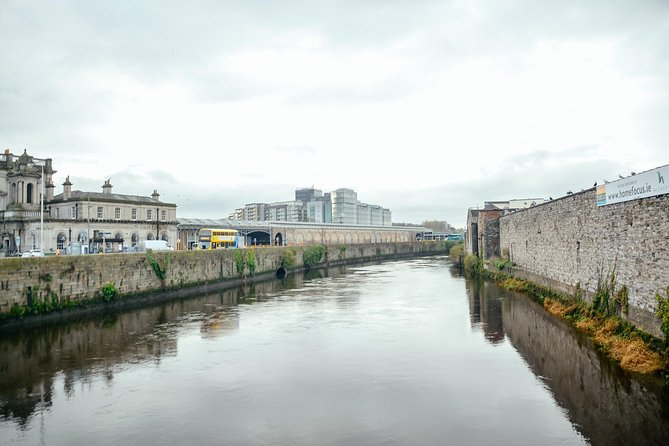
This tour is built as a walking experience through central Dublin. You should treat it like a sightseeing walk, not a light stroll.
Here’s what I’d plan for:
- Wear comfortable shoes. Reviews repeatedly describe it as a great tour, but also one that requires proper walking comfort.
- Bring a light layer. Dublin weather can change fast, and your guide may still keep the walk moving even if it’s rainy.
- Expect that you’ll cover more ground than you’d guess from just looking at two named stops. If you’re trying to stack this with other activities the same day, build in buffer time.
If you have mobility limitations, this is where your guide’s flexibility becomes important. The tour is intended for travelers with moderate physical fitness, but the private format is your friend—ask for a slower pace if needed.
Value for $135.16: what you get and where it might not be enough

At $135.16 per person for about 3.5 hours, you’re paying for a private local-led experience, not a bus-and-headphones style tour. The math is easier to like when you consider what’s included.
What’s included:
- A private guide
- CO2 neutral operations (carbon emissions are offset)
- Free admission for the GPO and the Garden of Remembrance as listed
What’s not included:
- Entrance to attractions not listed as free (so if your route adds paid stops, you’ll likely pay those separately)
So is it worth it? For me, it comes down to one question: do you want to spend your time in Dublin with a guide who can flex and answer questions, and do you prefer seeing fewer sites with more explanation?
If yes, this pricing feels reasonable. If you only want a quick, checklist-style overview, you might decide something else fits better. Private tours pay off when you care about the why, not just the what.
Also, if you’re a planner: the experience is often booked about 39 days in advance. Booking earlier usually gives you more choices, especially if you want a particular day and time.
Who should book this 1916 Easter Rising private tour
Book it if you:
- Want Dublin history tied to real places, not just a lecture.
- Prefer walking with your own pace and your own questions.
- Like guides who point out small details you’d miss alone.
- Plan to be in central Dublin for a few hours and want a focused experience around the Easter Rising.
Consider alternatives if you:
- Want lots of museum time or guaranteed indoor stops. This tour is centered on specific landmark visits and walking.
- Need a fixed “every day includes these exact buildings” itinerary. The route can vary by guide, and timing can affect access.
- Have zero patience for walking distances. Even with private guiding, it’s still a walking tour.
FAQ
Is this tour private or part of a group?
It’s a private tour where only you and your local guide participate.
How long does the tour last?
It lasts about 3 hours 30 minutes (approx.).
Where do I meet the guide, and where does the tour end?
You meet at Custom House Quay, North Wall, Dublin and end at Collins Barracks, Benburb St, Stoneybatter, Dublin.
What are the main stops on the route?
The core stops are the General Post Office (GPO) and the Garden of Remembrance.
Is admission included for the stops?
Admission for the GPO and the Garden of Remembrance is listed as free. Entrance to other attractions is not included.
Do I need to arrange my own transportation to the meeting point?
Yes. Hotel pickup and drop-off are not included, and the meeting point is listed as near public transportation.
How much walking is involved, and is it suitable for everyone?
It’s described as requiring a moderate physical fitness level, so you should plan for a few hours of walking.
What language is the tour offered in?
The tour is offered in English.
Is the tour carbon offset or sustainable in some way?
Yes. It’s listed as CO2 neutral, with carbon emissions offset for all tours.
What if I need to cancel?
You can cancel for a full refund if you cancel up to 24 hours in advance of the start time.
Should you book this private 1916 Easter Rising Dublin tour?
If you want Dublin’s 1916 story tied to actual places—especially the GPO—and you prefer a tour where you can ask questions and set your pace, I’d book it. The private format is the real win here, and the free admissions for the two main stops make the experience easier to justify.
Just do one smart thing before you go: if there’s a specific extra site you’re hoping to see, confirm it with your guide day-of. With private guiding, that one conversation can turn a good tour into a perfect one for your interests.
More Tours in Dublin




More Tour Reviews in Dublin



Kilmainham and 1916



Fresh off the cobbles: the latest Dublin reviews
- Dublin Private Airport Transfer to Ireland
★ 4.5 · 3 reviews - Private Chauffeur Service From Dublin Airport to Killarney
★ 5.0 · 3 reviews - Ireland: 3-Day West Coast Explorer Tour
★ 5.0 · 3 reviews - From Dublin: 4-Day Southern and Western Coast Tour
★ 4.3 · 3 reviews - Dublin : Street Art Walking Tour
★ 5.0 · 3 reviews - Spring Tonic Foraging Tour
★ 5.0 · 3 reviews
Kilmainham & 1916 History, compared.
 ★ 5.01916 Rebellion Walking TourFrom $271,605 reviews
Wicklow’s Historic Gaol Day TourFrom $14355 reviews
★ 5.01916 Rebellion Walking TourFrom $271,605 reviews
Wicklow’s Historic Gaol Day TourFrom $14355 reviews
 ★ 5.0Dublin Private Highlights & History of 1916 Easter Rising TourFrom $135154 reviews
 ★ 4.4Wicklow Historic Gaol: 1-Hour TourFrom $1456 reviews
 ★ 5.0Day Tour from Dublin to Wicklow: Cliffs, Heritage, Wildlife, GaolFrom $7817 reviews
Browse the lists this tour appears in