
Reviewed · WALKING TOURS
A Self Guided Walking Tour of Dublin’s Docklands
Docklands is history in walking form. This self-guided Dublin Docklands audio tour strings together major riverfront sights with easy, offline audio and maps, so you can move at your own speed. I also like how the narration is set up for clarity: it’s meant to be understandable on the go, not a lecture you fight through.
You will need to plan for one practical thing: you bring your own smartphone and headphones. If your phone battery is weak or you hate listening while walking, this won’t feel as smooth.
In This Review
- Key Things to Know Before You Start
- A Self-Guided Docklands Walk You Can Set the Pace For
- Finding the Route at the Custom House (North Wall)
- Custom House to the Quays: Dublin’s Trade Past, Up Close
- Labor Landmarks: James Connolly, Liberty Hall, and the Stations
- The IFSC and Maritime Commemoration in One Flow
- Scherzer Rolling Lift Bridges and the Engineering Story of the Docks
- Seafarers’ Memorials, the Jeanie Johnston Replica, and Links to Emigration
- Samuel Beckett Bridge, Convention Centre Dublin, and Modern Dublin’s Edges
- Admiral William Brown, the Diving Bell, and Working-Port Details
- The East-Link Connection: Tom Clarke Bridge and a Brewery Stop
- Grand Canal Docks Sign, Hanover Quay, and the Creative Side of the Waterfront
- Ending at Red Sticks Dublin and Grand Canal Square
- Audio Setup: Offline Access and the One Thing You Must Bring
- Price and Value: Is $11.99 Fair for This Docklands Route?
- Who Should Book This Dublin Docklands Audio Tour
- Should You Book It?
- FAQ
- How long is the Dublin Docklands self-guided walking tour?
- Where does the tour start and end?
- Is the tour available in English?
- Do I need internet access during the walk?
- What do I need to bring with me?
- How do I reach the starting point using public transport?
- Can I use the tour again after I book it?
- Is this tour private for just my group?
- What if I need to cancel?
Key Things to Know Before You Start

- Offline maps and audio help you keep moving without burning mobile data
- Local-insider narration keeps the Docklands stories understandable as you walk
- A doable 50 minutes to 1 hour 10 minutes length fits a morning or afternoon stroll
- GPS-guided pacing makes it easier to hit landmarks without constantly checking streets
- Big-sight variety: trade buildings, labor history, bridges, and famine remembrance
- Ends on the Grand Canal near Red Sticks Dublin, a handy finish for wandering on
More Dublin walks at an easy pace
- Dublin Highlights and Hidden Gems Guided Walking Tour★ 5.0 · 6,020 reviews
- Dublin: Highlights and Hidden Gems Walking Tour★ 4.9 · 2,140 reviews
- 1916 Rebellion Walking Tour★ 5.0 · 1,605 reviews
- 90 Minute Dublin Walking tour and Sightseeing tips★ 5.0 · 916 reviews
A Self-Guided Docklands Walk You Can Set the Pace For
This is built for people who want the good parts of guided history without the clock pressure. You’ll follow a GPS route and listen to narration like an audio story, with enough structure to keep you from missing the important context. The best value is how many landmark types you pass in one stretch: maritime commerce, labor movement, major transport hubs, and memorial sites.
Timing is also realistic. At about 50 minutes to 1 hour 10 minutes, you can fit the tour between other Docklands plans without turning it into an all-day project. And because it’s self-guided, you can pause for photos, slow down at bridges, or linger at memorials when you need a breather.
One more thing I like: you can use the tour in two ways. There’s the GPS walk, plus a virtual playback option that works like an audiobook from anywhere—handy if you want to preview themes at home or listen later.
Finding the Route at the Custom House (North Wall)
Your tour starts at the Custom House, North Wall, Dublin 1. That’s a strong place to begin because the Docklands story starts with trade and shipping, and this part of Dublin still feels tied to the river. The route is designed with directions to the starting point, so once you’re in the right area, getting underway should be much easier than hunting for a vague pin.
Getting there is pretty straightforward with public transport. The start point is near options connected to Busáras, along with Luas and bus stops, and Tara Street DART. If you’re walking from central streets, it’s roughly a 10-minute walk from O’Connell Street and about 15 to 20 minutes from College Green, depending on pace.
Practical tip: have your headphones ready before you step outside. Once you start moving, it’s much easier to keep your attention on the narration and the buildings around you instead of digging for cords.
Custom House to the Quays: Dublin’s Trade Past, Up Close
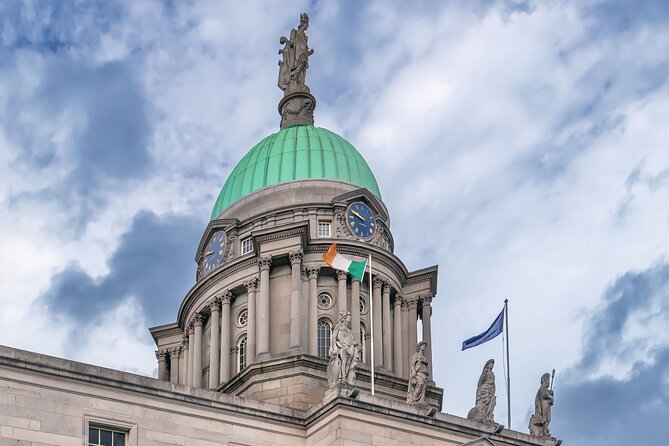
The first stretch sets the tone. You’ll pass the Custom House, a striking neoclassical building that served as the center of Irish trade and commerce. Even if you only catch it from the sidewalk, it’s the kind of landmark that instantly tells you why this area mattered.
Next you walk along the quayside, where historic warehouses sit alongside modern development. This is where the Docklands becomes a living lesson: you can see how the old port function shaped the street layout, then watch that framework get repurposed for today’s Dublin.
A small caution: quayside areas can be windy, especially near open river stretches. Bring a layer if the weather is cool, and don’t expect every stop to feel quiet. Some viewpoints are close to busy roads or transport corridors, so keep an eye out while you stop for photos.
Labor Landmarks: James Connolly, Liberty Hall, and the Stations
Then the tour turns toward labor and political history—still part of the Docklands story, just not the shipping side.
You’ll pass the memorial honoring James Connolly, a key figure in Ireland’s fight for independence and workers’ rights. Right after that is Liberty Hall Theatre, an important landmark tied to Dublin’s labor movement history. Together, these stops make the Docklands feel less like a museum district and more like a place shaped by real working lives.
You also get two major transport anchors: Busáras (Dublin’s central bus station) and Connolly Train Station. If you’ve ever felt like Dublin’s routes converge here, this walk explains why: people, goods, and movement have always been central to the city’s identity.
Where this section can be tricky is sheer concentration. Near big stations, it can be easy to lose your place if you’re constantly crossing streets or checking your phone. The GPS guidance helps, but you’ll do yourself a favor by stepping aside before you adjust your device.
More guided Dublin outings with a local

The IFSC and Maritime Commemoration in One Flow
Once you’ve covered the labor and transport landmarks, the walk shifts again—this time toward the financial present and the maritime memory that never fully went away.
You’ll pass through the IFSC, a major financial hub in Dublin with multinational corporations and financial institutions. It’s a quick reminder that the Docklands didn’t freeze in time. It changed, and quickly.
After that comes the Triumphal Arch, a historic monument commemorating Dublin’s maritime heritage and economic prosperity. This is one of those moments where the narration helps you read the symbolism instead of just looking at stonework.
Then the tour brings in engineering, not just architecture.
Scherzer Rolling Lift Bridges and the Engineering Story of the Docks
You’ll see the Scherzer Rolling Lift Bridges, described as engineering marvels that once facilitated maritime traffic in the area. Even if you don’t know the first thing about bridge mechanics, the audio context makes it clear how crucial these structures were to keeping ships moving and commerce flowing.
This stop is also a good example of why an audio guide helps here. Without explanation, you might treat the bridge as just another piece of infrastructure. With narration, it becomes part of the Docklands’ working system.
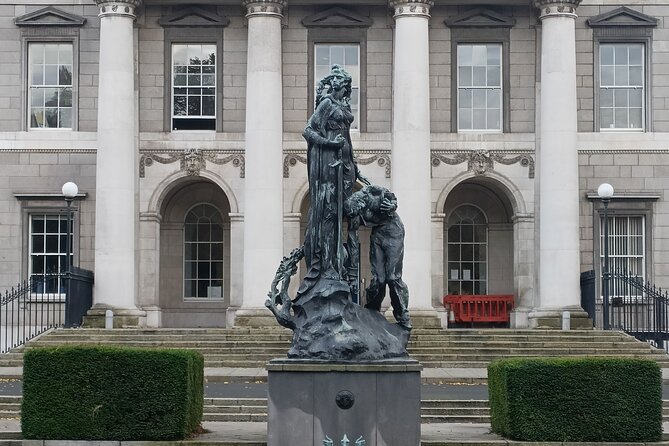
You’ll also encounter the Famine Memorial, a poignant tribute to those who suffered during Ireland’s Great Famine in the 19th century. It’s emotional ground, and it deserves more than a glance. If you’re the type who pauses for a moment at memorials, plan for it here.
Seafarers’ Memorials, the Jeanie Johnston Replica, and Links to Emigration
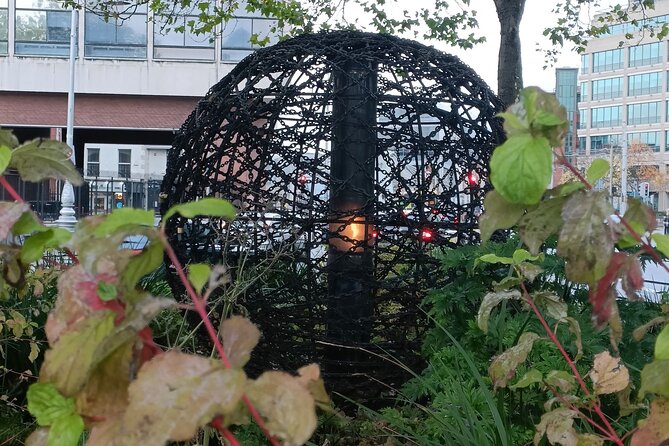
After the Famine Memorial, you pass a memorial honoring Irish seafarers who lost their lives at sea—another reminder that the Docklands story includes risk, not just trade. This section connects human cost to maritime life in a way that feels direct.
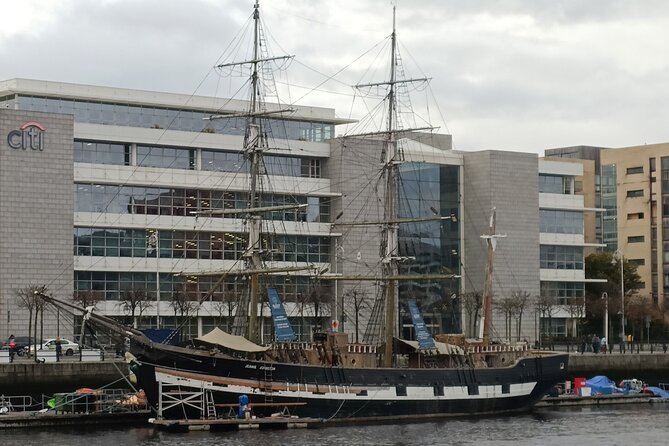
A standout stop is the replica of The Jeanie Johnston, a historic ship that carried Irish emigrants to North America during the Great Famine. Even as a replica, it’s a powerful anchor for the narrative, because it gives you a physical point to connect the memorial themes to real journeys.
If you want one travel habit that pays off here: keep your phone muted during short photo moments so you can take in the place first, then re-listen to catch the meaning. It keeps the experience from turning into constant screen focus.
Samuel Beckett Bridge, Convention Centre Dublin, and Modern Dublin’s Edges
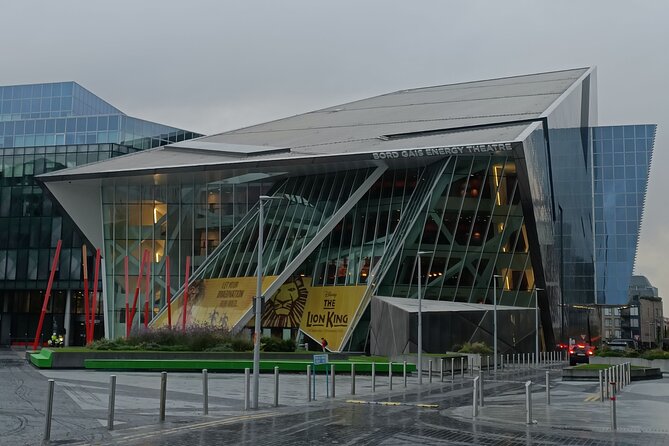
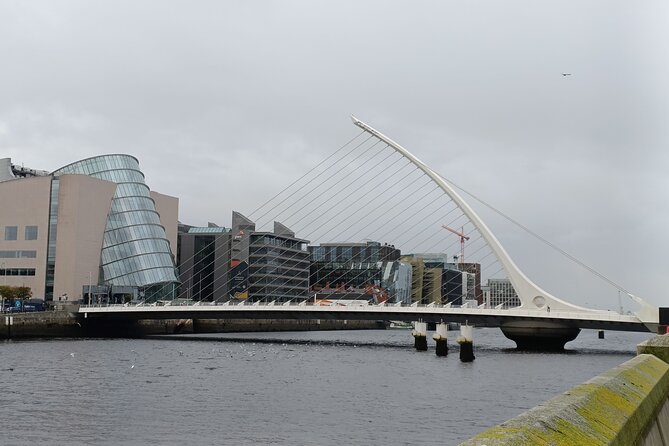
Next you cross into a modern skyline view: the tour takes you over the Seán O’Casey Bridge for city and waterfront views. Then you’ll pass the Samuel Beckett Bridge, an iconic modern bridge named after the renowned Irish writer.
These bridges are more than crossings. They’re perspective machines. You’ll notice how Dublin’s riverfront is no longer just an industrial working strip—it’s part of how the city presents itself to the rest of the world.
You also walk by Convention Centre Dublin, a state-of-the-art venue for conferences, events, and exhibitions. It’s a reminder that the Docklands now hosts global visitors and big gatherings, while the audio keeps tying that present to the maritime past.
Admiral William Brown, the Diving Bell, and Working-Port Details
Now you’ll hit a fascinating shift: from big monuments to tools.
You’ll pass a statue of Admiral William Brown, an Irish-born naval officer who founded the Argentine Navy. That’s an unusual connection, and it underlines how Irish maritime knowledge spread far beyond Ireland’s shoreline.
Next is the historic Diving Bell, once used for dock maintenance in Dublin’s bustling port. The audio context is especially helpful here. A diving bell sounds like a story detail, but in port terms, it’s practical technology—part of how ships and docks stayed operational.
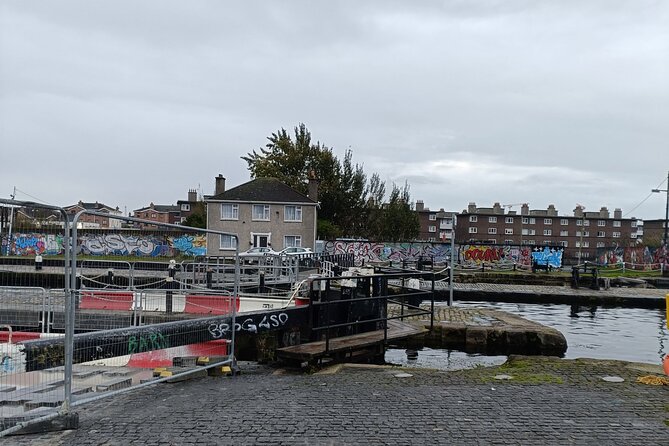
Then the tour continues with the sea lock, a crucial component regulating water levels in the docks. You’ll get the idea that the Docklands wasn’t just about buildings—it was about managing water and movement, day after day.
The East-Link Connection: Tom Clarke Bridge and a Brewery Stop
You’ll pass by Tom Clarke Bridge, also known as the East-Link Bridge, described as a vital transportation link connecting Dublin’s north and south. This is another place where the narration helps you see the modern city grid as an extension of older movement routes.
Then you’ll come to BrewDog Outpost Dublin, a popular brewery stop along the path. It’s not required viewing, but it gives you an easy mid-to-late walk break option if you want a drink or a snack without planning extra detours.
Good time to be practical: if you’re hungry, save it for this section. The tour is short enough that stopping earlier can throw off your finish time.
Grand Canal Docks Sign, Hanover Quay, and the Creative Side of the Waterfront
As the tour nears the finish, you’ll see signs that the Docklands has been layered with leisure and creativity.
You’ll pass the Grand Canal Docks sign, marking the entrance to Dublin’s historic canal basin. Then you move by Hanover Quay, a waterfront area known for a mix of residential and commercial developments—so it’s not just a sightseeing corridor.
You’ll also walk past Hanover Quay Studios, a recording studio complex frequented by musicians and artists. This adds a different texture to the Docklands story: the same space that once supported heavy movement now supports creative work.
Two great photo moments here are typically the edges of the canal basin signage and studio frontage, but use the narration to decide where to pause.
Ending at Red Sticks Dublin and Grand Canal Square
The tour ends at Red Sticks Dublin on the Grand Canal. Along the way, you pass Grand Canal Square, described as a lively public space with modern architecture and cultural attractions, plus the Red Sticks sculpture landmark that adds to the artistic landscape.
This ending location is convenient because it’s easy to keep exploring on foot afterward. You’re not stuck returning to the exact same starting point. You’ve arrived at a natural finish where stopping for food, walking around, or jumping on transport options feels simple.
If you want one smart planning move: end your tour and then immediately choose one nearby add-on—another short walk, a café break, or a museum. The Docklands transition from port history to present-day city life is a good storyline to keep going.
Audio Setup: Offline Access and the One Thing You Must Bring
This is a smartphone-and-headphones experience. The tour is offered in English, and you should bring your own device and headphones since they’re listed as not included.
The upside is data savings and reliability. You get offline access to audio, maps, and geodata, which makes this much easier in areas where cell service can be spotty. Offline also means fewer interruptions if you walk under taller buildings or through denser station approaches.
You also get unlimited, lifetime use before and after your booking date. That’s good value if you come back to Dublin later or want to replay parts when you’re closer to the places you care about most.
One last practical note: the tour is marked as private activity for your group. Since it’s self-guided, you won’t deal with a group crowding your pace. It’s essentially tailored to how you walk.
Price and Value: Is $11.99 Fair for This Docklands Route?
At $11.99 per person, you’re paying for a short, structured walk plus audio narration, offline maps, and lifetime access. That can be good value in Dublin, where a lot of “free sightseeing” still needs your own effort to learn context.
What makes the price feel reasonable is the amount packed into the route: major landmarks (Custom House, Liberty Hall area, stations), major bridges (Seán O’Casey, Samuel Beckett, Tom Clarke/East-Link), and multiple memorial sites (Famine Memorial, seafarers memorial, and the Jeanie Johnston replica). You’re not paying to visit one attraction. You’re paying to understand a corridor of the city.
The only place where value drops a bit is if you already know Docklands history well and you’d rather spend your time in one or two museums. If that’s you, you might skim and move faster without getting as much payoff from the audio. For most people, though, it’s a clean way to turn an ordinary walk into a meaningful one.
Who Should Book This Dublin Docklands Audio Tour
This one fits best if you want:
- A short, manageable walking route with lots of context
- To learn Docklands history at your own rhythm, without a fixed group schedule
- Offline reliability using maps and narration stored for your trip
- A route that mixes labor history, maritime details, memorials, and modern Dublin bridges
It’s also good for people who enjoy city walking but get irritated when tours move too fast. You can pause at memorials, step away near stations, and then restart the story when you’re ready.
If you hate listening while walking, you’ll likely feel friction. This tour’s value lives in the audio.
Should You Book It?
I’d book this Docklands audio tour if you want a smart way to connect Dublin’s riverfront sights to the bigger story—trade, workers’ rights, famine remembrance, seafaring, and how the city reshaped itself. The route length makes it easy to commit, and the offline setup makes it practical.
I’d skip it only if you’re set on a longer guided day with museum time, or if you don’t want to rely on your phone. With the right setup—charged phone and decent headphones—this is an efficient, rewarding walk.
FAQ
How long is the Dublin Docklands self-guided walking tour?
It’s approximately 50 minutes to 1 hour 10 minutes.
Where does the tour start and end?
It starts at the Custom House, North Wall, Dublin 1 and ends at Red Sticks Dublin on the Grand Canal.
Is the tour available in English?
Yes, it’s offered in English.
Do I need internet access during the walk?
No. The tour includes offline access to audio, maps, and geodata, which is meant to reduce data use.
What do I need to bring with me?
You need your own smartphone and headphones.
How do I reach the starting point using public transport?
It’s near public transportation, including Busáras, Luas and bus stops, and the Tara Street DART station. It’s also about 10 minutes’ walk from O’Connell Street and 15 to 20 minutes from College Green.
Can I use the tour again after I book it?
Yes. You get unlimited, lifetime use of the tour, before your booking date and after it.
Is this tour private for just my group?
Yes. It’s listed as a private tour/activity, so only your group participates.
What if I need to cancel?
This experience is non-refundable and cannot be changed for any reason.
More Dublin Walking Tours





More Tours in Dublin




More Tour Reviews in Dublin



Fresh off the cobbles: the latest Dublin reviews
- Dublin Private Airport Transfer to Ireland
★ 4.5 · 3 reviews - Private Chauffeur Service From Dublin Airport to Killarney
★ 5.0 · 3 reviews - Ireland: 3-Day West Coast Explorer Tour
★ 5.0 · 3 reviews - From Dublin: 4-Day Southern and Western Coast Tour
★ 4.3 · 3 reviews - Dublin : Street Art Walking Tour
★ 5.0 · 3 reviews - Spring Tonic Foraging Tour
★ 5.0 · 3 reviews
Walking Tours, compared.
 ★ 5.0Dublin Highlights and Hidden Gems Guided Walking TourFrom $296,020 reviews
 ★ 4.9Highlights and Hidden Gems Walking TourFrom $272,140 reviews
 ★ 5.01916 Rebellion Walking TourFrom $271,605 reviews
 ★ 5.090 Minute Dublin Walking tour and Sightseeing tipsFrom $21916 reviews
 ★ 5.02-Hour Historical Walking Tour from DublinFrom $22875 reviews
 ★ 4.7Historical 2-Hour Guided Walking Tour of DublinFrom $22865 reviews
 ★ 5.0Dublin Traditional Irish 3 Course Meal Walking Tour with LocalFrom $107755 reviews
 ★ 4.9Mythology, Folklore and Legends Walking TourFrom $27703 reviews
Browse the lists this tour appears in