
Reviewed · WALKING TOURS
Dublin: Mythology, Folklore and Legends Walking Tour
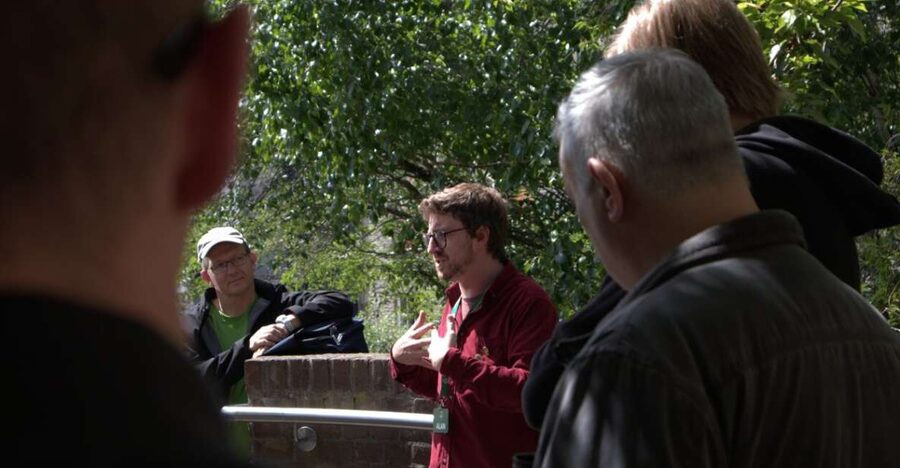
Myth walks make Dublin feel brand new. This folklore-led stroll turns familiar streets into a living storybook, with Temple Bar as a myth-launchpad and Ireland’s legends as your guide. You’re in good hands with writers and storytellers like Helena, Lee, Emily, and Dave, and they bring humor without sanding off the edges of the tales.
I especially love how this tour makes the myths feel practical—you learn what Irish people believed, and how those beliefs shaped daily life and national identity. Second, I love the mix of stops: you get popular landmarks like O’Connell Street, but you also get the Georgian Quarter side that most first-timers miss.
One possible drawback: if you want only straight, date-heavy history with zero folklore, this may feel more like storytelling than schooling. Also, it’s a walking tour in real weather, so pack for rain and don’t plan to treat it like an indoor show.
In This Review
- Key things that make this tour worth your time
- Temple Bar to Mythic Origins: starting outside The Old Storehouse
- Celtic characters on the streets: banshee, púca, fairies, and warriors
- The Georgian Quarter’s darker side and why it matters
- Abbey Theatre tragedy through a folklore lens
- O’Connell Street and the Gaelic revival: stories that live on
- How the walking format keeps it fun (and not exhausting)
- Price, value, and who this tour fits best
- Should you book this Dublin mythology tour?
- FAQ
- FAQ
- How long is the Dublin Mythology, Folklore and Legends Walking Tour?
- How much does the tour cost?
- Where do I meet for the tour?
- Where does the tour end?
- Is the tour guided in English?
- Is the tour wheelchair accessible?
- What topics and mythical creatures will the guide cover?
- Is hotel pickup and drop-off included?
Key things that make this tour worth your time
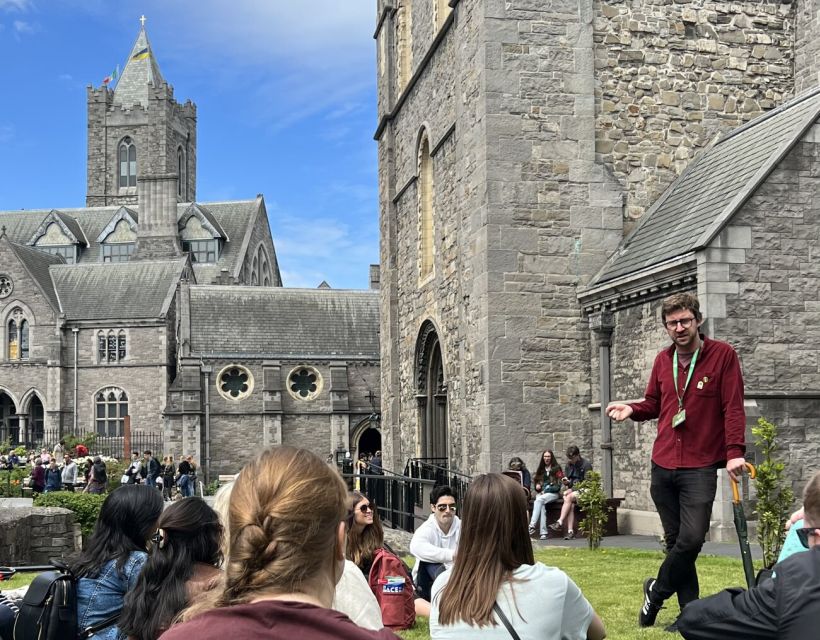
- Temple Bar as origin story, not just a nightlife landmark
- Banshee, púca, fairies, and leprechaun explained in plain, local terms
- Georgian Quarter darkness: rebellions, grave robbing, revolutions
- Abbey Theatre tragedy tied into the wider Irish story of identity
- Gaelic language revival plus contemporary street characters at the finish
More Irish myth and folklore on foot
- Dublin Mythology and Folklore Tour with Irish Stories and Legends★ 5.0 · 1,003 reviews
- Storytelling of Irish Myths and Legends★ 5.0 · 158 reviews
- Howth Hiking Trail from Dublin: Mythology and Legend★ 5.0 · 77 reviews
- Legends, Ghosts and Ghouls Walking Tour Dublin★ 4.5 · 16 reviews
Temple Bar to Mythic Origins: starting outside The Old Storehouse
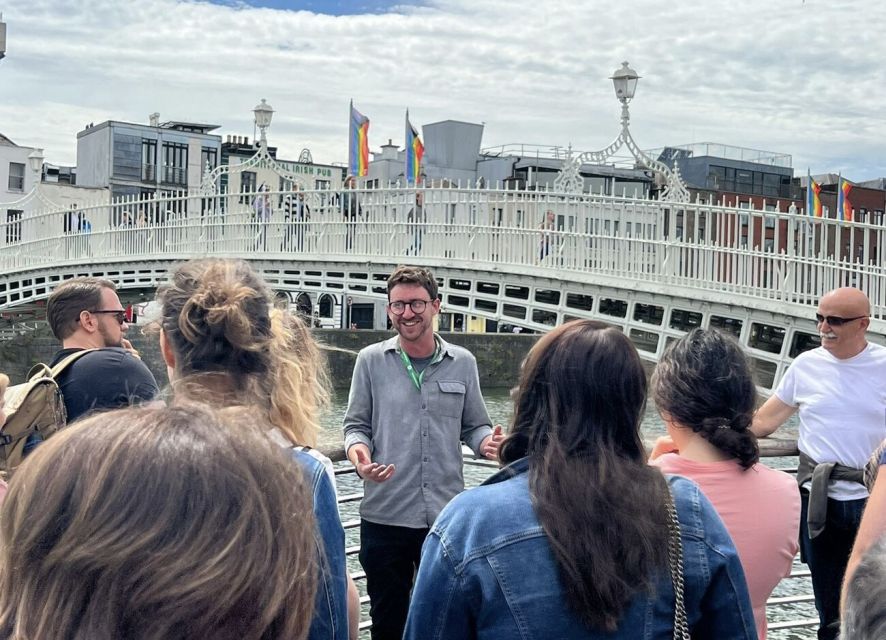
Most Dublin tours start by showing you photos. This one starts by using a place you already recognize—Temple Bar—and asking you to see it as a doorway into older belief systems. The meeting point is outside The Old Storehouse pub, and you’ll know you’re in the right place because there’s a green umbrella.
Right away, the guide frames Celtic-era traditions so the streets don’t feel random. Temple Bar can be loud and busy, but on this walk it becomes a launching pad for questions like: Where did Irish storytelling come from? Why do certain creatures show up again and again? And why do people still talk about them?
You’ll also start getting the “rhythm” of the tour: short movements, story pauses, and enough stopping that you’re not constantly straining your legs while trying to listen. Several guides keep the pacing friendly, with longer stops that give your brain time to absorb the character work—plus a chance to get your bearings.
Practical tip: wear shoes you can stand in for a couple of hours. Even with breaks, you’ll still be walking between story stops.
Celtic characters on the streets: banshee, púca, fairies, and warriors
The main joy here is how the guide turns Irish folklore into something you can picture. You don’t just hear names—you learn what role these creatures played in the culture, and why they mattered to everyday fears, hopes, and explanations.
Expect a tour that includes mythical creatures such as:
- Banshee
- Púca
- Fairies in Irish folklore
- Leprechaun (mentioned as part of the broader legend set)
And it doesn’t stop at creatures. The stories also connect to Ireland’s ancient warriors, so the myth world isn’t floating off in fantasy-land. It ties back to identity, memory, and what people passed along.
This is where the best guides earn their money. People like Lee and Dave are singled out for humor and energy, while Helena and Emily are praised for being engaging storytellers who keep the room moving. That matters because folklore can sound abstract until someone gives it a voice, a reason, and a Dublin street to stand on.
If you’re wondering whether you’ll feel lost without Irish background, you probably won’t. The stories are built to be understandable while you walk, not delivered like a textbook lecture. And because the guide keeps returning to what the beliefs meant, you start noticing patterns across different tales.
Who this part is for: anyone who likes stories, enjoys character-driven history, or wants to understand why myths still show up in Irish culture, art, and conversation.
The Georgian Quarter’s darker side and why it matters
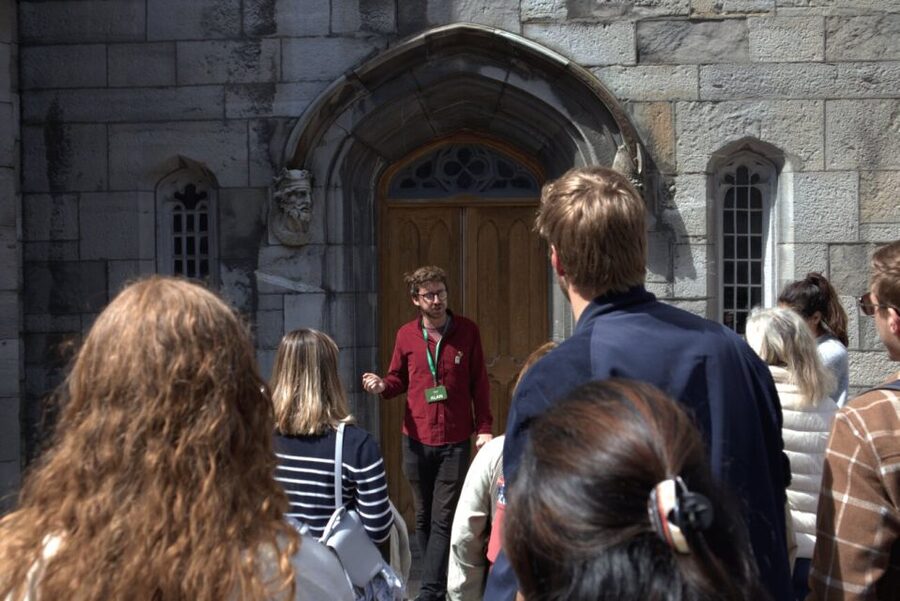
After Temple Bar’s myth-launchpad, the tour shifts tone. You’ll get off the beaten tourist track and move into the Georgian Quarter area, where the mood turns more macabre.
This is where you hear about:
- rebellions
- grave robbing
- revolutions
The value of this shift isn’t just the thrill factor. It’s that the guide helps you see how myth, fear, and public life can overlap. When a city goes through upheaval, people don’t only rewrite laws—they also rewrite meaning. Stories become a way to process chaos, explain loss, and give the future a framework.
In a place like Dublin, the architecture can feel calm from street level. But the tour’s job is to show you the pressure that sits under the calm: the tensions, the turning points, and the human mess behind the stone.
So yes, it gets darker. But it stays grounded in how people lived. The stops are long enough for the guide to tell the story clearly, and the pacing is set up so you’re not sprinting around trying to keep up.
Practical tip: if you’re traveling with kids, this is one reason the tour earns strong mentions—you’re not doing nonstop walking, and the guide’s storytelling style tends to keep younger attention from wandering.
Abbey Theatre tragedy through a folklore lens
One of the standout chapters is the tragic history of the Abbey Theatre. This part is smart because it connects the creative side of Ireland to the broader theme of storytelling and national identity.
Even if you don’t know the theatre’s history yet, you’ll leave with a clearer sense of why Ireland’s cultural voice matters. The guide frames theatre not as a distant museum topic, but as part of the same conversation as myth and legend—who gets to speak, which stories endure, and how art becomes a kind of public memory.
Why that matters on a walking tour: when you’re outside, surrounded by real streets, it’s easier to imagine how culture grows from place. The Abbey Theatre stop gives you a moment where the myth layer feels more “real” than magical. It’s still story work—but the stories helped shape how people understand themselves.
If you like tours that connect dots instead of just collecting facts, this is the moment you’ll probably appreciate most. And because the guide keeps the tone engaging, it doesn’t turn into a heavy lecture.
More Dublin walks at an easy pace
O’Connell Street and the Gaelic revival: stories that live on
The walk ends on O’Connell Street, finishing with an introduction to the revival of the Gaelic language and culture in Ireland. This ending matters because it shows you that folklore isn’t only about ancient creatures in old books. It’s also about living language, pride, and the push-and-pull of modern identity.
You’ll also meet the idea of Dublin’s present-day “street characters”—not in a creepy way, and not as a novelty act. The point is that stories still move through the city. They’re just using different tools now: conversation, signage, performance, and community memory.
This ending gives you something practical too. Once you understand the revival thread, you start noticing it elsewhere—on menus, in local references, in cultural events, and in how people talk about heritage.
And since the tour wraps back at the meeting point, you don’t have to worry about complicated after-you-leave logistics. It’s built to be a clean block of time early or mid-trip.
How the walking format keeps it fun (and not exhausting)
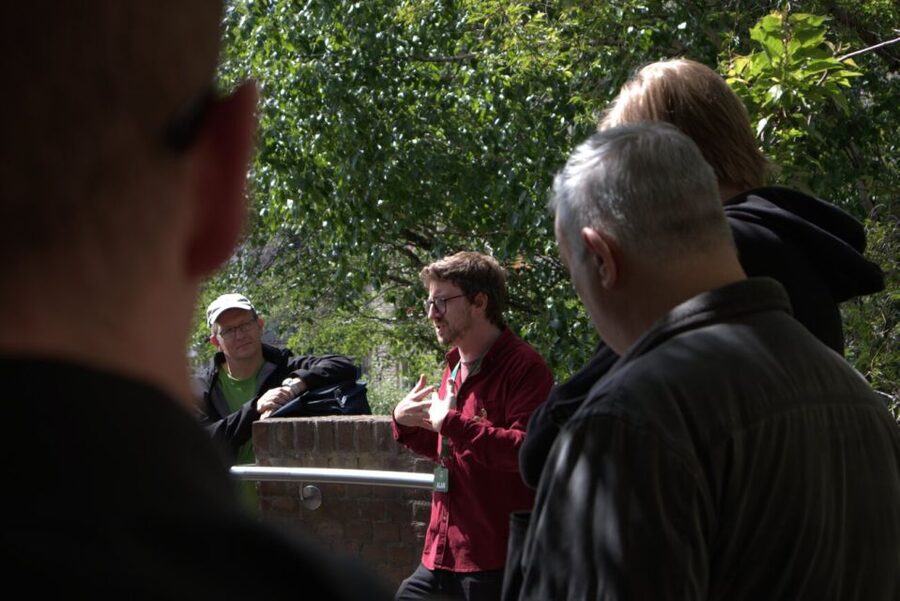
This is a 2-hour walking tour, and the way it’s paced is a big part of why people rate it so highly. You’ll have several stops, and they’re not “run, listen for ten seconds, then run again” stops. Guides keep the group moving, but they also give you time to settle into the story.
From the feedback, groups are often kept small enough to feel interactive. And guides like Helena, Lee, Emily, and Dave are praised for making it easy to ask questions and keep the mood friendly while you walk between sights.
There’s also a clear attempt to keep the experience comfortable. One helpful detail: stops and listening points are arranged so it’s not a misery slog, and it can work even if you’ve already walked a lot that day.
Practical tip: if you’re sensitive to long standing, bring a bottle of water and plan to use stop times to reset.
Also, the tour is wheelchair accessible. That’s a meaningful factor for planning, because it signals the operator considers inclusive access, not just “hardy” feet.
Price, value, and who this tour fits best
At $27 per person for about 2 hours, this tour is strong value if you like stories that connect culture to real streets. You’re not paying for entry tickets. You’re paying for a guide who can explain belief systems, name the creatures, and link them to Dublin’s visible places.
If you’ve already booked the classic checklist tours, this one gives you a different kind of payoff. It complements history walks because it answers the “why people believed what they believed” question—and it does it in a way you can remember. That’s the real bargain: you get context that helps you interpret other parts of the city while you’re still there.
It also fits well for:
- first-time visitors who want Dublin to feel more than monuments
- people who enjoy folklore, legends, and character-driven explanations
- families looking for an engaging tour length that doesn’t drag
- anyone who wants a break from lecture-heavy tours, but still wants substance
If you’re the type who needs museums, documents, and dates in every sentence, you might find some sections more atmospheric than academic. But if you’re open to how storytelling shaped Irish life, you’ll probably consider it one of your more memorable city experiences.
Should you book this Dublin mythology tour?
Yes—if you want Dublin to come alive through myth, folklore, and legends, this is an easy booking decision. The strong points are practical: friendly guides with humor, a clear focus on Irish creatures like banshee and púca, and stops that connect popular streets to places most people skip.
I’d skip it only if you’re looking for a purely factual, timeline-based history tour with no folklore emphasis. Otherwise, it’s a great way to start your trip with a fresh lens—and end it with a Gaelic revival thread that keeps echoing after the walk is over.
FAQ
FAQ
How long is the Dublin Mythology, Folklore and Legends Walking Tour?
The tour lasts 2 hours.
How much does the tour cost?
It costs $27 per person.
Where do I meet for the tour?
Meet outside The Old Storehouse pub, and look for the green umbrella.
Where does the tour end?
The activity ends back at the meeting point.
Is the tour guided in English?
Yes, the live tour guide speaks English.
Is the tour wheelchair accessible?
Yes, it is wheelchair accessible.
What topics and mythical creatures will the guide cover?
You’ll learn about Irish folklore themes and characters, including the banshee and púca, along with other mythical creatures like fairies and leprechauns.
Is hotel pickup and drop-off included?
No. Hotel pickup and drop-off are not included.
More Tours in Dublin






More Tour Reviews in Dublin



Myth, Folklore and Legend




Fresh off the cobbles: the latest Dublin reviews
- Dublin Private Airport Transfer to Ireland
★ 4.5 · 3 reviews - Private Chauffeur Service From Dublin Airport to Killarney
★ 5.0 · 3 reviews - Ireland: 3-Day West Coast Explorer Tour
★ 5.0 · 3 reviews - From Dublin: 4-Day Southern and Western Coast Tour
★ 4.3 · 3 reviews - Dublin : Street Art Walking Tour
★ 5.0 · 3 reviews - Spring Tonic Foraging Tour
★ 5.0 · 3 reviews
Walking Tours, compared.
 ★ 5.0Dublin Highlights and Hidden Gems Guided Walking TourFrom $296,020 reviews
 ★ 4.9Highlights and Hidden Gems Walking TourFrom $272,140 reviews
 ★ 5.01916 Rebellion Walking TourFrom $271,605 reviews
 ★ 5.090 Minute Dublin Walking tour and Sightseeing tipsFrom $21916 reviews
 ★ 5.02-Hour Historical Walking Tour from DublinFrom $22875 reviews
 ★ 4.7Historical 2-Hour Guided Walking Tour of DublinFrom $22865 reviews
 ★ 5.0Dublin Traditional Irish 3 Course Meal Walking Tour with LocalFrom $107755 reviews
 ★ 5.0The Dublin Private Walking TourFrom $163701 reviews
Browse the lists this tour appears in