
Reviewed · WALKING TOURS
Dublin: Bucket List Sights Walking Tour
One of the best ways to understand Dublin fast is walking. This 2-hour bucket list route strings together the city’s big eras—Vikings, Christians, Normans, English rule, and modern-day influence—without feeling like a history lecture.
I especially like how the tour balances major landmarks with human stories, and I came away with a cleaner sense of where everything fits in the city.
A small drawback to consider: you’ll be on pavement for about two hours, and Temple Bar’s lively energy is not everyone’s cup of tea.
What stands out is the guide approach. When I think of the best part, it’s Peter’s style—kind, tuned in to your interests, and ready to answer questions as you go.
Second, I like that the walk doesn’t just point and move on; you get context for why each stop matters, from cathedrals to government to street-level Dublin.
If you prefer slow, quiet sightseeing, you may want to pair this with a calmer plan afterward. And because it’s an outdoor walking tour, you’ll want to dress for the weather and be ready for crowd pockets around the central sights.
In This Review
- Key highlights worth knowing
- Getting your bearings with a smart 2-hour plan
- Christchurch Cathedral: Vikings first, then the cathedral we recognize
- St. Patrick’s Cathedral and Jonathan Swift’s Dublin
- Dubh Linn Garden and Dublin Castle: power, change, and the long middle
- Temple Bar: an old neighborhood turned into a nightlife magnet
- Ha’penny Bridge, Merchant’s Arch, and the city’s in-between moments
- Looking from Celtic beginnings to modern tech influence
- Molly Malone and the Trinity College finish that sets up your next move
- Price and value: why $19 can work well here
- Who should take this walk (and who might not)
- Should you book Dublin’s Bucket List Sights Walking Tour?
- FAQ
- FAQ
- Where does the Dublin walk start?
- How long is the tour?
- How much does it cost?
- Is there a live guide?
- Is the tour wheelchair accessible?
- What are the main sights on the route?
- Where does the tour end?
- Is free cancellation available?
- Can I reserve without paying right away?
Key highlights worth knowing
- Christchurch Cathedral: shaped by Viking beginnings and later Norman stonework, plus a story tied to Henry Roe’s whiskey money
- St. Patrick’s Cathedral: named for Dublin’s patron saint, with a connection to Jonathan Swift
- Dublin Castle: medieval and Georgian layers plus the reality of 700 years of British government in Ireland
- Temple Bar: one of the city’s older quarters, now famous for live music and lively pubs
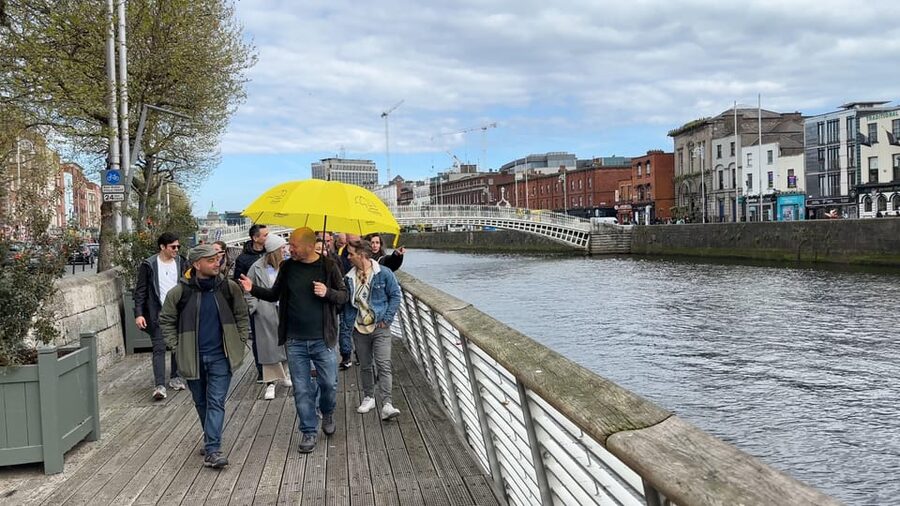
- Ha’penny Bridge and Merchant’s Arch: classic photo stops tied to the city’s shifting eras
- Trinity College ending at the gates: the finish point that lines you up for the Book of Kells area
More Dublin walks at an easy pace
- Dublin Highlights and Hidden Gems Guided Walking Tour★ 5.0 · 6,020 reviews
- Dublin: Highlights and Hidden Gems Walking Tour★ 4.9 · 2,140 reviews
- 1916 Rebellion Walking Tour★ 5.0 · 1,605 reviews
- 90 Minute Dublin Walking tour and Sightseeing tips★ 5.0 · 916 reviews
Getting your bearings with a smart 2-hour plan
Dublin can feel like a collection of great buildings and street corners until someone puts the timeline together for you. That’s exactly what this walk does. In about two hours, you cover a tight loop through the oldest core and the government/college center, so you can make better choices later.
The tour is guided, live, and in English, and it’s built for a “main sights” goal. If your travel day is short—or you just want the city to click quickly—you’ll appreciate that it’s not trying to solve everything.
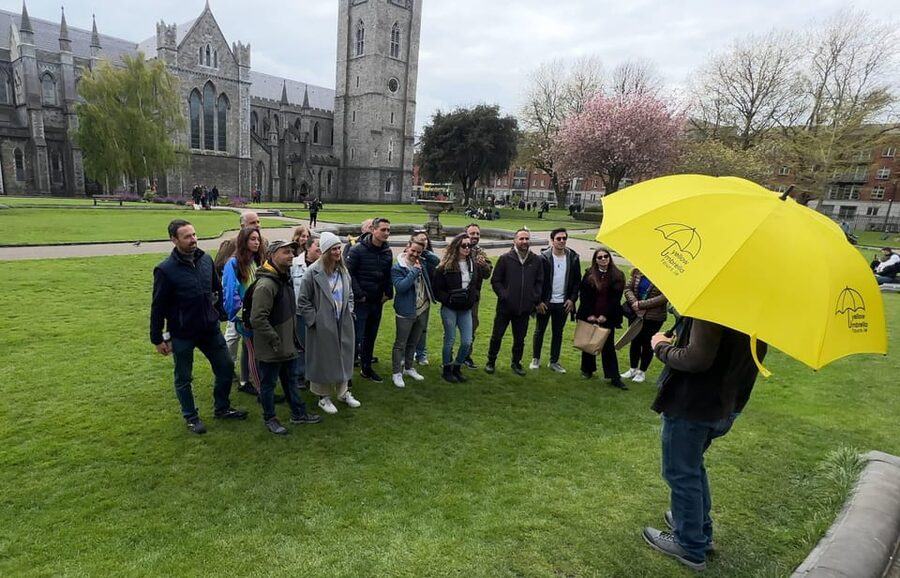
One detail I’d treat as a win: it starts at Christchurch Cathedral, right across from the cathedral area. Your meeting point is across the road from Christchurch Cathedral, outside the Bull and Castle, and you’ll want to look for the yellow umbrella.
Christchurch Cathedral: Vikings first, then the cathedral we recognize
Your first real wow moment is Christchurch Cathedral. The story you’ll hear here goes beyond the usual postcard description because the building didn’t appear fully formed. It began as a Viking-era structure in wood and later shifted into stonework under the Normans.
You also get the kind of “how did this get paid for” detail that makes history feel tangible. The tour explains that the spectacular 19th-century neo-Gothic cathedral you see today connects to the so-called whiskey money of Henry Roe. That turns the cathedral from an old landmark into a plot line with characters and motives.
What this stop gives you: a quick understanding of Dublin’s layers. Even if you’ve seen other European cities, Dublin’s story feels especially stacked here, because the timeline keeps resurfacing in the architecture.
What to watch for: Christchurch is a major sight, so if you want photos without shoulder-to-shoulder crowds, aim for the earliest moments of your route.
St. Patrick’s Cathedral and Jonathan Swift’s Dublin
Next comes St. Patrick’s Cathedral, and the naming matters. You’ll hear why it’s linked to Dublin’s beloved patron saint and the famous tale of Saint Patrick banishing snakes from Ireland. It’s the kind of story locals use to explain identity, and it fits the way Dublin presents its beliefs in public places.
This stop also has a big literary anchor. The tour notes that the cathedral is the burial place of the former Dean, Jonathan Swift, the writer of Gulliver’s Travels. Swift’s Dublin isn’t just something from a book; it sits in the city’s physical geography.
Why this matters for you: you get a cathedral paired with a mind. Instead of only architecture talk, you’re also learning how Dublin’s culture shows up in names you’ve likely heard before.
Small practical note: wear comfortable shoes. Cathedral areas are usually walk-up, pause, and look—repeated a few times over the full route.
Dubh Linn Garden and Dublin Castle: power, change, and the long middle
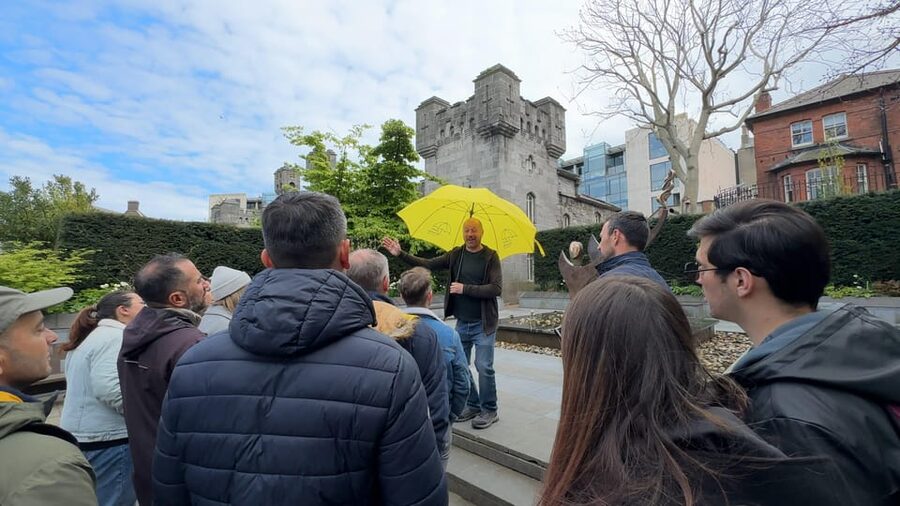
You move from churches to the seat of political power, and the transition feels natural. The tour heads toward Dubh Linn Garden, where you’ll learn about the Chester Beatty Library area and also about the Vikings’ longboats mooring when they arrived roughly twelve centuries ago.
That’s a clever way to frame a modern spot: you’re not just standing in a pretty garden-adjacent area. You’re standing where water mattered, where arrival mattered, and where Dublin’s earliest chapters were tied to movement and trade.
Then it’s onward to Dublin Castle, one of those places that can be hard to appreciate unless someone gives you the timeline. The tour explains that the castle shows a mix of medieval and Georgian architecture across both lower and upper courtyard areas. That mix is part of the point: Dublin’s power structures changed hands, but the city kept building on top of itself.
You’ll also hear the big political weight clearly. The castle was the centre of British rule in Ireland for about 700 years, and the tour describes the handover to Michael Collins and the Irish Free State in 1922.
What I’d take from Dublin Castle: it’s not only a historic stop. It’s also a lesson in how “old” buildings can still echo the present. If you’re the type who wants to understand why modern Dublin talks about independence the way it does, this is one of your strongest moments.





Temple Bar: an old neighborhood turned into a nightlife magnet

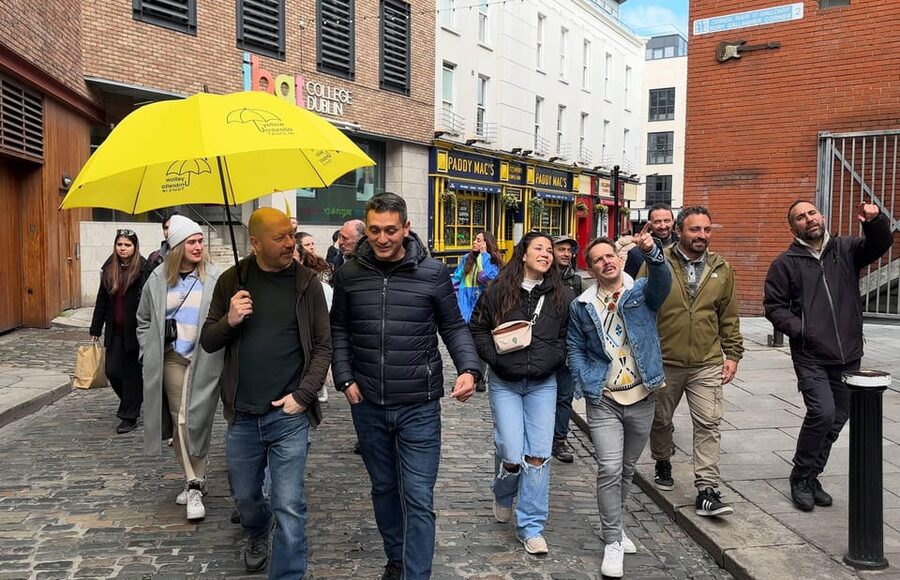
From the castle area you head toward Temple Bar, and this is where Dublin shifts into street life. The tour frames Temple Bar as one of the oldest parts of the city dating from the Tudor Conquest in the 16th century, which is an interesting contrast to what most visitors experience first: music, pubs, and energy.
It’s also a place you’ll understand faster once you’ve already gotten the “timeline” from the cathedrals and castle. The older quarter background makes Temple Bar feel less like a tourist district and more like a neighborhood that evolved into a cultural center.
This is also one of your easiest spots for quick photos—just be realistic about crowd levels. The description alone tells you it’s lively, and the “live music and Irish pubs” vibe can mean noise and people flow.
If you’re sensitive to crowds: consider spending extra time listening rather than trying to linger in the thickest pub doors. You’ll still catch the feel without getting stuck in the busiest pockets.
Ha’penny Bridge, Merchant’s Arch, and the city’s in-between moments
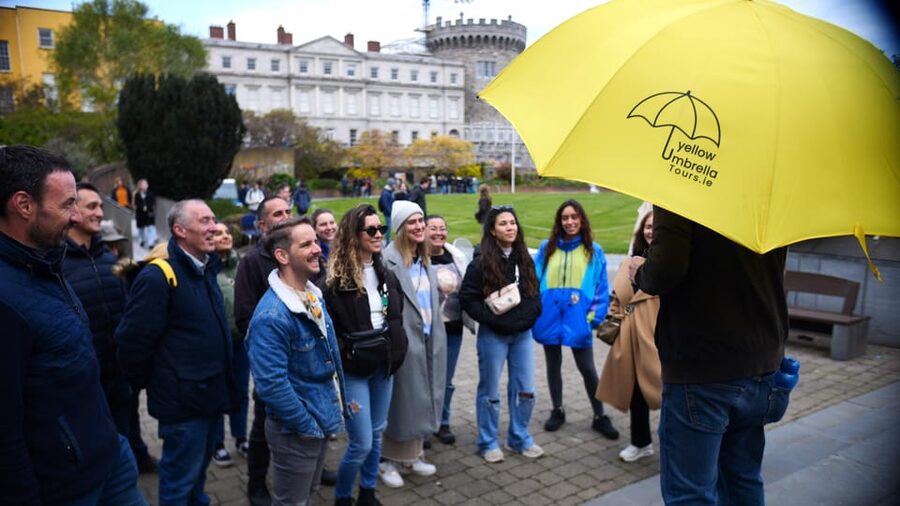
One of the tour’s best tricks is that it doesn’t treat Dublin as five isolated landmarks. It connects them with bridges, arches, and view points so the city feels like a continuous story.
You’ll cross the Ha’penny Bridge and pass through Merchant’s Arch. These are iconic for the obvious reasons—architecture, angles, and photos—but the real value is how they sit between eras. You’re traveling across the Liffey and moving through parts of the city that tell you Dublin has always been a “meeting place.”
There’s also a moment involving Crown Alley and Central Plaza, including a mention of Sam Stephenson’s brutalist behemoth. Whether you love brutalism or not, it helps to see Dublin isn’t only “old stone.” You’re getting the city’s modern attitude in the middle of the walking route.
Why this section is worth it: these are the stops that make your next day easier. Once you’ve walked the geography—bridge to arch to alley—you’ll find your way around the center with less effort.
Looking from Celtic beginnings to modern tech influence

The tour swings to the north side for a view that pulls the city’s long timeline into one line of sight. You’ll learn about the original Celtic settlement from about 2,100 years ago, then how the city stretches forward to the Silicon Docks influence from the Americans in the 21st century.
This is the kind of perspective that changes how you interpret what you see. Dublin suddenly feels less like a single historic postcard and more like a place that keeps reinventing its role.
The practical payoff is simple: you’ll know which parts of Dublin connect to which story. And if you want to do more walking or pick a museum next, you’ll have a better sense of what kind of Dublin you’re searching for—ancient settlement vibes, church-and-government Dublin, or modern creative/commercial Dublin.
Molly Malone and the Trinity College finish that sets up your next move
Near St. Andrew’s Church, you’ll meet Dublin’s famous figure: Molly Malone. Even if you’ve only heard the song, seeing her in the street-level setting helps it click. It’s a reminder that Dublin’s history isn’t only in large buildings; it’s also in characters that became part of city identity.
Then the tour finishes at Trinity College outside the front gate, where you’ll be positioned for what most people come for next: the Book of Kells exhibition area. The tour ending doesn’t try to replace that experience, but it puts you in the right place at the right time.
What I like about this finish: it works whether you plan to enter Trinity right away or simply use the area as your next stop. Either way, you’re leaving with a clear direction.
Price and value: why $19 can work well here
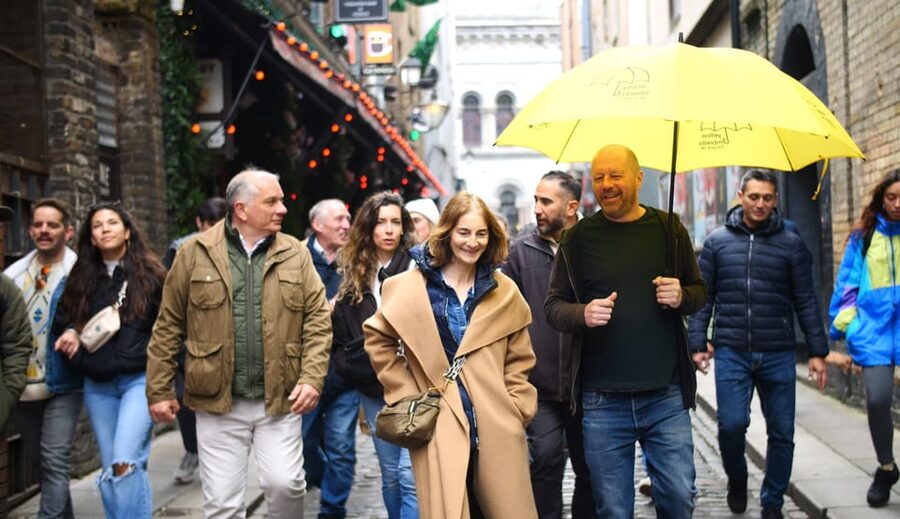
At $19 per person for about two hours, this tour competes well with the usual options that cost more but don’t give you the same timeline sense. You’re paying for a live guide, a structured route through top landmarks, and the ability to ask questions as you walk.
The value isn’t only the sites. It’s the connections—how Viking beginnings relate to later stonework, how a cathedral connects to a writer like Jonathan Swift, and how Dublin Castle helps explain modern political identity. That “put it together” skill is hard to get from self-guided wandering.
Also, the tour is wheelchair accessible, which is a big deal for a walking-based route. If mobility is a factor for you, it’s worth considering that the tour format is designed to work for more people than purely stairs-and-hills itineraries.
Who should take this walk (and who might not)
This tour is a strong fit if:
- You want the main Dublin sights in one organized route without planning every step.
- You like history that connects to names you already know, like Jonathan Swift.
- You want a guide who will answer questions and offer pointers for the rest of your trip.
It may be less ideal if:
- You’re hoping for a very slow pace or deep museum time. This is built for outdoor sightseeing and landmark context.
- You dislike lively nightlife zones. Temple Bar is part of the route and is described as a lively area for music and pubs.
One more note from the guide style: the tour is known for adapting to your comfort level with English and for answering questions. If English isn’t your strongest language or you just prefer to ask things as they come up, that kind of flexibility is genuinely useful.
Should you book Dublin’s Bucket List Sights Walking Tour?
I’d book it if you want a fast, logical Dublin orientation built around Christchurch Cathedral, St. Patrick’s Cathedral, Dublin Castle, Temple Bar, and Trinity College. This is the kind of tour that helps you stop seeing Dublin as separate attractions and start seeing it as one connected story.
Skip it if you’re already confident in Dublin’s timeline and you’d rather spend your time at a slower pace in one neighborhood. But if you want to get your bearings fast and leave with clearer context for what you’ll do next, this one is a practical choice.
FAQ
FAQ
Where does the Dublin walk start?
You meet your guide across the road from Christchurch Cathedral, outside the Bull and Castle, and you should look for the yellow umbrella.
How long is the tour?
The tour lasts about 2 hours.
How much does it cost?
It’s $19 per person.
Is there a live guide?
Yes. The tour includes a live tour guide who speaks English.
Is the tour wheelchair accessible?
Yes, it’s listed as wheelchair accessible.
What are the main sights on the route?
The tour highlights include Christchurch Cathedral, St. Patrick’s Cathedral, Dublin Castle, Temple Bar, and Trinity College (Book of Kells area is the big draw there).
Where does the tour end?
The tour ends back at the meeting point across from Christchurch Cathedral.
Is free cancellation available?
Yes. You can cancel up to 24 hours in advance for a full refund.
Can I reserve without paying right away?
Yes. You can reserve now and pay later.
More Dublin Walking Tours






More Tours in Dublin





More Tour Reviews in Dublin



Fresh off the cobbles: the latest Dublin reviews
- Dublin Private Airport Transfer to Ireland
★ 4.5 · 3 reviews - Private Chauffeur Service From Dublin Airport to Killarney
★ 5.0 · 3 reviews - Ireland: 3-Day West Coast Explorer Tour
★ 5.0 · 3 reviews - From Dublin: 4-Day Southern and Western Coast Tour
★ 4.3 · 3 reviews - Dublin : Street Art Walking Tour
★ 5.0 · 3 reviews - Spring Tonic Foraging Tour
★ 5.0 · 3 reviews
Walking Tours, compared.
 ★ 5.0Dublin Highlights and Hidden Gems Guided Walking TourFrom $296,020 reviews
 ★ 4.9Highlights and Hidden Gems Walking TourFrom $272,140 reviews
 ★ 5.01916 Rebellion Walking TourFrom $271,605 reviews
 ★ 5.090 Minute Dublin Walking tour and Sightseeing tipsFrom $21916 reviews
 ★ 5.02-Hour Historical Walking Tour from DublinFrom $22875 reviews
 ★ 4.7Historical 2-Hour Guided Walking Tour of DublinFrom $22865 reviews
 ★ 5.0Dublin Traditional Irish 3 Course Meal Walking Tour with LocalFrom $107755 reviews
 ★ 4.9Mythology, Folklore and Legends Walking TourFrom $27703 reviews
Browse the lists this tour appears in