
Reviewed · WALKING TOURS
Dublin: Hidden Gem Walking Tour with Local Guide
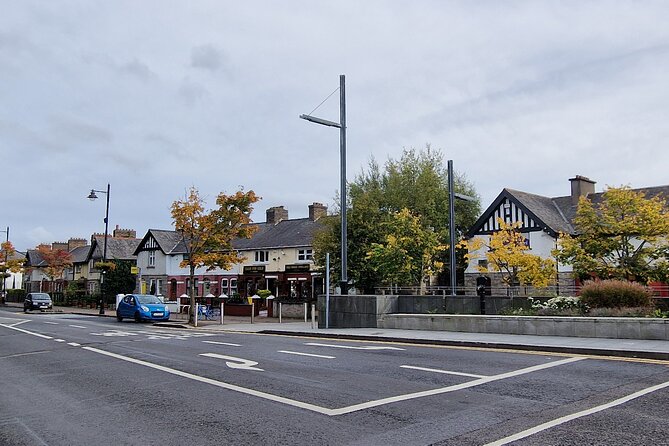
Tallaght feels like Dublin’s quiet side street, until this walk turns on the lights. I love how the tour stitches together local characters and everyday corners of Kingswood and Tallaght Village in just two hours. The guide, Sophie, keeps it conversational and packs in letters, poems, and context so the area stops feeling like a blur of suburbs.
My second favorite thing is the way the route moves between eras, from monastery-era Tallaght to 20th-century housing growth and back again to legends and music in the hills. You’ll also get some basic Irish at the end, plus a chance to use it at a nearby bilingual café. One thing to consider: the tour runs on good-weather days, so plan around forecast and keep an alternate date in mind.
In This Review
- Key Highlights to Know Before You Go
- Kingswood Heights to Tallaght Village: A Fast Tour Through Big Time
- Kingswood Heights: Tallaght’s Ancient Beginnings Start Close to Home
- Whitehall (Former Katharine Tynan Residence): Literature Where the Streets Are
- Belgard Road: William Howard Russell and the Long Reach of Reporting
- Oisín in Tír na nÓg: Legend Meets the Dublin Mountains View
- Tallaght Aerodrome to Chocolate Memories at Belgard Retail Park
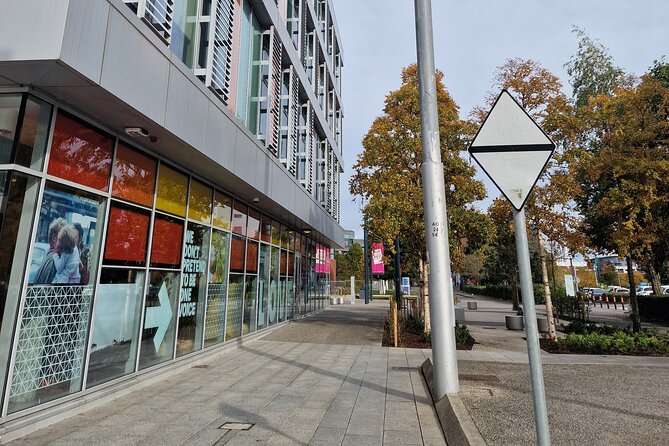
- TU Dublin Tallaght Campus: When Growth Hit Fast
- St Maelruain’s Church: Monastery Roots and an Earliest Irish Legend of Place
- Alice Furlong at St Maelruain’s: Irish Language Advocacy in Real Life
- Tallaght Village Green: Fenian Rising Connections and Dickens on the Streets
- Finishing in Tallaght Village: Cottages by Thomas Joseph Byrne and Basic Irish
- Value, Booking, and What to Expect Day-of
- Who This Tour Is For (and Who Might Skip It)
- Should You Book This Kingswood to Tallaght Walk?
- FAQ
- How long is the Dublin: Hidden Gem Walking Tour with Local Guide?
- What language is the tour offered in?
- Where does the tour start and end?
- How many people are in the group?
- Do I need tickets or admissions for the stops?
- Do I get a mobile ticket?
- Is the tour accessible by public transportation?
- Is a service animal allowed?
- What happens if the weather is poor?
Key Highlights to Know Before You Go
- Small group feel (max 12) means more questions and a less rushed pace.
- Sophie’s storytelling style uses letters, poems, and historical snapshots to make names stick.
- Tallaght’s overlooked role in bigger Irish events shows up repeatedly, not just once.
- Bilingual touches include an Irish/English version of an Oisín legend and some basic Irish practice.
- Views on the route connect legends to the Dublin Mountains area.
More Dublin walks at an easy pace
- Dublin Highlights and Hidden Gems Guided Walking Tour★ 5.0 · 6,020 reviews
- Dublin: Highlights and Hidden Gems Walking Tour★ 4.9 · 2,140 reviews
- 1916 Rebellion Walking Tour★ 5.0 · 1,605 reviews
- 90 Minute Dublin Walking tour and Sightseeing tips★ 5.0 · 916 reviews
Kingswood Heights to Tallaght Village: A Fast Tour Through Big Time
This isn’t a “see a monument and move on” kind of walk. It’s a character-driven route that helps you understand how Tallaght grew from older rural roots into a major urban area—while still keeping threads to early Irish history, writers, and national events.
The pace is brisk but not chaotic. With a 2-hour duration and a group capped at 12, you’re not standing in a line waiting for others to catch up. The tour also helps if you already know Dublin fairly well. You’ll start to see how often Dublin’s story includes the outskirts, not just the postcard center.
You’ll be on your feet for much of the tour, but the stops are short and frequent. Each one is built around a theme: a person, a legend, a location tied to war or politics, or a shift in how the area lived and worked.
Kingswood Heights: Tallaght’s Ancient Beginnings Start Close to Home
The tour begins in Kingswood Heights, and from the first minutes you get a framing of Tallaght’s origins. The guide points you toward the older layer of Irish history that most people skip when they focus only on the city core.
This first stretch is about getting your bearings. You’re not just hearing random facts—you’re being shown the logic behind the places. Tallaght isn’t presented as a generic suburb; it’s presented as a place with a long memory.
It’s also an easy opener for first-time visitors. If you’re new to the Tallaght area, you’ll still feel oriented by the time you reach the next stop.
Whitehall (Former Katharine Tynan Residence): Literature Where the Streets Are
Next comes one of the tour’s smartest choices: bringing a major Irish literary figure into a very specific local setting. You’ll hear about Katharine Tynan, from her life and the literary circles she moved through in both Irish and English worlds to her own contributions as a writer.
What makes this stop work is the way it turns literature into geography. You’re not learning names only—you’re connecting names to a house that once sat where you’re standing, and to relationships that shaped Irish culture.
The guide shares materials like letters connected to Katharine’s friendships with W.B. Yeats and George William Russell (AE). These aren’t presented like dusty documents. They’re used as clues to help you picture how people talked, corresponded, and influenced each other.
If you like Irish writing or you just enjoy hearing how artists actually lived, this stop is one of the moments you’ll remember later.
Belgard Road: William Howard Russell and the Long Reach of Reporting
At Belgard Road, the tour shifts into war correspondence and 19th-century journalism through William Howard Russell. He’s introduced as a major early war correspondent, and the route ties his Tallaght roots to the wider world of newspapers and major conflicts.
You’ll get a clear run through the big reporting themes: his early life in Tallaght, his work for The Times, and major story areas that stretched across Ireland and beyond—Daniel O’Connell’s era, the Great Famine, the Crimean War, and the American Civil War.
This stop also adds one of those human details that makes history feel less like a textbook. The guide mentions his friendship with Charles Dickens. It’s a good reminder that even serious war reporting didn’t happen in isolation; people circulated through networks of writers and public figures.
If you’re the type who likes history with names and connections, this part gives you both—plus it explains why one person from Tallaght could become known internationally.
More guided Dublin outings with a local


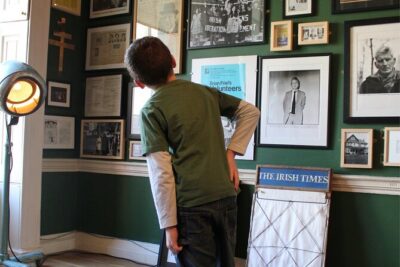
Oisín in Tír na nÓg: Legend Meets the Dublin Mountains View
Here the tour gets fun in a way that still feels tied to place. The guide briefly covers Irish mythology and then lands on one of the best known legends: Oisín in the Land of Youth (Oisín I dTír na nÓg).
You’ll hear the story in a bilingual Irish/English format, with a version shared during the stop. This is a smart way to make mythology approachable, even if your Irish is nonexistent. The guide isn’t expecting you to be able to read; you’re meant to follow along, understand the basics, and connect the legend back to local surroundings.
The payoff is the link to the Dublin Mountains. Even if you don’t know the mountains well, you’ll understand why this legend gets tied to the surrounding hills. It’s a rare blend of story and real-world view, and it breaks up the heavier political and literary stops.
Tallaght Aerodrome to Chocolate Memories at Belgard Retail Park
Then you get a stop that feels like a time machine. Belgard Retail Park is the setting for a discussion of the former Tallaght Aerodrome—its role through WW1, the Irish War of Independence, and the Irish Civil War—all within the space where many people now just run errands.
This is also where the tour does something I really appreciate: it explains why the past still matters when the buildings change. The aerodrome is presented as land with layered uses, and the guide connects it back to the family background of Katharine Tynan through mention of a poem tied to the development.
After that, the route shifts into everyday history with the Gallagher family and Urneys Chocolates. You learn how Urney’s became a Tallaght institution for decades and then closed in 1980—plus what remains of the brand’s presence in Ireland.
The stop doesn’t treat business history as trivia. It frames companies as anchors in local identity. People remember where their favorite products came from. The guide also briefly touches the Jacob’s brand operating in Tallaght for a time, and what these businesses meant for the area’s transformation.
If you like the way the tour connects big events to regular life, you’ll likely rank this stop among your favorites.
TU Dublin Tallaght Campus: When Growth Hit Fast
At TU Dublin, the tour turns toward the modern transformation of Tallaght. You’ll learn about the area’s shift in the span of a few decades, especially the 1970s to 1980s, when Tallaght became one of the fastest growing urban centers in Western Europe.
What makes this stop useful is that it doesn’t present growth as only positive. The guide places it against the backdrop of Ireland dealing with economic difficulties, high unemployment, and high emigration. That context matters. It helps you understand why rapid change is not just about buildings—it’s about families, work, and leaving.
You’ll also get a chance to see how the area developed from that period into the Tallaght people recognize today. Even if you walk past buildings every day, this kind of explanation makes you notice patterns.
St Maelruain’s Church: Monastery Roots and an Earliest Irish Legend of Place
St Maelruain’s Church of Ireland brings the tour back to ancient roots, literally. The guide explains that the current church stands on the site of a monastery that held major importance in early Ireland.
It’s tied to the idea of two major religious centers known as the two eyes of Ireland, with a parallel monastery at Finglas. You’ll hear about St Maelruain himself and how the present church came into being.
This stop is short, but it works as a reset. After aerodromes and chocolate and city growth, you get to remember that some of these routes were meaningful long before modern Dublin spread outward.
Alice Furlong at St Maelruain’s: Irish Language Advocacy in Real Life
Not far away, the tour focuses on Alice Furlong, buried on the church grounds. This is one of the tour’s most quietly powerful segments because it highlights cultural work—not just politics in the narrow sense.
You’ll hear that Alice was involved as a founding member and vice-president within Inghinidhe na hÉireann (Daughters of Ireland). She’s also described as a poet and writer and an Irish-language advocate whose love of the language connected to Tallaght.
The guide shares some of her poetry in Irish, and provides English translations. This is a big plus if you’re curious about Irish-language culture but don’t know where to start. You get the Irish text plus a professional translation, so you can appreciate the meaning without feeling shut out.
Tallaght Village Green: Fenian Rising Connections and Dickens on the Streets
At Village Green, the tour points out a plaque commemorating the Fenian Rising of 1867 and emphasizes Tallaght’s role in that period.
Then it adds a cross-link that makes you look at the place differently: the guide shares writings by Charles Dickens connected to this chapter of history in Tallaght. It’s another reminder that Tallaght’s story isn’t isolated. It was seen, written about, and folded into narratives beyond local memory.
You don’t get an overlong lecture here. You get enough detail to feel anchored, plus a direction for further reading if you want it later.
Finishing in Tallaght Village: Cottages by Thomas Joseph Byrne and Basic Irish
The final stop returns to Tallaght Village and brings you to cottages designed by architect Thomas Joseph Byrne, described as one of the influential architects of the day.
You’ll also hear a quick but meaningful history of local transport: the Dublin and Blessington Steam Tramway (DBST) that ran through the area before closing in 1932. It’s the kind of detail that makes you picture what daily movement looked like before cars and modern transit patterns took over.
To close the tour, the guide teaches basic Irish and then suggests using what you learn at a special local café in Tallaght Village—right in the heart of the neighborhood. The café is bilingual Irish/English, which makes the language practice feel practical instead of performative.
Value, Booking, and What to Expect Day-of
For $18.05 per person and roughly two hours, this is strong value if you like context and conversation. You’re paying for a guided route that covers a lot of ground—literary figures, war reporting, mythology, churches, language, and local commercial history—without turning it into a museum-style slog.
It’s also budget-friendly compared with city tours that focus on a single landmark. Here you’re getting a whole storyline across multiple eras.
Groups are kept small (max 12), and you get a mobile ticket. The tour is offered in English, and it includes materials along the way—letters and poems are part of how you follow the narrative.
Two practical points to plan around:
- Wear shoes for a walking tour with frequent short stops.
- Since it requires good weather, check the forecast and keep flexibility if conditions look rough.
Who This Tour Is For (and Who Might Skip It)
This tour is ideal if you:
- Want a different side of Dublin than the classic center-and-castles pattern
- Like history tied to real people—writers, correspondents, language advocates
- Enjoy bilingual bits and don’t mind basic Irish practice
You might skip it if you:
- Prefer very famous monuments only
- Want a long sit-down or indoor-heavy experience
- Dislike walking in weather that might turn
Should You Book This Kingswood to Tallaght Walk?
If you’re open to learning Dublin from the edges, I’d book it. This is the kind of tour that changes how you see a neighborhood you thought you already understood. The route connects poets, journalism, religion, mythology, business life, and urban growth into one clear thread—and it does it in a small-group format with a guide who answers questions and uses real documents like letters and translated poetry.
The biggest reason to book is simple: you’ll leave with a much sharper sense of Tallaght’s importance, and you won’t just remember names—you’ll remember places.
FAQ
How long is the Dublin: Hidden Gem Walking Tour with Local Guide?
The tour runs for about 2 hours.
What language is the tour offered in?
The tour is offered in English.
Where does the tour start and end?
It starts in Kingswood Kilnamanagh, Dublin, Co. Dublin, Ireland and ends in Tallaght Village (R819), next to a bilingual Irish/English café.
How many people are in the group?
The tour has a maximum of 12 travelers.
Do I need tickets or admissions for the stops?
The stop descriptions indicate admission tickets are free.
Do I get a mobile ticket?
Yes, you receive a mobile ticket.
Is the tour accessible by public transportation?
It’s near public transportation.
Is a service animal allowed?
Yes, service animals are allowed.
What happens if the weather is poor?
The tour requires good weather. If it’s canceled due to poor weather, you’ll be offered a different date or a full refund.
More Dublin Walking Tours



More Tours in Dublin




More Tour Reviews in Dublin



Fresh off the cobbles: the latest Dublin reviews
- Dublin Private Airport Transfer to Ireland
★ 4.5 · 3 reviews - Private Chauffeur Service From Dublin Airport to Killarney
★ 5.0 · 3 reviews - Ireland: 3-Day West Coast Explorer Tour
★ 5.0 · 3 reviews - From Dublin: 4-Day Southern and Western Coast Tour
★ 4.3 · 3 reviews - Dublin : Street Art Walking Tour
★ 5.0 · 3 reviews - Spring Tonic Foraging Tour
★ 5.0 · 3 reviews
Walking Tours, compared.
 ★ 5.0Dublin Highlights and Hidden Gems Guided Walking TourFrom $296,020 reviews
 ★ 4.9Highlights and Hidden Gems Walking TourFrom $272,140 reviews
 ★ 5.01916 Rebellion Walking TourFrom $271,605 reviews
 ★ 5.090 Minute Dublin Walking tour and Sightseeing tipsFrom $21916 reviews
 ★ 5.02-Hour Historical Walking Tour from DublinFrom $22875 reviews
 ★ 4.7Historical 2-Hour Guided Walking Tour of DublinFrom $22865 reviews
 ★ 5.0Dublin Traditional Irish 3 Course Meal Walking Tour with LocalFrom $107755 reviews
 ★ 4.9Mythology, Folklore and Legends Walking TourFrom $27703 reviews
Browse the lists this tour appears in