
Reviewed · WALKING TOURS
Dublin: Highlights and Hidden Corners Walking Tour
Dublin is a lot more fun on foot. This 2.5-hour walking tour strings together major landmarks and offbeat corners, with a guide who makes the city’s twists and turns feel personal. I love the small-group size (max 16, often fewer), and I really like how the stops mix famous addresses with strange little surprises you would miss on your own. The main drawback to note: all the sights are external, so you won’t go inside buildings like Trinity College on this tour.
You start centrally on Dame Street at the Tree of Gold statue and move through the former Viking and medieval area, then swing to the north side across the River Liffey. Along the way you’ll get the human stories behind places like the General Post Office, and you’ll also get the playful details too, from a wobbly-bridge moment to a post-box with symbolism. If you prefer lots of indoor time, this may feel a bit more like a “see and learn” walk than a “go inside” experience.
At $31 per person, it’s good value for first-day orientation. You’re buying a focused route, a friendly English-speaking guide, and a tight pacing that usually lands you in the Trinity College area for a smooth next step on your own.
In This Review
- Key things I’d bet on (before you book)
- Entering Dame Street: why this tour sets you up fast
- Crann an Óir to City Hall: Dublin’s official face and the streets behind it
- The Viking-to-medieval stretch: Dublin Castle grounds and Christ Church Cathedral
- Temple Bar-side alleys: Fishamble Street, Smock Alley, and the people-sized Dublin
- Across the Liffey: Millennium Bridge, the Northside, and the change of viewpoint
- O’Connell Street and the GPO: where history hits the sidewalk
- Meeting House Square, Temple Bar energy, and the Irish stage around you
- The Italian Quarter and St Mary’s Church-turned-café
- Henry & Moore Streets to O’Connell Monument: small streets, big ideas
- Former Parliament House (Bank of Ireland): the political center of the walk
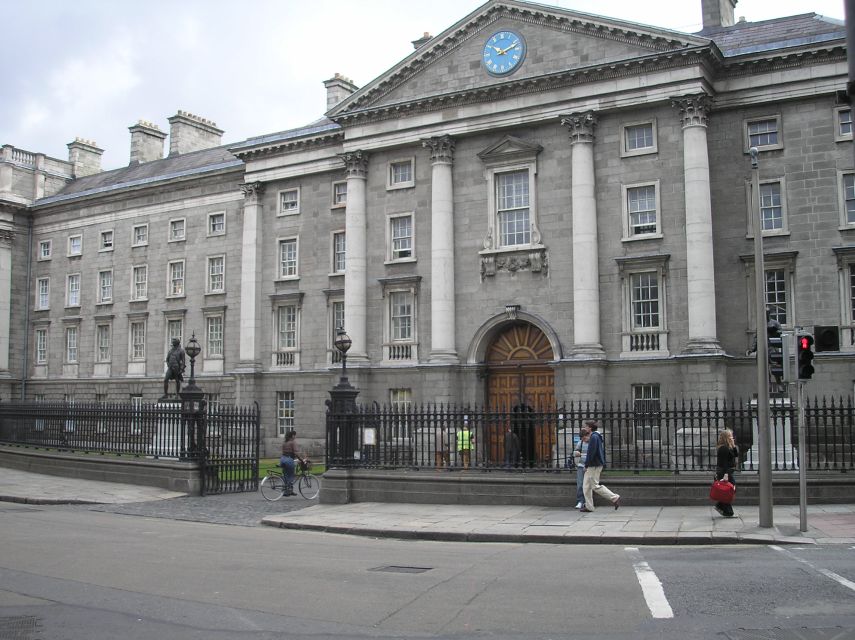
- Finish outside Trinity College: Book of Kells is waiting, but not on this walk
- The quirky Dublin details you’ll remember longer than the landmarks
- What the 2.5 hours feels like in real terms (pace and group size)
- Price and value: what $31 buys you in Dublin terms
- Who this tour suits best (and who might prefer something else)
- Should you book this Dublin Highlights and Hidden Corners walk?
- FAQ
- Where do I meet for the Dublin tour?
- How long is the walking tour?
- Is this tour inside buildings?
- What landmarks does the route include?
- Is the tour wheelchair accessible and is it in English?
- What’s the cost and do I get free cancellation?
Key things I’d bet on (before you book)
- Max 16 people on a relaxed route, so it’s easier to hear and ask questions
- External-only stops still make sense here, because the guide points out what to notice from the street
- Big Dublin icons + small curiosities across both sides of the Liffey
- Real story moments tied to places like the General Post Office and O’Connell Street
- Quirky photo-and-fact details like a post-box symbol and playful art references
- Finish outside Trinity College, giving you a clear next target for your day
More Dublin walks at an easy pace
- Dublin Highlights and Hidden Gems Guided Walking Tour★ 5.0 · 6,020 reviews
- Dublin: Highlights and Hidden Gems Walking Tour★ 4.9 · 2,140 reviews
- 1916 Rebellion Walking Tour★ 5.0 · 1,605 reviews
- 90 Minute Dublin Walking tour and Sightseeing tips★ 5.0 · 916 reviews
Entering Dame Street: why this tour sets you up fast
This is one of those Dublin walks that helps you feel oriented early. You start right in the center at the Tree of Gold statue (Crann an Óir), at Central Plaza on Dame Street, by the corner of Dame Street and Fownes Street Upper. From there, your guide works like a map you can follow: landmarks come first, then the side streets and odd corners that explain how the city actually grew.
What I like is the balance. You get the obvious stops, but you’re not just collecting postcard views. The guide connects streets to events, and events to people, so the city feels less like a list and more like a story you can walk through.
Also, the time window is practical. Two and a half hours is long enough to cover a lot of ground without turning into a full-day slog. If you’ve only got one afternoon to get your bearings, this is a strong choice.
Crann an Óir to City Hall: Dublin’s official face and the streets behind it
The route begins on Dame Street, right where locals and visitors both pass through. This is a smart opening because you’re in the busiest, most readable part of downtown, so the early minutes feel easy, not confusing.
From there, you move into the city-center zone that ties together civic Dublin with older layers underneath. City Hall is one of the anchors, and it’s a reminder that Dublin isn’t just pubs and scenery. It’s also government, planning, and the decisions that shape everyday life.
Your guide then starts doing the real work: pointing out how the city’s layout reflects different eras. You’ll hear about the former Viking and medieval quarter, which matters because Dublin’s street patterns can feel random until you understand what came first.
The Viking-to-medieval stretch: Dublin Castle grounds and Christ Church Cathedral
One of the best parts of this walk is the way it moves you through time without turning it into a lecture. After the downtown center, you’ll be directed toward the Dublin Castle grounds and gardens area. Even though you stay outside, you’re in the right setting to understand why this location is such a focal point in Dublin’s story.
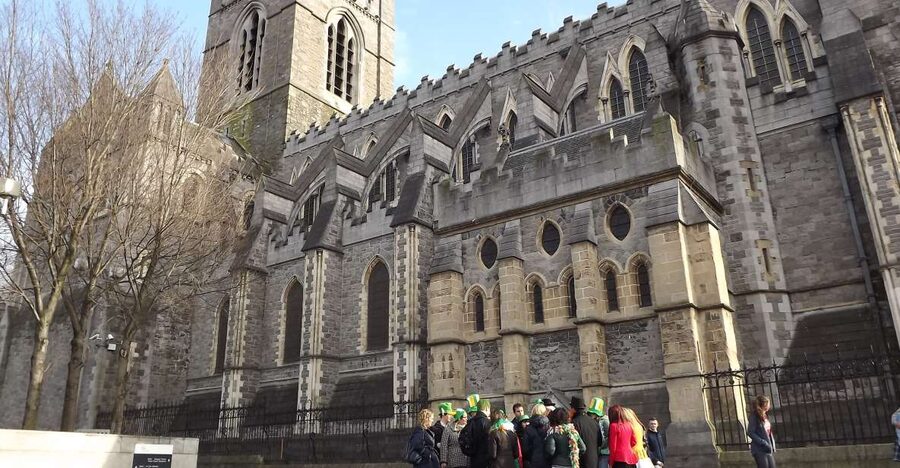
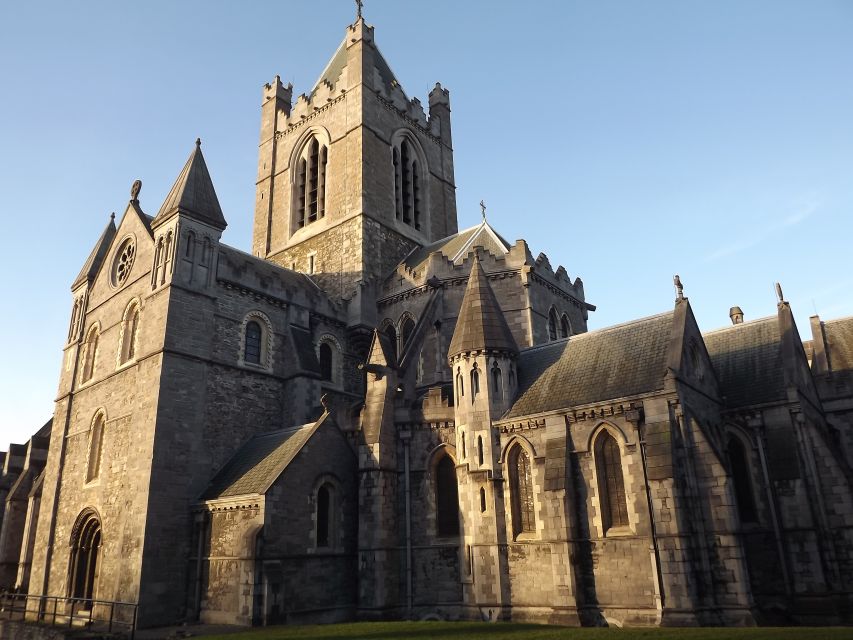
Next up is Christ Church Cathedral, another major marker. Again, you won’t go inside on this tour, but from the street you can still pick up the scale and significance of the site. Your guide’s job is to translate that stone-and-spire presence into real context: what the place meant, and why it ended up where it is.
This stretch also helps you connect something important: Dublin’s “big names” are not separate from the rest of the city. They sit right in the middle of the streets you’ll keep walking afterward—so the history stays in view.
Temple Bar-side alleys: Fishamble Street, Smock Alley, and the people-sized Dublin
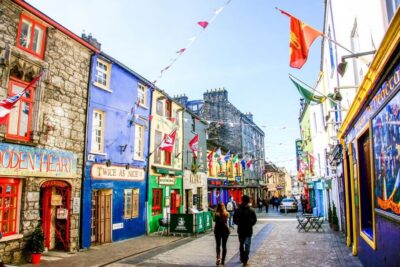
Once you swing toward Temple Bar, the tone shifts in a good way. The city gets noisier, more layered, and more detailed. Fishamble Street and Smock Alley are the kind of streets that make Dublin feel lived-in rather than staged.
These stops matter because they’re where you can see the city’s smaller rhythm. Instead of jumping from one landmark to the next, you get the sense of how neighborhoods and street life developed around these older corridors.
And because the tour is guide-led, you’re not just walking through tourist density. You’re learning what to notice: which details hint at older uses, and how those older uses shape what you see now.



Across the Liffey: Millennium Bridge, the Northside, and the change of viewpoint
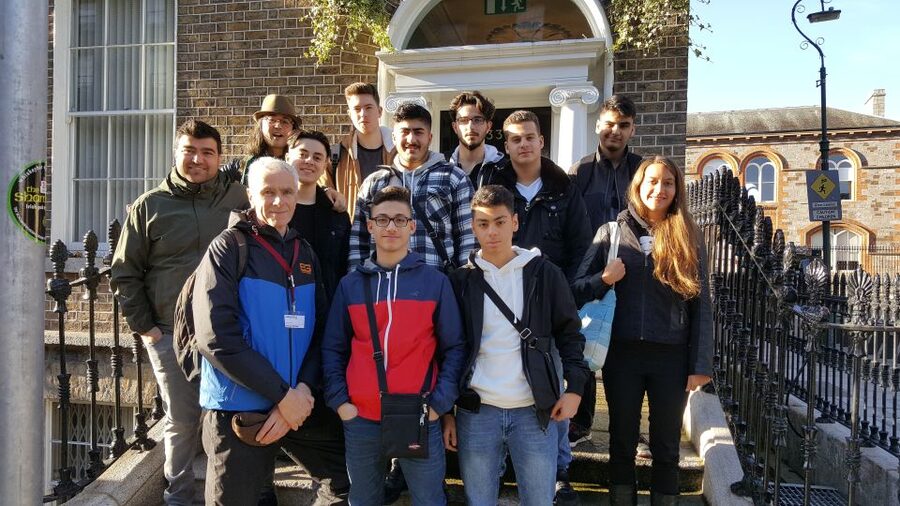
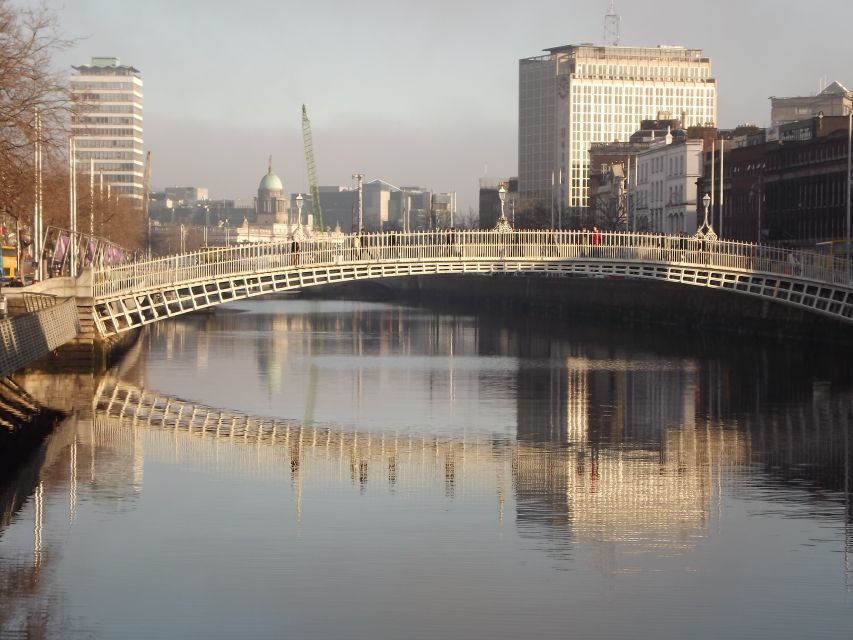
Crossing the River Liffey is one of those moments where the walk turns from “interesting” into “I get the city.” The route includes the Millennium Bridge and the river itself, which gives you a clear physical sense of Dublin’s two halves.
On the walk to the north side of the river, you’ll shift from one style of street scene to another. It’s not just geography—it changes your perspective on the stories you’ve heard so far.
This section also includes a very memorable sensory detail: you’ll feel the bounce of a wobbly bridge. That’s the kind of detail your guide points out so you remember it, not because it’s a museum stop.
O’Connell Street and the GPO: where history hits the sidewalk
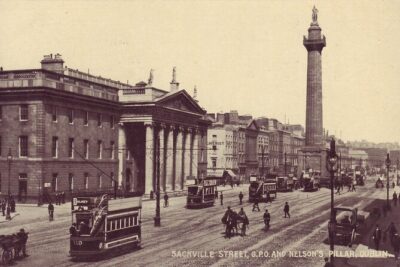
O’Connell Street is one of Dublin’s signature streets, and it’s also a place where big historical events played out in the open. The tour passes O’Connell Street and includes the General Post Office (GPO), which your guide will connect to the 1916 Rising.
The GPO is important because it wasn’t just a building. It was headquarters for the rebels, and it was tied to major destruction in and around the street during that period. Standing near these places and hearing the story gives you a sense of scale and impact you simply won’t get from reading a sign.
This is where the guide’s delivery really matters. When it’s done well, the street stops stop being “where something happened” and become “here’s what people faced.”
Meeting House Square, Temple Bar energy, and the Irish stage around you
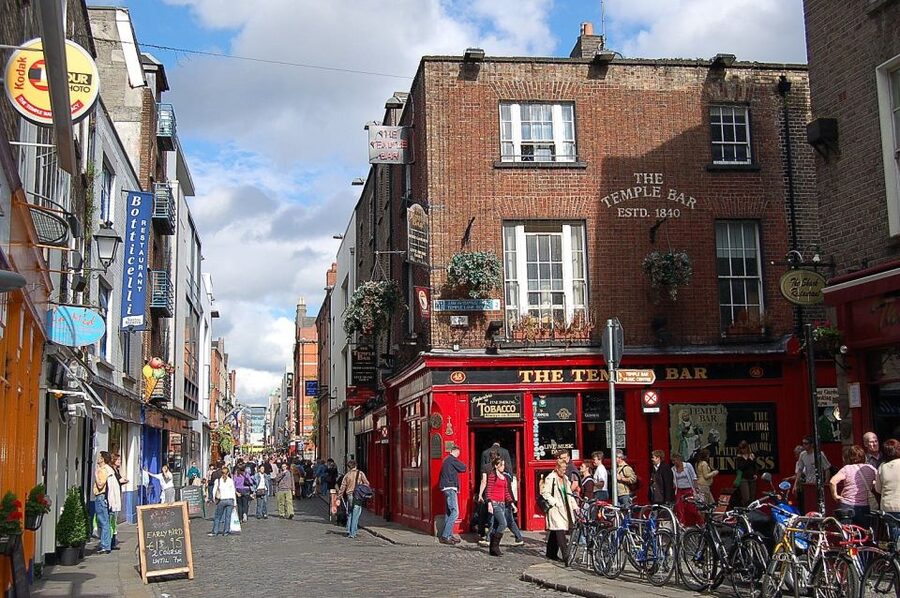
Your walk loops through Meeting House Square, Temple Bar. This is one of those stops where you can feel the city’s social life in real time. Even while you’re staying outside, the guide’s stories make the area feel like more than nightlife branding.
It’s a good moment to reset after the heavier history. You’re still learning, but the tone becomes lighter and more observational. And since the walk keeps moving, you don’t stall out while the area is at its busiest.
The Italian Quarter and St Mary’s Church-turned-café
As you continue toward the east and the area known as the Italian Quarter, the tour leans into street-level Dublin flavor. You’ll have a sense of how neighborhoods earn their reputations, even when the buildings and facades have changed over time.
Then you’ll reach St Mary’s Church, which is now a famous café/bar. This is another of those stops where external viewing makes sense: the guide helps you read what used to be there, and what the place has become.
This kind of transformation is a Dublin signature. It’s how the city keeps using older space instead of replacing everything, and your guide points out the clues that make those transitions legible.
Henry & Moore Streets to O’Connell Monument: small streets, big ideas
Henry & Moore Streets are part of the route for a reason: they’re a reminder that Dublin’s “main story” isn’t only on the big avenues. These smaller streets help stitch the route together, and they’re often where you’ll hear the guide’s more quirky facts—things that feel fun in the moment and stick later.
The walk also includes the O’Connell Monument. It’s a straightforward stop, but the point is the meaning behind it. This is how you get from architecture to identity: streets and statues tied to national storylines.
Former Parliament House (Bank of Ireland): the political center of the walk
Another highlight is the Former Parliament House area, now the Bank of Ireland. This is a powerful pause on the route because it bridges Dublin’s older political role with its modern presence.
Even if you just glance at the building from the outside, it’s the kind of location that makes you slow down a little. Your guide’s explanation gives you the “why” behind the grandeur and helps you understand the building as a hinge between eras.
Finish outside Trinity College: Book of Kells is waiting, but not on this walk
The tour ends outside Trinity College, near the famous Book of Kells. Since this is an external-only experience, you won’t tour the inside spaces as part of this walk.
Still, the finish is well-chosen. By the time you reach Trinity, you’ve already built context for what you’re seeing. It becomes an easy next step: you know what the institution represents, even before you decide whether to schedule an indoor visit separately.
The quirky Dublin details you’ll remember longer than the landmarks
This tour has a playful streak, and it’s not random. The guide points out specific, odd details that turn into great conversation starters later.
You’ll hear about things like:
- Dublin’s first but now defunct full-time cinema
- A church that’s not a church (as the guide frames it)
- A former Lisbon tram now serving as a café
- An amusing representation of a da Vinci painting
- A wobbly bridge moment you can feel
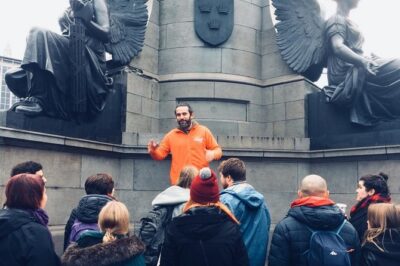
- A post-box that represents Ireland’s transition to independence
- A stark-naked representation of a very famous 18th-century composer
That last set might sound like a gimmick, but it works because it’s paired with context. It teaches you how to look at the city: not just at what’s famous, but at the odd visual clues that reveal how Dublin thinks, remembers, and reuses space.
And if you’re wondering about guide quality, the names you might encounter include Joe Brennan, John O’Flynn, Jacob, Katie, and Dave. Across those different guides, the common thread is pacing and storytelling that make the walk feel structured rather than rushed.
What the 2.5 hours feels like in real terms (pace and group size)
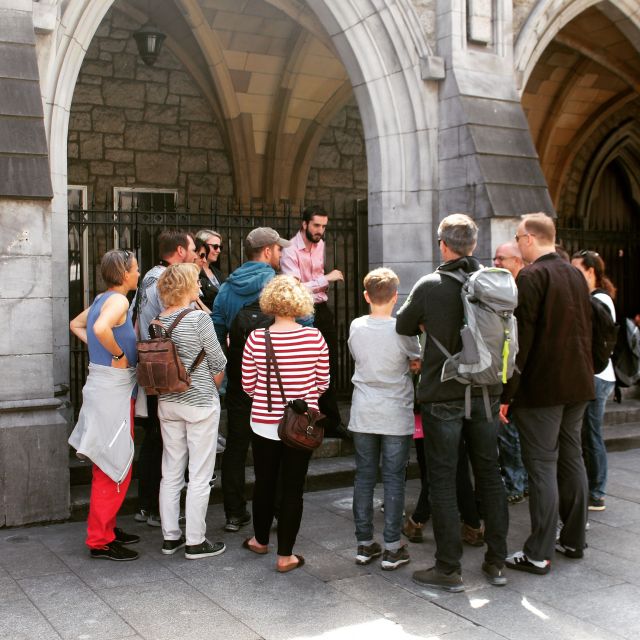
This is described as easy-going, and that shows in how the route is set up. Small groups help a lot. With a maximum of 16 people and sometimes fewer, it’s easier to keep up, hear clearly, and ask questions without the guide repeating themselves every five minutes.
One consideration: you might want a slightly slower pace if you’re walking with mobility limits or if you prefer more time at each photo spot. The overall tour length stays consistent, so the guide has to manage time—and that can make the walk brisk for some people.
If you want the best experience, do this: bring your curiosity, not your checklist. Ask questions early and let the guide steer your attention toward what’s important right now. That’s when the offbeat details land.
Price and value: what $31 buys you in Dublin terms
At about $31 per person for a 2.5-hour live guided walk, you’re paying for three things: route design, a professional guide, and the explanation layer that helps you actually “read” the city.
You’re not paying for indoor access here. That’s a fair trade-off because the stops are chosen for what you can see from the street, and the stories fill in what you would otherwise miss. For first-timers, this can save time. Instead of trying to figure out which landmarks connect and why, you get a ready-made thread.
The tour includes a professional, well-trained guide. Not included is gratuity (so if the service is good, you’ll want to tip as you normally would). You’ll also want to plan your own follow-up stops afterward—especially if you want to go inside Trinity to see the Book of Kells.
Who this tour suits best (and who might prefer something else)
This walking tour is a great fit if you:
- want a first-day orientation to central Dublin
- like history but also want it told in an approachable, story-driven way
- enjoy street-level details and quirky facts as much as big landmarks
- prefer small groups where you can hear the guide
It might be less ideal if you:
- strongly prefer indoor museum-style visits on a guided schedule
- want a very slow, sit-and-stare pace for every stop
- dislike city-center walking with crowds nearby at times
Should you book this Dublin Highlights and Hidden Corners walk?
I’d book it if you want to understand Dublin quickly, without a stuffy vibe. The mix of official landmarks (like City Hall and the Parliament House area), major streets (O’Connell Street), and street-level weird-and-wonderful stops gives you a real sense of how the city works.
The best part is that the guide doesn’t treat Dublin like a set of separate attractions. You walk one thread: from the old quarters to civic power, from across the Liffey to Trinity’s doorstep. If that sounds like your kind of day, this is a solid $31-to-hours value choice.
FAQ
Where do I meet for the Dublin tour?
Meet at the Tree of Gold Statue (Crann an Óir) in Central Plaza, Dame Street, Dublin 2, at the corner of Dame Street and Fownes Street Upper.
How long is the walking tour?
The tour runs for 2.5 hours. Starting times vary, so you’ll want to check availability for the time that fits your day.
Is this tour inside buildings?
No. All visits are external. You’ll be able to see the sights from the street, and if you want to go inside major sites afterward, you can do that on your own.
What landmarks does the route include?
You’ll pass City Hall, Dublin Castle grounds and gardens, Christ Church Cathedral, Fishamble Street and Smock Alley, Meeting House Square (Temple Bar), Millennium Bridge and the River Liffey, the Italian Quarter, St Mary’s Church (now a famous café/bar), Henry & Moore Streets, O’Connell Street, the General Post Office, O’Connell Monument, the former Parliament House (now the Bank of Ireland), and you finish outside Trinity College.
Is the tour wheelchair accessible and is it in English?
Yes. The tour is listed as wheelchair accessible, and the live guide speaks English.
What’s the cost and do I get free cancellation?
The price is $31 per person. You get free cancellation up to 24 hours in advance for a full refund, and you can reserve and pay later.
More Dublin Walking Tours




More Tours in Dublin





More Tour Reviews in Dublin



Fresh off the cobbles: the latest Dublin reviews
- Dublin Private Airport Transfer to Ireland
★ 4.5 · 3 reviews - Private Chauffeur Service From Dublin Airport to Killarney
★ 5.0 · 3 reviews - Ireland: 3-Day West Coast Explorer Tour
★ 5.0 · 3 reviews - From Dublin: 4-Day Southern and Western Coast Tour
★ 4.3 · 3 reviews - Dublin : Street Art Walking Tour
★ 5.0 · 3 reviews - Spring Tonic Foraging Tour
★ 5.0 · 3 reviews
Walking Tours, compared.
 ★ 5.0Dublin Highlights and Hidden Gems Guided Walking TourFrom $296,020 reviews
 ★ 4.9Highlights and Hidden Gems Walking TourFrom $272,140 reviews
 ★ 5.01916 Rebellion Walking TourFrom $271,605 reviews
 ★ 5.090 Minute Dublin Walking tour and Sightseeing tipsFrom $21916 reviews
 ★ 5.02-Hour Historical Walking Tour from DublinFrom $22875 reviews
 ★ 4.7Historical 2-Hour Guided Walking Tour of DublinFrom $22865 reviews
 ★ 5.0Dublin Traditional Irish 3 Course Meal Walking Tour with LocalFrom $107755 reviews
 ★ 4.9Mythology, Folklore and Legends Walking TourFrom $27703 reviews
Browse the lists this tour appears in