
Reviewed · HISTORICAL TOURS
Dublin LGBTQ Pride Historical and Cultural Walking Tour
Queer Dublin in two hours. This LGBTQ Pride historical and cultural walking tour strings together major landmarks with stories many people miss. You’ll move through the center of Dublin at a steady walking pace while keeping the focus on Irish LGBTQ+ life and activism.
I especially like how the tour uses iconic places (Temple Bar, GPO Museum, Abbey Theatre, Trinity College, Dublin Castle) as story anchors. I also like the small-group feel at a 2-hour length, so you’re not stuck listening to history shouted at you for ages. A third-plus win: the route is packed with “why it matters” context, not just dates.
One thing to consider: Trinity College Dublin’s admission isn’t included, so you may need to budget for that stop. Also, it’s city-center walking, so wear shoes you trust on pavement.
In This Review
- Key highlights worth marking on your map
- Where the tour starts in Temple Bar (and why that matters)
- GPO Museum and the 1916 Easter Rising through queer memory
- Abbey Theatre: LGBTQ icons and how culture changes the public story
- Liberty Hall and Pride’s early fight in Ireland
- Crossing from Temple Bar to Trinity College: alumni and the old arch
- Meeting House Square by Sean Harrington Architects and queer Dublin in the 1980s
- Anna Livia, Temple Bar HQ, and the George Bar’s living legacy
- Ending at Dublin Castle: 1,200 years, with a queer lens
- Price and logistics: what $29.02 buys you in Dublin
- Who should book this Dublin LGBTQ Pride tour?
- Practical tips so you enjoy the full 2-hour walk
- Should you book this Dublin LGBTQ Pride Historical and Cultural Walking Tour?
- FAQ
- How long is the Dublin LGBTQ Pride Historical and Cultural Walking Tour?
- What does the tour cost?
- Where does the tour start and where does it end?
- What language is the tour offered in?
- Do I get a mobile ticket?
- Are admission tickets included for all stops?
- Is Trinity College Dublin admission included?
- Is the walking route suitable for everyone?
- Can I bring a service animal?
- What is the cancellation policy?
Key highlights worth marking on your map
- Temple Bar meetup plus LGBTQ headquarters area: start in the heart of the action, then loop back to key queer sites.
- GPO Museum and the 1916 Easter Rising: learn how LGBTQ figures are remembered in a turning-point moment of Irish history.
- Abbey Theatre’s role in modern culture: hear how national theater ties into LGBTQ icons and public life.
- Liberty Hall and Pride’s early turning point: focus on Ireland’s first gay pride parade and an inspirational trans activist.
- The George Bar as a living institution: see why Dublin’s oldest operating gay bar still matters.
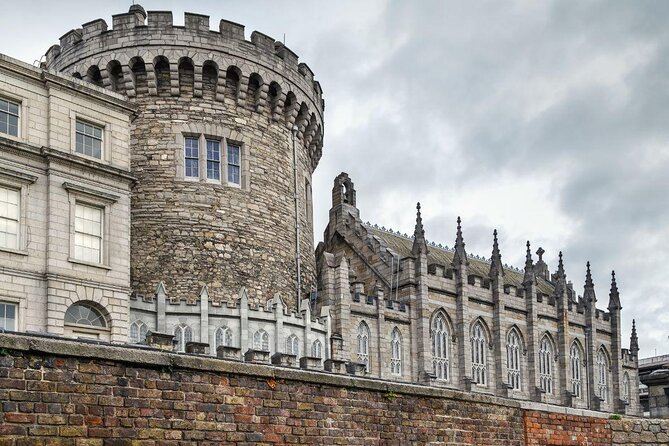
- Finish at Dublin Castle: end in 18th-century grandeur after 1,200 years of civic history.
More Dublin walks at an easy pace
- Dublin Highlights and Hidden Gems Guided Walking Tour★ 5.0 · 6,020 reviews
- Dublin: Highlights and Hidden Gems Walking Tour★ 4.9 · 2,140 reviews
- 1916 Rebellion Walking Tour★ 5.0 · 1,605 reviews
- 90 Minute Dublin Walking tour and Sightseeing tips★ 5.0 · 916 reviews
Where the tour starts in Temple Bar (and why that matters)
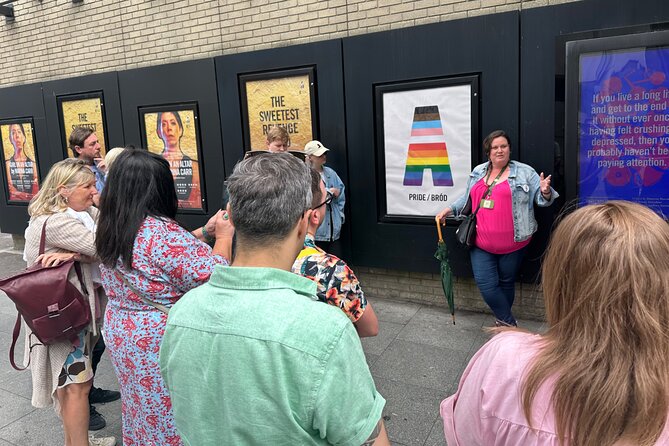
The experience begins right in Temple Bar, at 3 Crown Alley, Temple Bar (D02 CX67). That’s a smart starting choice. Temple Bar is a tourist magnet, sure, but the tour uses the neighborhood like a doorway—into Dublin’s public spaces where queer life has been visible, contested, celebrated, and documented.
You’ll get your bearings fast: meet your guide, collect your mobile ticket, and get oriented for a route that stays mostly in the central city. The walk is designed for a moderate physical fitness level, which usually means you should be comfortable with paced city-center walking and standing at stops for short explanations.
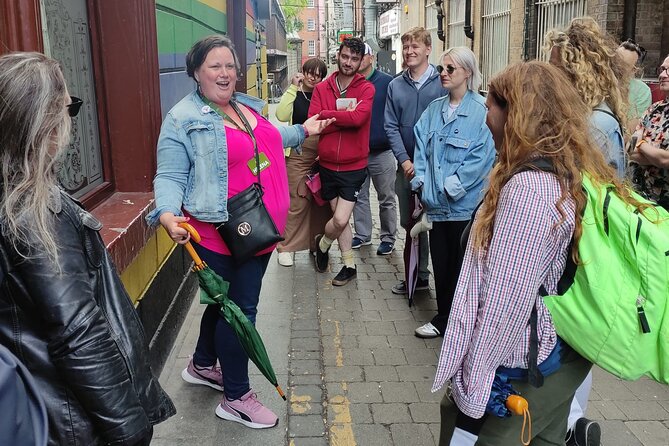
And the best part? Even when you’re in a famous, photographed area, the guide keeps returning the story to people. Not just movements in the abstract, but what it meant to live your identity in Ireland across different decades. The energy tends to be lively and direct—good for a 2-hour format where you want momentum, not a lecture that drags.
GPO Museum and the 1916 Easter Rising through queer memory
One of the most compelling stops is the GPO Museum. The building itself is a big deal in Irish history because it’s tied to the 1916 Easter Rising. The tour’s twist is what makes it more than a standard “famous building” stop: you’ll hear about LGBTQ figures connected with that week of upheaval, and how their contributions were remembered—or overlooked—over time.
This stop works because it gives you a frame for thinking about visibility. In Ireland, major national events get taught in a clear way, but queer history often shows up in fragments. Here, the guide brings those fragments together and helps you connect the dots between public rebellion and private risk.
It’s also practical. Since the GPO is central, it’s an easy anchor point for your mental map. When you later see other sites like the Abbey Theatre, Trinity College, and Dublin Castle, you’ll start recognizing a pattern: queer history isn’t only about activism in the streets. It’s also about who gets recorded in institutions.
Time here is about 10 minutes, so you’re not expected to read every plaque. Instead, you get a focused story you can follow, then look up more on your own if you want to.
Abbey Theatre: LGBTQ icons and how culture changes the public story
Next comes the Abbey Theatre, Ireland’s national stage. This is where the tour shifts from political history to cultural influence. You’ll learn about a contemporary gay icon associated with the theater and talk about how Irish modern culture was shaped through people who used performance, words, and visibility as tools.
I like that approach. A lot of walking tours hit you with dates and definitions. Here, the focus is on how a national theater becomes a public platform—one where queer identity can be recognized, discussed, or challenged. The Abbey Theatre stop helps you understand the long arc: rights movements don’t only progress through laws and marches. They also progress through art, speech, and the slow reshaping of what feels normal in public life.
The stop is short—again, around 10 minutes—but the setting does the heavy lifting. Even if you’ve never seen a show there, the building reads as important the second you arrive. That makes it easier to absorb the guide’s points and keep the tour feeling connected.
Liberty Hall and Pride’s early fight in Ireland
At Liberty Hall, you’ll get a story that’s emotionally heavier and historically urgent. This is where the tour talks about the circumstances around the first ever gay pride parade in Ireland, plus an inspiring look at a trans activist.
This stop matters because it reframes Pride as more than a parade day. You hear what made early organizing difficult—why it took courage to insist on public recognition—and how people pushed past ridicule and risk. It’s the kind of discussion that helps you understand why Pride has a past, not just a present.
A practical note: Liberty Hall is another central site, so it keeps the walk efficient. You’ll only be there about 10 minutes, which means you’ll want to stay alert and listen closely. If you love details, jot down a guide’s key names or themes so you can follow up after the tour with books or reputable Irish history sources.
More of Dublin's history on foot
Crossing from Temple Bar to Trinity College: alumni and the old arch
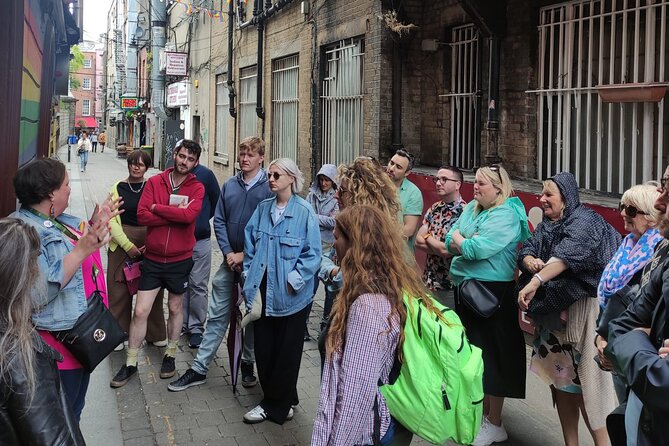
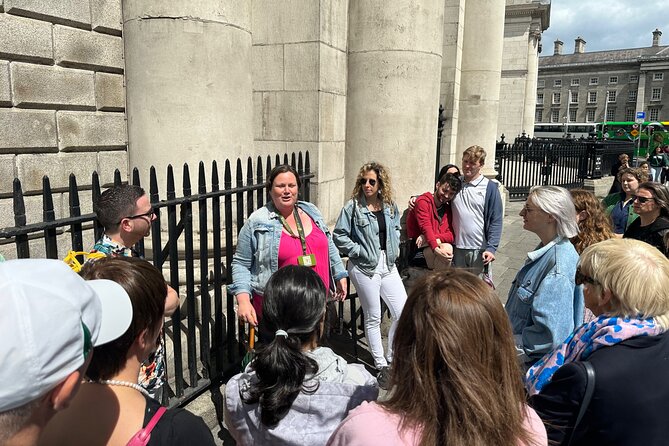
The tour then reaches Trinity College Dublin, one of Ireland’s oldest and best-known universities. The emphasis here is on LGBTQI+ alumni who passed beneath Trinity’s famous old arch, and the wider College Green area nearby.
This is one of those stops that feels both grand and specific. You’re not just walking around a campus landmark. You’re using the setting to talk about who flourished inside major institutions—and what it took for queer people to exist in environments that historically didn’t always welcome them.
One key planning detail: Trinity College admission is not included. If you’re booking this tour as a way to save time and costs, factor that in. It may still be worth it because the guide’s context helps you see the place differently. But don’t assume the entire tour is ticket-free.
If you want to keep the day smooth, wear comfortable shoes, since campuses can involve uneven ground and standing around for photos and explanations.
Meeting House Square by Sean Harrington Architects and queer Dublin in the 1980s
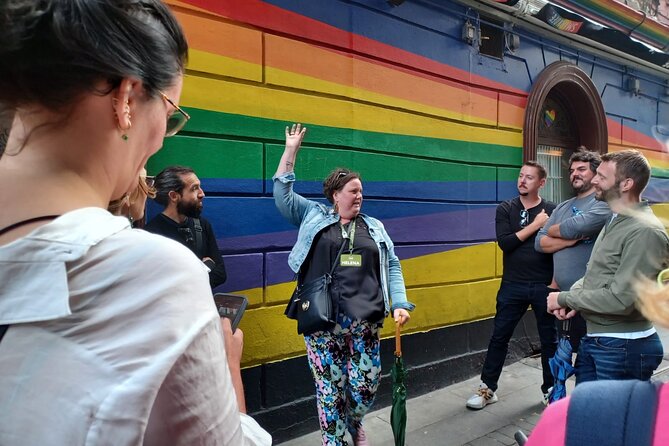
Another stop worth paying attention to is Meeting House Square by Sean Harrington Architects. Here, the tour loops back through Temple Bar and focuses on the changing face of queer Dublin in the 1980s—including the people who brought hope and light to the community.
This is where the tour becomes less about famous buildings and more about the social texture of a decade. The 1980s were a complicated time, and the guide’s job is to turn that complexity into something you can understand quickly. Expect discussion that connects real people, real community needs, and the way ideas of safety and belonging shifted over time.
The architecture matters too, in a subtle way. Meeting House Square feels like a civic space, which helps underline the tour’s theme: queer life is not only “elsewhere.” It happens in the heart of the city, in public squares, and in shared cultural spaces.
Time here is about 10 minutes, so listen for the names and themes you can carry forward.
Anna Livia, Temple Bar HQ, and the George Bar’s living legacy
The tour then keeps you moving along the water and around Temple Bar again, including a stop tied to Anna Livia and crossing Dublin’s famous waterway areas from both sides. It’s a nice pacing break. After a few heavier stops, the water makes it easier to reset your brain and take photos without the pressure of reading a plaque every second.
Then you’ll return to Temple Bar’s LGBTQ+ headquarters side, described as having a café, disco, cinema, and more—a site connected with Ireland’s first bona fide Gay headquarters. The point here isn’t just that a venue exists. It’s that it shows community infrastructure: places where people could meet, find culture, and build momentum.
Finally, you’ll reach The George Bar, described as Dublin’s oldest operating gay bar and treated as a cultural institution. This is the stop where the tour feels most like a living “go here later” recommendation. You’ll learn why the bar stays at the center of the city’s LGBTQ+ community, and how that continuity matters when history often feels like it breaks and restarts.
Time at these stops is around 10 minutes each, but the George Bar stop is ideal if you want one clear takeaway: identify one place you can revisit after the tour to keep the story in your present-day Dublin itinerary.
Ending at Dublin Castle: 1,200 years, with a queer lens
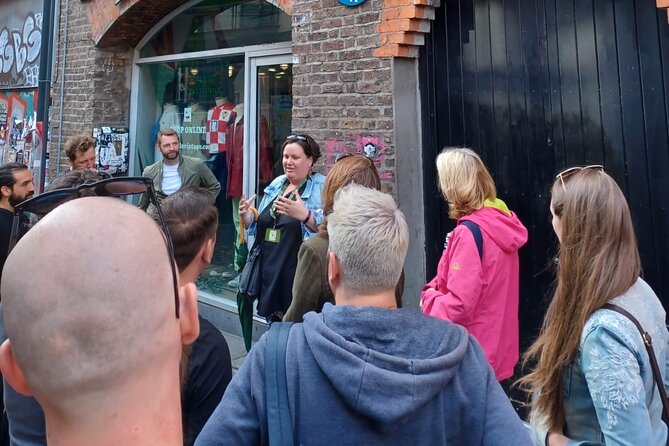
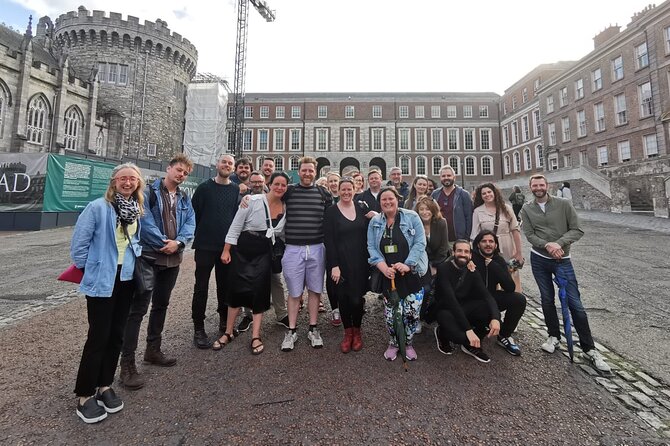
The tour wraps up at Dublin Castle, finishing in the upper courtyard. Dublin Castle is one of those sites where the sheer age is hard to ignore—1,200 years of history, with the castle’s more visible parts tied to 18th-century splendour.
Ending here works for a reason. You start in a neighborhood known for nightlife and visibility, and you end in a seat of power and ceremony. Along the way, the guide has framed LGBTQ+ history as part of the same Ireland that produces institutions and national stories. The ending doesn’t try to make everything feel perfectly triumphant. Instead, it gives you a sense of scale: queer life has always lived alongside formal power, even when it was pushed to the edges.
If you want a simple post-tour plan, you can use the castle area as a waypoint for food and wandering. Just keep in mind the tour is about 2 hours, so you’ll still have energy after.
Price and logistics: what $29.02 buys you in Dublin
At $29.02 per person for about 2 hours, this is strong value, especially because many stops are listed as admission ticket free. That matters because it keeps you from paying twice—once for the tour, then again for every location.
The one notable exception is Trinity College Dublin, where admission is not included. That doesn’t ruin the deal, but it does mean the true cost depends on how you handle that one stop. Still, the guide’s explanations at Trinity are likely to make the added expense feel less like a random campus entrance fee and more like part of a purposeful story.
A couple more practical notes that help you plan:
- The tour offers a mobile ticket.
- It runs in English.
- The group is capped at 100 travelers, so you won’t be alone, but it’s not a massive open-ended event.
If you like walking tours that mix landmark photos with human stories you can’t easily piece together on your own, this one fits.
Who should book this Dublin LGBTQ Pride tour?
This tour is a great match if you want:
- A queer lens on Irish history without needing to study Irish politics first.
- A route that stays central and practical, with short stops timed for learning and moving.
- A balance of culture and activism, from the Abbey Theatre to Pride’s early moments at Liberty Hall.
It’s also a smart choice for first-timers to Dublin who don’t want to waste time clicking through disconnected “attractions” that don’t connect to each other. If you’re an architecture or culture person, you’ll appreciate stops like Meeting House Square and the way the tour ties spaces to people.
If you’re after a tour that’s only about nightlife, this isn’t that. It’s history and culture first, with bar stops that feel more like context than the whole point.
Practical tips so you enjoy the full 2-hour walk
- Wear comfortable shoes. It’s a city-center walking route with short stop-and-start sections.
- Bring a phone and earbuds if you like to follow up later on themes the guide mentions (the tour itself is short at each stop).
- If Trinity College is important to you, plan for the fact that admission isn’t included.
- It’s near public transportation, so you can build it into a bigger day without stressing about a far commute.
- Service animals are allowed, and the tour is suitable for travelers with moderate physical fitness.
One last small tip: this is the kind of tour where listening carefully beats multitasking. If you want to remember names and places, give yourself a quiet mind for those 10-minute story windows.
Should you book this Dublin LGBTQ Pride Historical and Cultural Walking Tour?
Yes, if you want a compact, city-center way to understand LGBTQ+ Ireland through real places: Temple Bar, GPO Museum, Abbey Theatre, Liberty Hall, Trinity, and Dublin Castle. For $29.02, the combination of mostly free admissions and guided context makes it feel like good value, not just a “see the sights” stroll.
I’d think twice only if you’re trying to keep costs absolutely fixed or you hate tours where one stop (Trinity College) can add an extra admission layer. Otherwise, the route is built for learning without being exhausting, and the stories are the reason to go—especially if you like history that connects to public spaces you can still visit after the tour.
FAQ
How long is the Dublin LGBTQ Pride Historical and Cultural Walking Tour?
It runs for about 2 hours.
What does the tour cost?
The price is $29.02 per person.
Where does the tour start and where does it end?
You start at 3 Crown Alley, Temple Bar, Dublin (D02 CX67). The tour ends at the upper courtyard of Dublin Castle (in Dublin 8).
What language is the tour offered in?
The tour is offered in English.
Do I get a mobile ticket?
Yes, the experience includes a mobile ticket.
Are admission tickets included for all stops?
Admission is listed as free for many stops, but Trinity College Dublin does not include admission.
Is Trinity College Dublin admission included?
No. Admission for Trinity College Dublin is listed as not included.
Is the walking route suitable for everyone?
It’s recommended for travelers with a moderate physical fitness level.
Can I bring a service animal?
Service animals are allowed.
What is the cancellation policy?
You can cancel for free up to 24 hours in advance for a full refund.
More Dublin Walking Tours



More Tours in Dublin




More Tour Reviews in Dublin



Fresh off the cobbles: the latest Dublin reviews
- Dublin Private Airport Transfer to Ireland
★ 4.5 · 3 reviews - Private Chauffeur Service From Dublin Airport to Killarney
★ 5.0 · 3 reviews - Ireland: 3-Day West Coast Explorer Tour
★ 5.0 · 3 reviews - From Dublin: 4-Day Southern and Western Coast Tour
★ 4.3 · 3 reviews - Dublin : Street Art Walking Tour
★ 5.0 · 3 reviews - Spring Tonic Foraging Tour
★ 5.0 · 3 reviews
Historical Tours, compared.
 ★ 5.0Dublin Historical Centre Food Tour with 8 Food Tastings & DrinksFrom $1251,718 reviews
 ★ 5.02-Hour Historical Walking Tour from DublinFrom $22875 reviews
 ★ 4.7Historical 2-Hour Guided Walking Tour of DublinFrom $22865 reviews
 ★ 4.5Dublin to Cork, Blarney Castle & Cóbh Heritage Centre by trainFrom $195510 reviews
 ★ 4.8Jeanie Johnston Tall Ship Irish Famine History TourFrom $16431 reviews
Wicklow’s Historic Gaol Day TourFrom $14355 reviews
★ 4.8Jeanie Johnston Tall Ship Irish Famine History TourFrom $16431 reviews
Wicklow’s Historic Gaol Day TourFrom $14355 reviews
 ★ 4.3Dublin’s Haunted History Walking TourFrom $31345 reviews
 ★ 5.0Deliciously Dublin: The Artisan Donut Walking & History TourFrom $70329 reviews
Browse the lists this tour appears in