
Reviewed · HISTORICAL TOURS
Dublin: Macabre History Walking Tour
There is something oddly comforting about fear in old stone streets. This 2-hour macabre Dublin walking tour threads myth and real-life brutality through the city center, crossing near the riverside as you follow stories you’d usually miss.
Two things I really like: the storytelling is sharp and paced, with guides like Rob and Peter bringing the characters to life without turning it into chaos. The second is the route vibe, where you end up in less-frequented lanes and corners that make Dublin feel lived-in, not staged.
One consideration: it’s dark history, not a gore-fest. If you’re hoping for nonstop bloody detail, you may wish it leaned even harder into the horror side.
In This Review
- Key things to know before you go
- Finding the Spire and the Yellow Umbrella Start Point
- A Tight Two-Hour Walk Through the City’s Dark Reputation
- Seeing Cuchulainn’s Death and the Myth Behind the Stones
- Grave Robbing, Mortuary Life, and What “Science” Cost in the 1800s
- Mummified Corpses and the Real Scare Tucked Near the City Walls
- Legless Serial Killer Tales and the Power of Street-Level Storytelling
- Medieval Quarantines, Public Executions, and Dublin’s Public Fear
- Man-Eating Rats and the Dark Humor of Urban Survival
- Near the Cathedral Finale: A Brothel Keeper’s End by Fire
- Price and Value: What $19 Buys You in Dublin
- Who This Tour Suits (and Who Should Skip It)
- Should You Book This Dublin Macabre History Tour?
- FAQ
- How long is the Dublin Macabre History Walking Tour?
- Where do I meet for the tour?
- Is hotel pickup and drop-off included?
- How much does the tour cost?
- What languages is the tour offered in?
- Is the tour suitable for children?
- Is the tour wheelchair accessible?
- Can I get a refund if I cancel?
- Is there a reserve and pay later option?
Key things to know before you go

- Meet at the Spire on O’Connell Street, then follow the yellow umbrella
- Two hours of walking through Dublin’s old city center, including both sides of the river
- Legend meets real crime, from Cuchulainn to serial-killer-style tales
- Grim public life shows up too: quarantines and public executions are part of the story
- Unusual finale near the cathedral, including the end of a famous brothel keeper by fire at the stake
- Adults only (not suitable for children under 18), so the tone is firmly grown-up
More Dublin walks at an easy pace
- Dublin Highlights and Hidden Gems Guided Walking Tour★ 5.0 · 6,020 reviews
- Dublin: Highlights and Hidden Gems Walking Tour★ 4.9 · 2,140 reviews
- 1916 Rebellion Walking Tour★ 5.0 · 1,605 reviews
- 90 Minute Dublin Walking tour and Sightseeing tips★ 5.0 · 916 reviews
Finding the Spire and the Yellow Umbrella Start Point

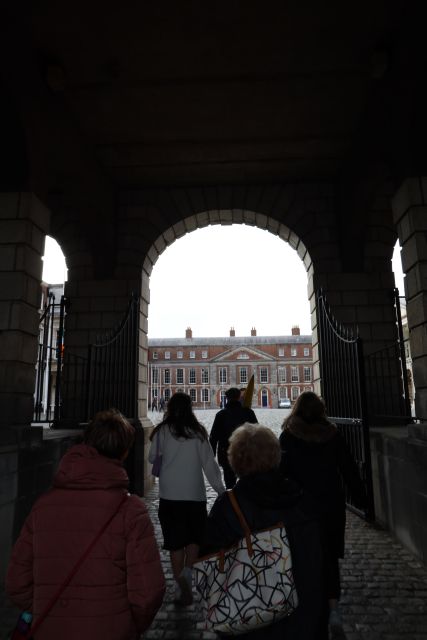
Your tour begins right where the city keeps turning: beside the Spire in the middle of O’Connell Street. The guide is easy to spot if you look for the yellow umbrella, though it’s worth scanning carefully because more than one person can be holding one.
This matters more than you might think. Dublin is busy, streets branch off fast, and a 2-hour tour has no room for confusion. If you arrive a few minutes early, you’ll get your bearings fast and start listening right away.
You’ll be walking in and around the older parts of central Dublin, so dress for real street time. Even if the tour is short, you’ll likely spend most of it on your feet, and you’ll want to keep your pace steady.
A Tight Two-Hour Walk Through the City’s Dark Reputation
The promise here is simple: a guided wander through Dublin’s old city center that focuses on the gruesome side of the past. You’ll hear chilling tales as you move, not as a single lecture in one place.
At a practical level, two hours is the sweet spot for this kind of tour. It’s long enough to cover multiple eras and themes, including medieval through 19th-century stories, but short enough that you won’t feel like you’re stuck outside in bad weather the whole afternoon or evening.
In terms of group feel, the experience can be small. People have described tiny groups that felt close to VIP, even when the tour wasn’t private. If you’re the type who likes asking questions, a smaller group can make it easier to slow down and get answers without the guide rushing past you.
Seeing Cuchulainn’s Death and the Myth Behind the Stones
One of the standout highlights is the Statue of Cuchulainn’s Death. Even before you hear the story, it’s a useful reminder of how Dublin layers myth onto everyday streets.
Cuchulainn is the kind of character you remember because the image is brutal and symbolic at the same time. You’ll learn the tale of the warrior who has his eyes pecked out by a raven on his shoulder. That’s the macabre theme in a nutshell: legends that lean into fear and consequence, not just heroics.
What I like about starting with myth is that it sets expectations. The tour isn’t only about crime scenes and executions. It’s also about how stories stick to place, and how even a statue in the city can act like a warning sign from the past.
Grave Robbing, Mortuary Life, and What “Science” Cost in the 1800s
The tour also points you toward a very 19th-century idea: a thriving business of grave robbing beside the city mortuary. This is one of those topics that makes you rethink what you imagine “medical history” means.
Here’s why it’s valuable for you: when a guide connects the dots between institutions and street-level desperation, the past stops feeling abstract. Grave robbing wasn’t just a criminal hobby. It was tied to demand, and to the harsh realities of how bodies were treated and who had access.
As you move along the walk, you’ll hear how close this all was to where ordinary people lived and worked. That proximity is what makes it so unsettling. You’re not just hearing about violence in a distant era; you’re learning how it shaped the neighborhood atmosphere.
More of Dublin's history on foot
Mummified Corpses and the Real Scare Tucked Near the City Walls
The tour leans into the eerie stuff close to older parts of the city. You’ll hear stories about mummified corpses and the way the city’s past stored its secrets.
The phrase “close to the old city walls” matters because walls are more than boundaries. They mark older routes, older habits, and older limits on how people moved and survived. When a guide frames frightening tales near those older lines, the whole story feels more anchored.
Expect a mix of the strange and the darkly practical. You’re not just told something shocking; you’re given enough context to understand why people believed what they believed and why institutions reacted the way they did.
Legless Serial Killer Tales and the Power of Street-Level Storytelling
Yes, you’ll hear about the Legless Serial Killer, and the tour treats it like a piece of city folklore as much as a crime story. Whether every detail is taken literally or treated as a darker rumor, the effect is the same: it makes the streets feel haunted in a human way.
This is where the best guides shine. Both Rob and Peter get praised for keeping things fun while still moving forward. One review even notes acting and delivery that makes the story feel like it’s unfolding, not recited.
If you’re into true-crime style storytelling, you’ll probably love this section. If you’re not, you can still enjoy it as cultural history, because the point isn’t only the killer. It’s how fear spreads, how people cope, and how the city remembered.
Medieval Quarantines, Public Executions, and Dublin’s Public Fear

The tour doesn’t limit itself to old legends and anatomy-era crime. You’ll also learn about medieval quarantines and public executions, which show how Dublin handled crisis in public.
Quarantines are a useful theme because they’re about more than sickness. They are about control, rumor, and the line between safe and unsafe. When you hear these stories as part of a walking route, the city starts to feel like a living organism responding to pressure.
Public executions, on the other hand, highlight something hard to explain in a museum. They were designed to be seen. That means you’re learning about violence as spectacle and about how communities tried to enforce order through fear.
This is one of the tour’s strengths: it uses the macabre to explain social systems, not just shock you.
Man-Eating Rats and the Dark Humor of Urban Survival
Then comes a highlight that sounds like a horror movie but fits real city life: man-eating rats. Even if you take the details with a grain of doubt, the idea is clear. Urban fear often attaches itself to whatever is unseen, fast, or unstoppable.
Why this works on a walking tour is simple. You’re outside. You can look at narrow streets and river-adjacent areas and imagine how fast rumors would spread, how smell and sanitation shaped daily life, and how people interpreted danger.
Also, this is where humor can sneak in. Several people mention the guides’ ability to keep the tone entertaining while still staying on track. That balance keeps the stories from becoming heavy in the worst way.
Near the Cathedral Finale: A Brothel Keeper’s End by Fire
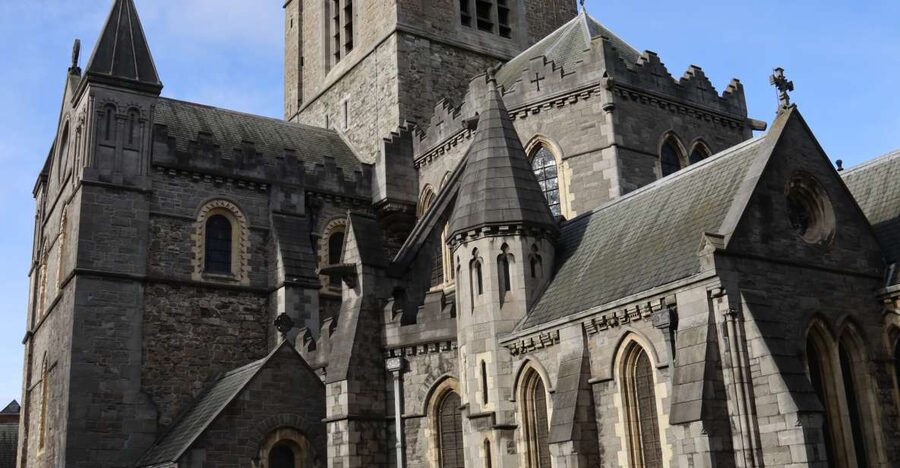
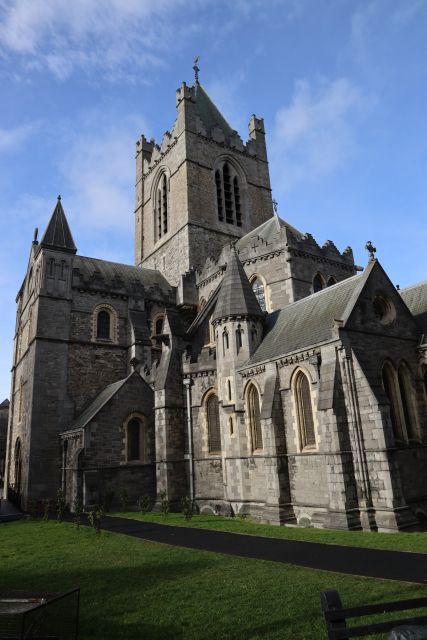
The tour ends beside a cathedral, and it closes with one of Dublin’s most famous brothel-keeper stories. You’ll hear about her untimely demise by fire at the stake, which is an ending designed to stick.
Even if you only remember the last stop, it’s a strong finish because it ties together themes you’ve heard all along: reputation, punishment, and public morality. It also shows how Dublin’s darker history wasn’t only about prisons and battlefields. It included the messy, money-driven sides of the city too.
I also appreciate that the finale doesn’t drag on. You finish back at the meeting point, so you keep your bearings and don’t end up stranded somewhere far from your next plan.
Price and Value: What $19 Buys You in Dublin
At about $19 per person for a 2-hour walking tour, the value is in the combination of time + storytelling. You’re paying for a guide to turn ordinary streets into a sequence of linked scenes: myth, crime, fear, punishment, and the city’s response.
This isn’t a museum ticket where you’re staring at objects for a set amount of time. You’re walking through the context, and that changes how the story lands. The guides who get high praise tend to keep pace tight, answer questions, and make it feel like you’re getting a private lesson rather than being pushed through a script.
If you’re thinking about whether it’s worth it, compare what else you could do in Dublin for two hours. Most alternatives either cost more, or they don’t add the kind of local narrative that makes the city feel personal.
In short: for $19, you’re buying perspective.
Who This Tour Suits (and Who Should Skip It)
This experience fits best if you like city stories that are grounded in place and you enjoy the darker side of urban history. It’s especially good if you’re the kind of traveler who walks past alleyways and wonders what happened there.
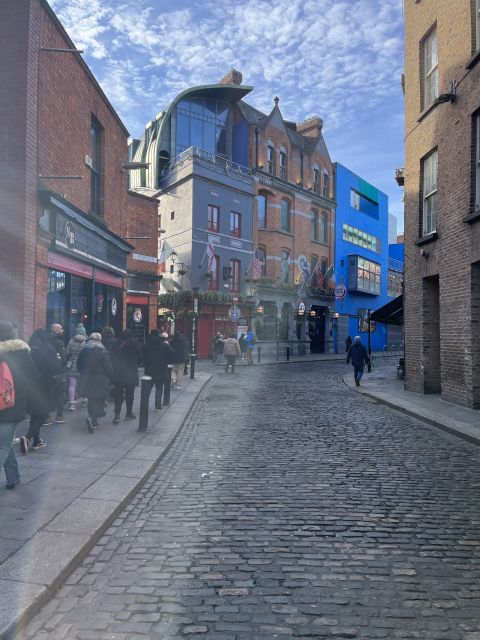
You might also like it if you want a route that’s not the same lineup you’d see on a big bus tour. People mention the less obvious areas of Dublin, and that’s the point. You come away seeing the city with new eyes.
On the other hand, it’s not suitable for children under 18, so it’s designed for adults only. Also, one caution from a lower rating is that the tour might feel less macabre or bloody than expected. If your goal is maximum horror, you may find it more chilling than graphic.
Should You Book This Dublin Macabre History Tour?
I’d book it if you want a lively, well-paced walk through Dublin that makes history feel street-level. The biggest selling point isn’t just the topics like grave robbing, quarantines, executions, and man-eating rats. It’s how the guides tell them, with Rob and Peter showing up in the praise for clarity, humor, and story delivery.
Skip it if you want a spotless, family-friendly overview of Dublin’s past. This is grown-up material, and it leans toward fear and brutality in its themes.
If you’re on a first or second day in Dublin and you want your bearings with a twist, this is a strong choice. Start at the Spire, follow the yellow umbrella, and let the city explain itself in its darker voice.
FAQ
How long is the Dublin Macabre History Walking Tour?
The tour duration is 2 hours.
Where do I meet for the tour?
You meet beside the Spire in the middle of O’Connell Street. Look for the yellow umbrella.
Is hotel pickup and drop-off included?
No. Hotel pickup and drop-off are not included.
How much does the tour cost?
The price is $19 per person.
What languages is the tour offered in?
The tour is offered in English.
Is the tour suitable for children?
No. It is not suitable for children under 18.
Is the tour wheelchair accessible?
Yes, the tour is wheelchair accessible.
Can I get a refund if I cancel?
Yes. You can cancel up to 24 hours in advance for a full refund.
Is there a reserve and pay later option?
Yes. You can reserve your spot and pay nothing today.
More Dublin Walking Tours






More Tours in Dublin





More Tour Reviews in Dublin



Fresh off the cobbles: the latest Dublin reviews
- Dublin Private Airport Transfer to Ireland
★ 4.5 · 3 reviews - Private Chauffeur Service From Dublin Airport to Killarney
★ 5.0 · 3 reviews - Ireland: 3-Day West Coast Explorer Tour
★ 5.0 · 3 reviews - From Dublin: 4-Day Southern and Western Coast Tour
★ 4.3 · 3 reviews - Dublin : Street Art Walking Tour
★ 5.0 · 3 reviews - Spring Tonic Foraging Tour
★ 5.0 · 3 reviews
Historical Tours, compared.
 ★ 5.0Dublin Historical Centre Food Tour with 8 Food Tastings & DrinksFrom $1251,718 reviews
 ★ 5.02-Hour Historical Walking Tour from DublinFrom $22875 reviews
 ★ 4.7Historical 2-Hour Guided Walking Tour of DublinFrom $22865 reviews
 ★ 4.5Dublin to Cork, Blarney Castle & Cóbh Heritage Centre by trainFrom $195510 reviews
 ★ 4.8Jeanie Johnston Tall Ship Irish Famine History TourFrom $16431 reviews
Wicklow’s Historic Gaol Day TourFrom $14355 reviews
★ 4.8Jeanie Johnston Tall Ship Irish Famine History TourFrom $16431 reviews
Wicklow’s Historic Gaol Day TourFrom $14355 reviews
 ★ 4.3Dublin’s Haunted History Walking TourFrom $31345 reviews
 ★ 5.0Deliciously Dublin: The Artisan Donut Walking & History TourFrom $70329 reviews
Browse the lists this tour appears in