
Reviewed · WALKING TOURS
Dublin: Sightseeing Walking Tour in German
You can get the Dublin feel in one walk. This easy-going German guided route lines up major sights plus oddball stories you won’t read in a brochure. You’ll get your bearings fast, with plenty of time to look around without feeling rushed.
I especially like the small-group size and the professional, friendly guide style. It makes a history-heavy city feel human, not like a lecture. You also get a strong mix of big-name stops and lesser-known street corners, the kind of stuff that turns a first visit into a real understanding.
One consideration: all visits are external, so if you want lots of interior ticketed sights, plan those separately. Also, the live guiding is in German, so it helps to be comfortable following along at a walking pace.
In This Review
- Key things I’d pencil into your Dublin day
- Why this German walking tour makes Dublin click
- Price and what you’re really buying for $34
- Meeting at the Tree of Gold and setting your route
- Dublin Castle, City Hall, and Christ Church Cathedral: seeing power up close
- From Temple Bar to the Liffey: Fishamble Street, Smock Alley, and the river moment
- St Mary’s (the church-café) and the Italian Quarter streets: Dublin as a remix
- O’Connell Street, the GPO, and the monument stops you can’t miss
- Former Parliament House and the route’s sharper punch
- Finishing outside Trinity College and the Book of Kells pull
- Should you book this Dublin German sightseeing walking tour?
- FAQ
- FAQ
- How long is the Dublin sightseeing walking tour in German?
- What language is the tour guide?
- Is this tour wheelchair accessible?
- Are the visits during the tour inside buildings?
- What landmarks are included on the route?
- Where does the tour start?
- Where does the tour end?
- What is included in the price?
- How much does the tour cost?
- What’s the cancellation policy?
Key things I’d pencil into your Dublin day
- German live guide with an easy-to-follow, upbeat way of explaining what you’re seeing
- Small group so you can ask questions and actually hear the story behind the streets
- External-only stops, meaning more street-level viewing and less inside sightseeing
- A route that spans both sides of the River Liffey, so you see the city as one connected whole
- A finale outside Trinity College, right where Dublin’s most famous campus stories kick in
More Dublin walks at an easy pace
- Dublin Highlights and Hidden Gems Guided Walking Tour★ 5.0 · 6,020 reviews
- Dublin: Highlights and Hidden Gems Walking Tour★ 4.9 · 2,140 reviews
- 1916 Rebellion Walking Tour★ 5.0 · 1,605 reviews
- 90 Minute Dublin Walking tour and Sightseeing tips★ 5.0 · 916 reviews
Why this German walking tour makes Dublin click
Dublin can feel like two cities at once: the postcard side and the street-level reality. This tour stitches them together by walking a loop through the centre, crossing key landmarks and moving you from one atmosphere to the next. In about 2.5 hours, you go from major government-era buildings to old church sites, then into lively shopping and café streets.
I like that the guide doesn’t just list names. You get the human stories that explain why a place looks the way it does today. And you also get the entertaining bits, including odd visual references and quirky tales that make the route memorable.
Because you’re with a small group, it stays relaxed. You’re not squeezed between tour masses, and you can hear the guide when you stop at intersections or viewpoints near the river. If you’ve only got one day in town, this is a smart way to start.
Price and what you’re really buying for $34
At $34 per person for roughly 2.5 hours, you’re paying for three things: direction, context, and time saved. You’re not just seeing Dublin Castle or Trinity College from the sidewalk. You’re also getting the explanation of what they represent and how the city evolved around them.
The value gets better because the walk covers a lot of ground without requiring tickets. Since most stops are external, you aren’t forced into scheduling entry times. Instead, you get concentrated viewing of the city’s landmarks plus the small side-street details that normally take longer to hunt down on your own.
You’ll still want to plan separate indoor visits if that’s your style. But as an orientation and story-boost for your whole trip, this price makes sense.
Meeting at the Tree of Gold and setting your route
The tour starts at the Tree of Gold Statue (Crann an Óir), at Central Plaza on Dame Street, at the corner of Dame Street and Fownes Street Upper (Dublin 2). This is a practical meetup point because Dame Street sits right in the central flow of the city.
When the walk begins, you’re guided into the former Viking and Medieval quarter. That’s the part of Dublin where it’s easiest to see layers: older building sites, medieval-era church surroundings, and later civic power moving into the same streets. The guide’s job is to help you keep track of the timeline while you’re walking, not after you get home.
A small tip: wear shoes that handle cobblestones and uneven sidewalks. This is a city-centre walking route, and you’ll feel it by the end.
Dublin Castle, City Hall, and Christ Church Cathedral: seeing power up close
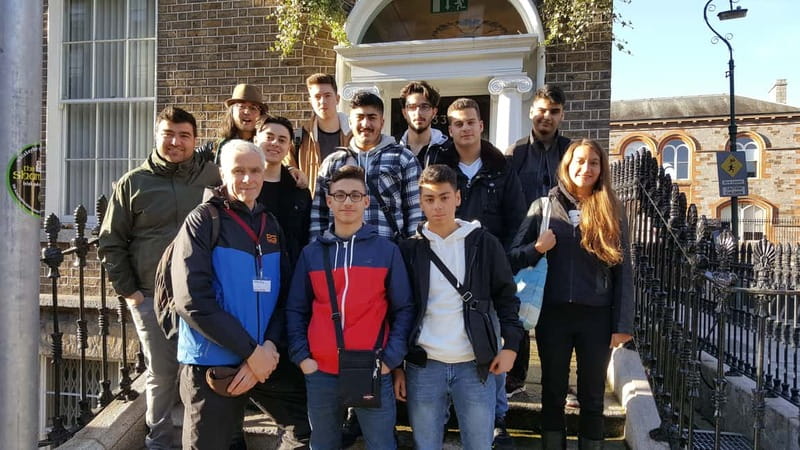
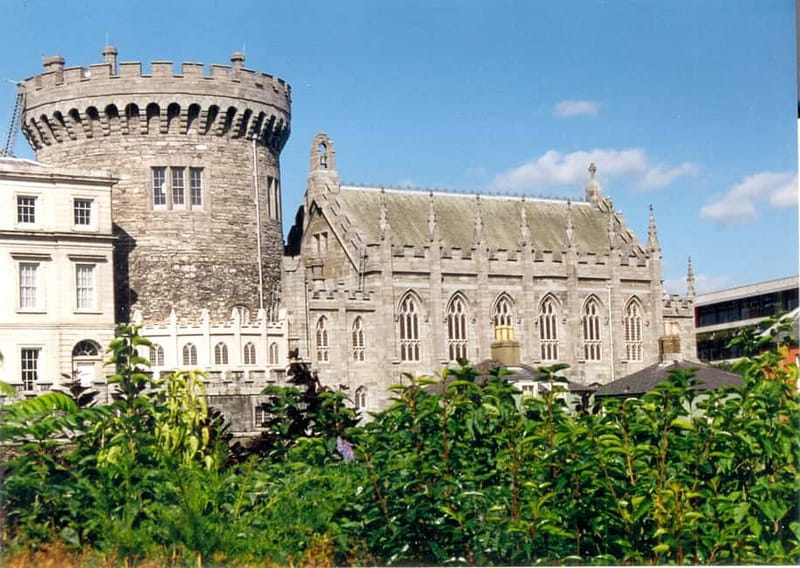
Early on, you circle through the Dublin Castle area and nearby sites, including the grounds and gardens at Dublin Castle. Even from the outside, it’s the kind of place that tells you Dublin has always been a political centre, not just a pub-and-music stop.
You also pass by City Hall, which gives you a civic layer beyond the castle. Seeing both helps you understand the difference between royal power and city governance—how authority moved and how buildings evolved to match the role.
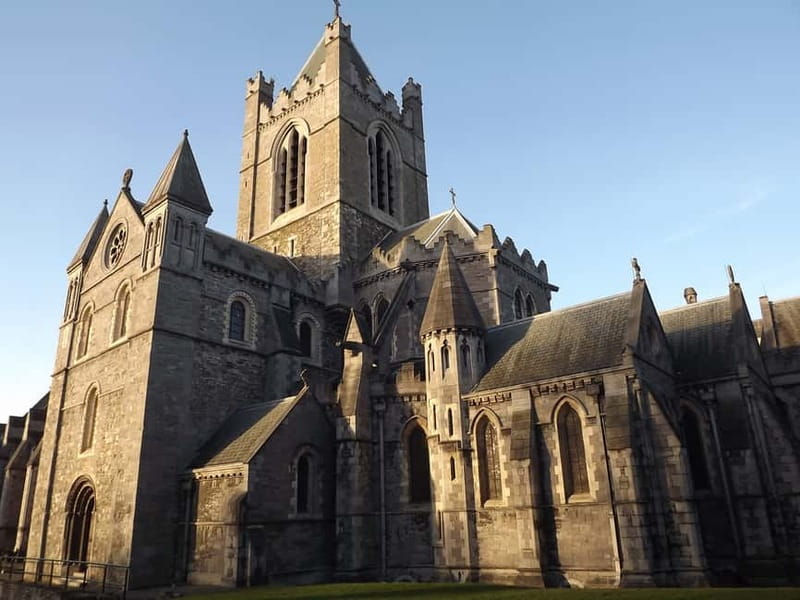
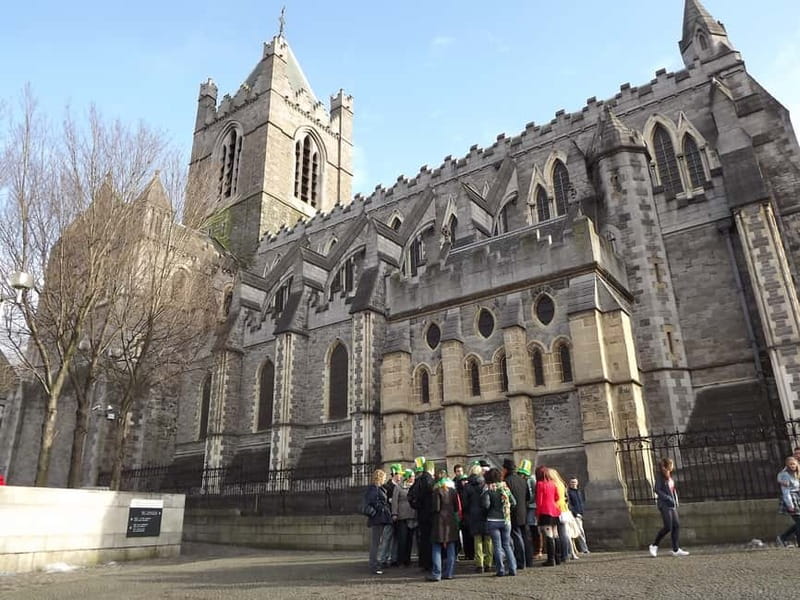
Then comes Christ Church Cathedral. The cathedral itself is viewed from the outside, but the setting matters. This is one of those stops where architecture and location combine, and the guide’s explanations help you notice the details you might otherwise skip while crossing the street.
One thing to remember: these are external stops. So your best photos come when you take a second, step back, and let the guide finish a story before you move on.

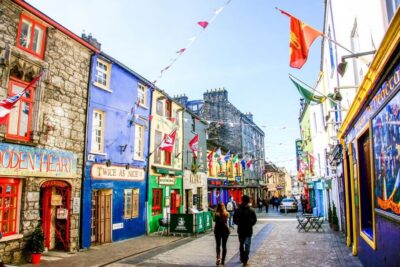



From Temple Bar to the Liffey: Fishamble Street, Smock Alley, and the river moment
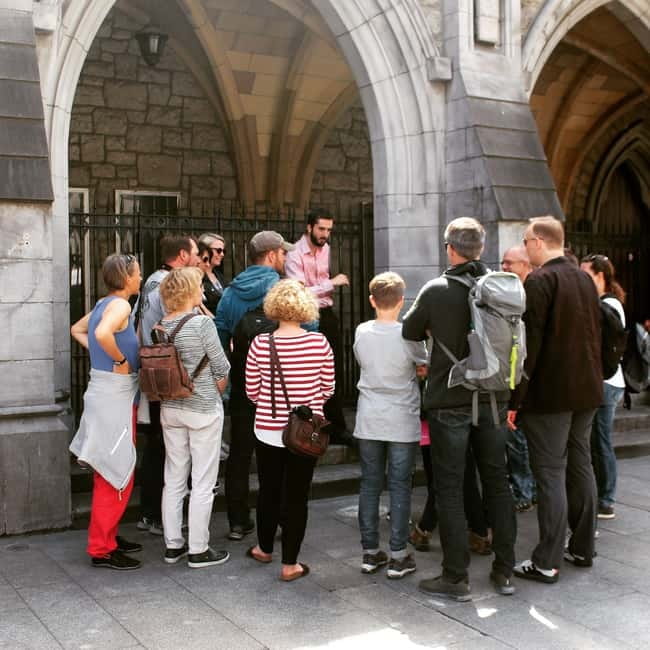
After the early landmarks, the tour swings toward Temple Bar and continues into the area around the river crossings. You’ll pass Meeting House Square in Temple Bar, then head toward the Millennium Bridge and along the River Liffey.
This river stretch is where Dublin starts to look like a postcard—wide views, bridges, and that classic sense of the city turning outward. It’s also a great moment for the guide’s story style. The tour includes little surprises tied to the places you’re standing in front of, and the river is the perfect stage for that.
You also walk through Fishamble Street and Smock Alley. These lanes and street corridors are where the city’s creative energy shows up in everyday form—small spaces that feel older and more character-filled than the big main streets.
The route continues into the Italian Quarter area. That adds a useful contrast: after historic church and government spaces, you get streets shaped by modern life, dining, and daily movement. It’s a reminder that Dublin’s past lives beside its present, not in a museum bubble.
St Mary’s (the church-café) and the Italian Quarter streets: Dublin as a remix
One of the more fun parts of the walk is how it treats institutions as living spaces. You’ll pass St Mary’s Church, which is now a famous café/bar. It’s not a random stop. The point is to show how the city reuses landmarks instead of freezing them in time.
Then you’ll keep moving through streets like Henry & Moore Streets and back toward the main historic lanes. This is where the guide’s explanations become practical. You learn what to watch for: old facades, street geometry, and the way Dublin’s centre bends around major landmarks.
If you’re the type who likes to look at doors, windows, and street corners, you’ll enjoy this portion. You’re walking through a city where everyday places have layered meanings, and the guide helps you connect the dots without turning the walk into homework.
O’Connell Street, the GPO, and the monument stops you can’t miss
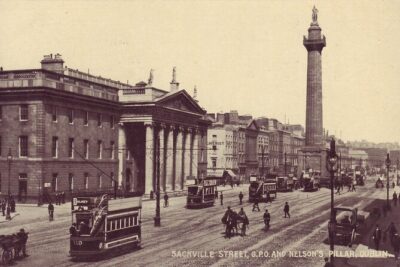
As you head back toward the main historic street, you’ll pass O’Connell Street. This is the Dublin spine for a reason: it’s wide, visible, and packed with landmarks tied to the country’s modern political story.
You also pass by the General Post Office (GPO). The tour’s focus here isn’t just that it’s famous—it’s what happened around it and why that moment still shapes the look of the area. The tour notes that the GPO housed the headquarters of the rebels of the 1916 Rising, which led to destruction of the building and almost the entire street and surrounds. Even without stepping inside, you feel how much the city remembers.
Next comes the O’Connell Monument. It’s a classic landmark stop where the guide connects symbolism to the physical placement in the city. Again, it’s external viewing, but the story makes the space feel more intentional.
This section is a great example of why you should do this walk early in your trip. Once you know what these places represent, you can walk past them later and actually read the city.
Former Parliament House and the route’s sharper punch
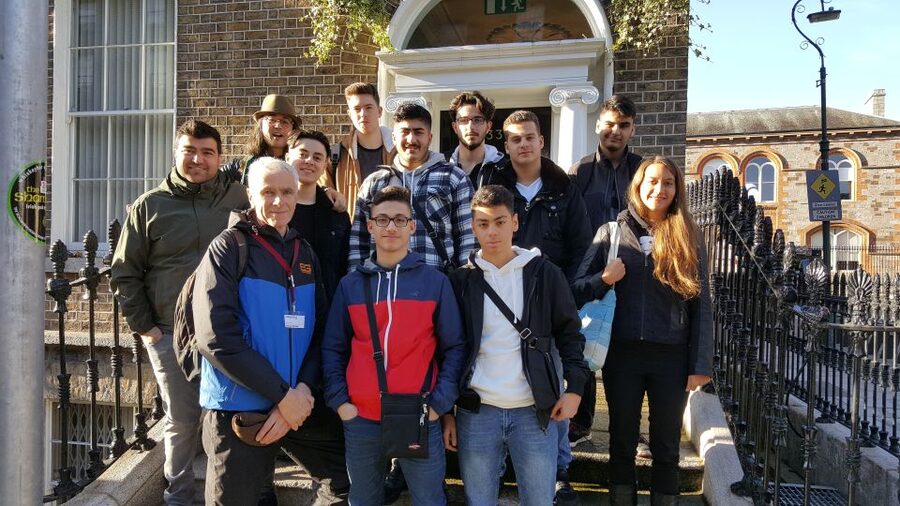
You’ll also pass the former Parliament House, now the Bank of Ireland. Seeing a former seat of power repurposed into a major banking address shows you how Dublin reuses prestige spaces.
This portion of the route adds a sharper tone compared with the Temple Bar side. It’s still an easy-going walk, but the stories are more weighty—especially when you’re close to landmarks tied to independence and major national change.
Near these central stops, the guide also shares amusing and memorable details included in the tour. You might get told about a da Vinci painting representation, a story linked to a post-box symbolizing Ireland’s transition to independence, and a shockingly blunt (and very Dublin) visual reference to a famous 18th-century composer. The point isn’t the shock factor. It’s that Dublin likes to tell history through wit, not solemn plaques.
You’ll also pass O’Connell Street’s surrounding landmark density, which is why the route is efficient. In one walk you cover multiple layers of the city: street scale, national memory, and civic design.
Finishing outside Trinity College and the Book of Kells pull
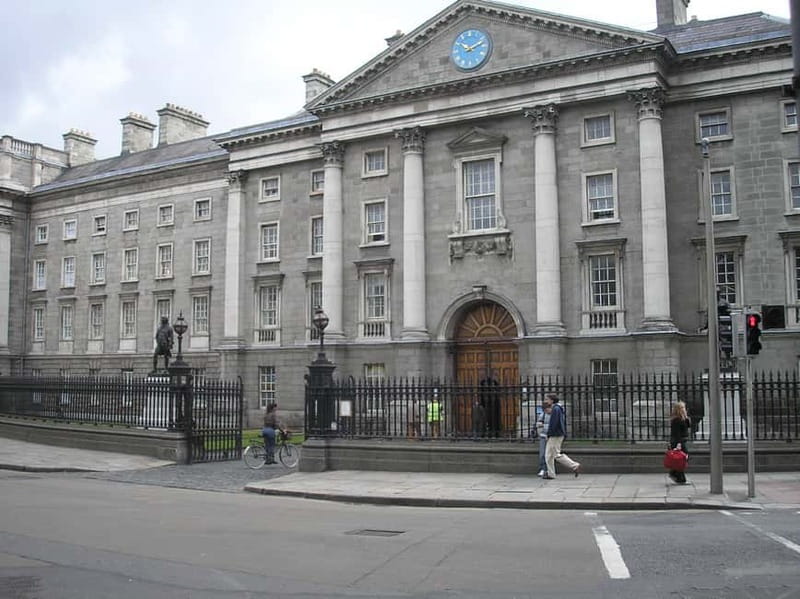
The tour ends outside Trinity College, near the former 18th-century Houses of Parliament. It’s a strong closing move because Trinity is the Dublin landmark that most visitors already recognize, even before they arrive.
The route also points you toward the Book of Kells as part of the finale. You’re not viewing it on this walk, since the visits are external. But ending here is smart. It gives you a reason to plan an indoor visit next—either for the manuscripts, the campus, or the broader Trinity experience.
The best thing about finishing at Trinity is momentum. After a story-filled walk, it’s easy to feel motivated to do one more step, not just go back to your hotel. If you’re still deciding what to book, this ending makes the decision easier because you’ve already learned why the campus is such a magnet.
Should you book this Dublin German sightseeing walking tour?
I’d book it if you want a fast, friendly way to understand the centre of Dublin. This is ideal for first-timers, short stays, and anyone who likes the idea of learning the stories behind big landmarks without needing tickets at every stop. The small group and the professional, friendly guide style are a big part of why it works.
I’d skip or pair it with something else if you strongly prefer interior visits. Since the stops are external, you’ll still want to add separate ticketed experiences for places you want to see from inside. And if German isn’t your comfort zone, consider whether you can follow explanations on the move.
If you’re flexible and you want your Dublin to feel coherent by day one, this is a solid pick.
FAQ
FAQ
How long is the Dublin sightseeing walking tour in German?
It’s about 2.5 hours.
What language is the tour guide?
The live tour guide speaks German.
Is this tour wheelchair accessible?
Yes, it’s listed as wheelchair accessible.
Are the visits during the tour inside buildings?
No. All visits are external, though opportunities for such visits may be available after the tour.
What landmarks are included on the route?
You’ll see major Dublin landmarks and areas such as Dublin Castle, City Hall, O’Connell Street, Trinity College (finish point), Christ Church Cathedral, Temple Bar area, the River Liffey and Millennium Bridge, the General Post Office, and more.
Where does the tour start?
It starts at the Tree of Gold Statue (Crann an Óir), Central Plaza, Dame Street 2, at the corner of Dame Street and Fownes Street Upper.
Where does the tour end?
The tour ends back at the meeting point area, with the finish outside Trinity College.
What is included in the price?
A professional, well-trained guide is included.
How much does the tour cost?
The price is $34 per person.
What’s the cancellation policy?
Free cancellation is offered up to 24 hours in advance for a full refund.
More Dublin Walking Tours





More Tours in Dublin





More Tour Reviews in Dublin



Fresh off the cobbles: the latest Dublin reviews
- Dublin Private Airport Transfer to Ireland
★ 4.5 · 3 reviews - Private Chauffeur Service From Dublin Airport to Killarney
★ 5.0 · 3 reviews - Ireland: 3-Day West Coast Explorer Tour
★ 5.0 · 3 reviews - From Dublin: 4-Day Southern and Western Coast Tour
★ 4.3 · 3 reviews - Dublin : Street Art Walking Tour
★ 5.0 · 3 reviews - Spring Tonic Foraging Tour
★ 5.0 · 3 reviews
Walking Tours, compared.
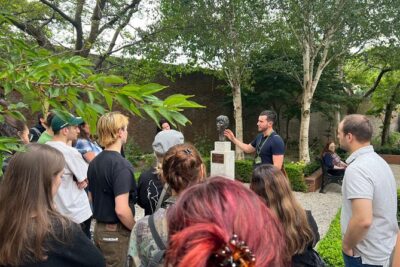 ★ 5.0Dublin Highlights and Hidden Gems Guided Walking TourFrom $296,020 reviews
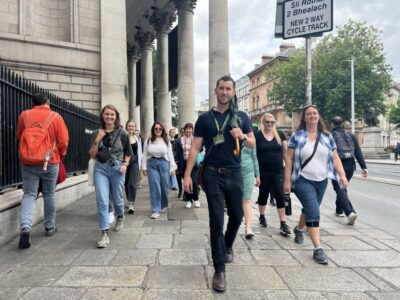 ★ 4.9Highlights and Hidden Gems Walking TourFrom $272,140 reviews
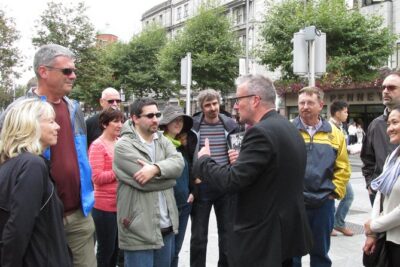 ★ 5.01916 Rebellion Walking TourFrom $271,605 reviews
 ★ 5.090 Minute Dublin Walking tour and Sightseeing tipsFrom $21916 reviews
 ★ 5.02-Hour Historical Walking Tour from DublinFrom $22875 reviews
 ★ 4.7Historical 2-Hour Guided Walking Tour of DublinFrom $22865 reviews
 ★ 5.0Dublin Traditional Irish 3 Course Meal Walking Tour with LocalFrom $107755 reviews
 ★ 4.9Mythology, Folklore and Legends Walking TourFrom $27703 reviews
Browse the lists this tour appears in