
Reviewed · HISTORICAL TOURS
Private Dublin Historical and Heritage Tour by Bike
Dublin by bike feels like fast-forward. This private heritage ride strings together famous landmarks and overlooked corners, with a guide who keeps the story moving right up the street. I especially liked the easy cycling pace paired with big historical scenes close together.
My favorite part is the extra care beyond the photos you take yourself. You get a souvenir video later, complete with captioned photos from your exact route, and your guide can help you snap pictures along the way (handy at busy viewpoints).
One thing to consider: the tour is outdoors and you’ll need moderate physical fitness, plus there’s no included snack stop, so plan your timing for coffee or food before you go.
In This Review
- The big highlights you’ll feel on day one
- From Grattan Bridge to Dublin Castle: the city’s layers, on two wheels
- Dubh Linn Gardens and The 40 Steps: small places with big meaning
- Saint Patrick’s Cathedral plus Norman walls: classic Dublin with a shortcut of context
- Teeling Whiskey and the Liberties: working-class Dublin, not just the postcard
- Kilmainham’s Royal Hospital and cemetery views: art, gardens, and perspective
- Kilmainham Gaol: standing outside a place of executions
- War Memorial Gardens to Chapelizod: safer paths along the Liffey
- Europe’s large urban park segment: walls, paths, and deer (if you’re lucky)
- Croppies Acre Memorial Park and the Guinness view across the river
- The guide plus the bike and the souvenir video: what you’re actually paying for
- Price and timing: who this fits and how to plan your day
- Who should book this Dublin historical heritage bike tour
- Should you book it?
- FAQ
- How long is the private Dublin historical and heritage bike tour?
- How much does the tour cost?
- Is this a private tour?
- Do I get picked up?
- Where does the tour start and end?
- What’s included, and is food provided?
- What physical level is needed?
- What happens if the weather is bad?
The big highlights you’ll feel on day one
- Private guide, private pace: it’s only your group, so stops feel unhurried.
- Both headline sites and side streets: you’ll hit Dublin classics plus the “wait, what’s that?” details.
- Photo help plus a later souvenir video: the captions make it easier to remember the who/what/where.
- Traffic-aware routes: you’ll spend time on safer, purpose-built paths near key sights and the river.
- Classic Dublin variety in one loop: bridges, cathedrals, Kilmainham, the Liffey, parks, and rebellion memorials.
More Dublin rides on two wheels
- Cycle Dublin – Bike & ebike Tours★ 5.0 · 748 reviews
- Dublin Panoramic e-Bike Tour with Howth Adventures★ 5.0 · 544 reviews
- Dublin: Bike & E-Bike Tour with a Local Guide★ 4.6 · 477 reviews
- E-Bike & Bike Tour with a Local Guide in Dublin★ 5.0 · 412 reviews
From Grattan Bridge to Dublin Castle: the city’s layers, on two wheels
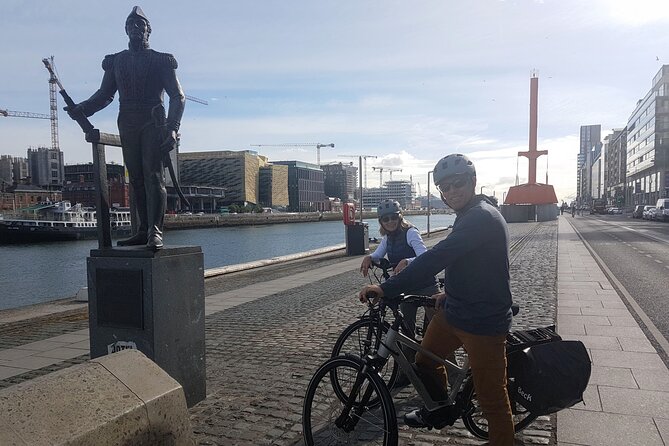
You start in central Dublin, then roll into the kind of history that doesn’t live in museums—it lives in the street shape. The first stop is Grattan Bridge, where you’ll pause to look at how the city rebuilt itself: the current bridge was rebuilt in 1875 on the foundation of an earlier 1755 bridge. That’s the theme of the tour—Dublin keeps reusing old ground while changing everything around it.
What makes this stop click is the way the guide connects physical landmarks to Irish place-names. You’ll hear about the meeting point of two rivers from which Dublin gets its name, plus stories tied to the original Custom House and a nearby hotel with connections to a famous rock band. Even if you’re not a “history facts” person, you’ll still come away with a mental map: the river logic, the buildings, and why the center grew where it did.
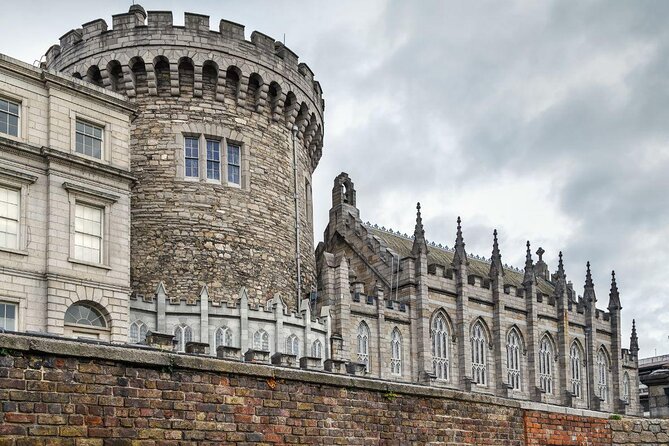
A few minutes later you’re at Dublin Castle, moving through the courtyard—right in the space that served as a center of government during British rule. You’ll get that striking contrast of architecture from different eras, with traces of early Norman rule visible where you least expect it. It’s a good early dose because it sets expectations for the rest of the ride: you’re not just sightseeing; you’re learning how the city was used.
Dubh Linn Gardens and The 40 Steps: small places with big meaning
From Dublin Castle, you head to Dubh Linn Gardens, a city-center pause that feels like a breather between major landmarks. The guide points out the circular garden tied to the dark pool idea behind Dublin’s name. That kind of explanation makes the place feel less random—suddenly you understand why something “just decorative” matters to the story of the city.
You’ll also pass and notice memorials and tributes, including the Garda Memorial and the David & Goliath statue, plus a Special Olympics tribute. This is one of those stops where you realize Dublin pays attention to remembrance in everyday spaces. It’s not only about kings and castles—it’s about modern Irish life layered over older traditions. You’ll likely also hear context about nearby Chester Beatty Museum and Library, which can be a useful lead if you want to extend your day after the bike tour.
Then comes The 40 Steps, one of those corners that makes you slow down even on a bike. The stop is designed around imagining the medieval city walls shown in metal plates. You’ll also hear about Jonathan Swift’s birthplace, which gives you a guide-led reason to look closely at a street corner instead of rolling past it.
This stop adds another layer: language mistakes and political protest. You’ll hear the story of a mis-translated street name, and the suffragettes who were arrested for throwing stones at windows. It’s a compact lesson in how Dublin’s streets hold the evidence of shifting power, beliefs, and everyday resistance.
Saint Patrick’s Cathedral plus Norman walls: classic Dublin with a shortcut of context
Next you’re at Saint Patrick’s Cathedral, where you get a quick but meaningful stop. The emphasis here is on views—cathedral and gardens—with just enough time to orient yourself in the area. You’ll also pass Jonathan Swift’s birthplace and see Norman walls still intact along the route, which connects the “Swift corner” idea from earlier to a larger place of worship and civic prominence.
The practical value of stopping at a cathedral during a bike tour is simple: it gives you a stable reference point in your photos. If you keep snapping pictures while rolling, everything starts to look similar. With Saint Patrick’s Cathedral in the mix, your camera rolls will make sense later when you sort them.
Teeling Whiskey and the Liberties: working-class Dublin, not just the postcard
After the cathedral stop, the tour shifts into the vibe of old neighborhoods—still Dublin, but more everyday. You roll through the Liberties, described as one of the oldest residential districts and often associated with working-class life. The guide explains the name and points out 19th and 20th century architecture that defines the feel of the area.
A special connection here is Guinness. You’ll hear about the intrinsic link between the neighborhood and the Guinness business, which helps you understand why certain buildings and street patterns exist where they do. It’s also a nice reminder that heritage isn’t only castles and cathedrals. Industry, labor, and local identity are part of Dublin’s historic “center of gravity,” too.
Right along this path, you stop at Teeling Whiskey Distillery for a short visit focused on a dramatic story from the 19th century: the great whiskey fire in Dublin. The stop is brief, but that’s part of its value. Instead of making the day all “inside buildings,” you get to carry a story out onto the street with you. You can take that whiskey-fire context and then revisit it later while you’re walking nearby, even after the tour ends.
A handful more Dublin outings we would happily send a friend to
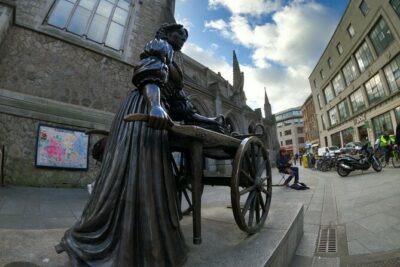




Kilmainham’s Royal Hospital and cemetery views: art, gardens, and perspective
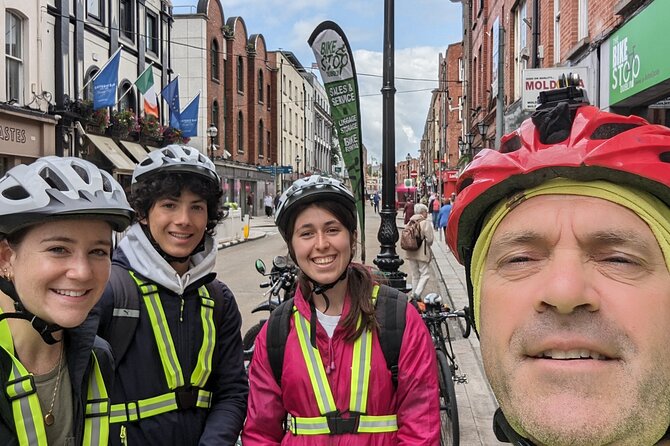
The ride continues toward Royal Hospital Kilmainham, where the tour slows into one of the more scenic stretches. You’ll pause for about 15 minutes to see the building’s earlier role as the Royal Kilmainham Hospital in the 17th century—and its later identity as the Irish Museum of Modern Art.
What you’ll want to pay attention to here is the viewpoint. The gardens overlook Dublin, and the guide’s description helps you see why this spot was chosen in the first place. It’s not just a pretty break; it’s a perspective switch from tight city streets to a broader sense of how Dublin sits and spreads.
Along the way you’ll also head toward Dublin’s oldest cemetery via a traffic-free path. Even if you don’t stop for long, the fact that it’s part of the route matters: it shows the “heritage bike” approach isn’t only about famous museums. It’s also about how the city remembers loss and community over time.
Kilmainham Gaol: standing outside a place of executions
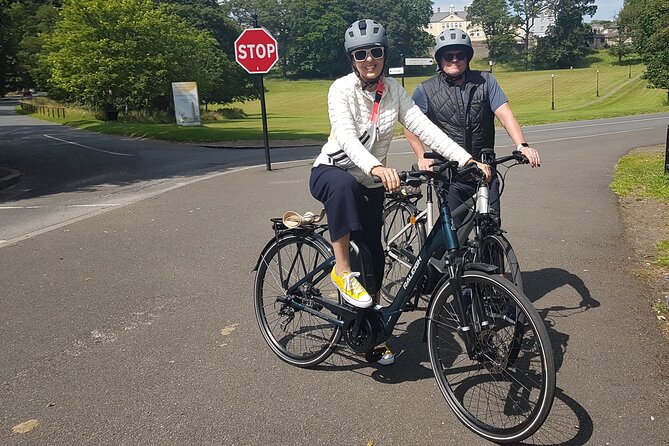
Then you reach Kilmainham Gaol, where the stop is intentionally short—about five minutes. You park and look at the entrance area where public executions once took place. You won’t be inside the prison museum during this particular stop, but the guide’s stories give the exterior a sharper meaning than it would have on its own.
This is one of the moments where the private guide format helps. Without being forced to rush, you get time to absorb what you’re seeing and connect it to the broader timeline of Ireland’s struggle and aftermath. If your group includes anyone who loves social history, this stop usually lands well.
War Memorial Gardens to Chapelizod: safer paths along the Liffey
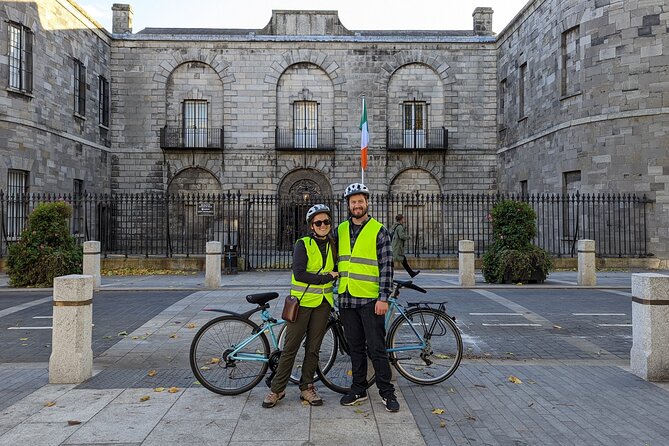
After Kilmainham, the tour shifts from landmark-to-landmark and leans into cycling experience. You pedal through the War Memorial Gardens, using peaceful, traffic-free pathways built to remember those who died in the First World War. It’s a calmer section, but still meaningful—Dublin’s remembrance shows up in the route itself.
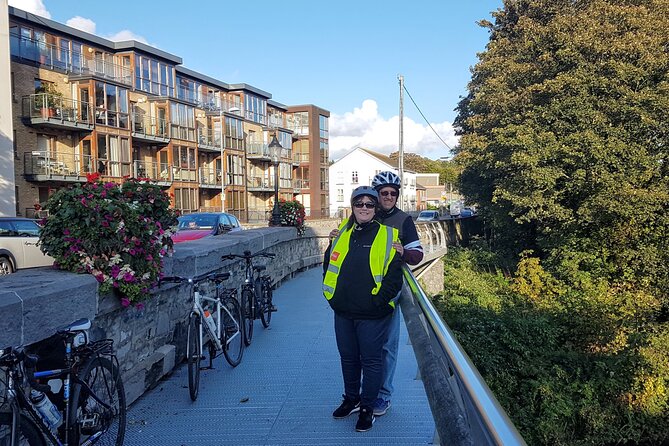
From there you continue along a safe, purpose-built cycle way next to the River Liffey, heading toward Chapelizod. The river stretch is where biking feels most like biking. You get the feeling of travel without constant negotiating for space. And since it’s a purpose-built cycle path, it’s easier to relax and focus on the view rather than constantly scanning traffic.
Chapelizod is the bridge between “city heritage” and “park day.” You’ll stop enough to break the ride rhythm, then head onward through the next green stretch.
Europe’s large urban park segment: walls, paths, and deer (if you’re lucky)
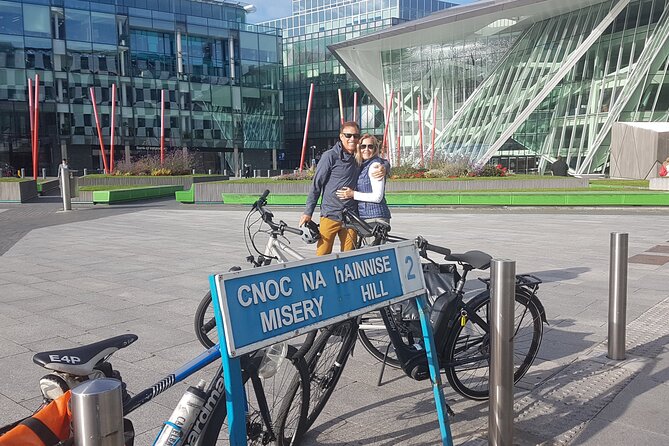
Leaving Chapelizod, you enter one of Europe’s largest urban parks through a gate set in 17th-century walls. The tour keeps you on dedicated cycle paths, with time to enjoy natural scenery and the company of wild deer if luck is on your side.
Even if deer don’t appear, the real win is the contrast. You’ve spent the morning learning Dublin’s political and social eras, and now you’re cycling under a different kind of Dublin identity—green space stitched into the city’s edge. It helps you end the day without feeling like you only stared at stone.
Croppies Acre Memorial Park and the Guinness view across the river
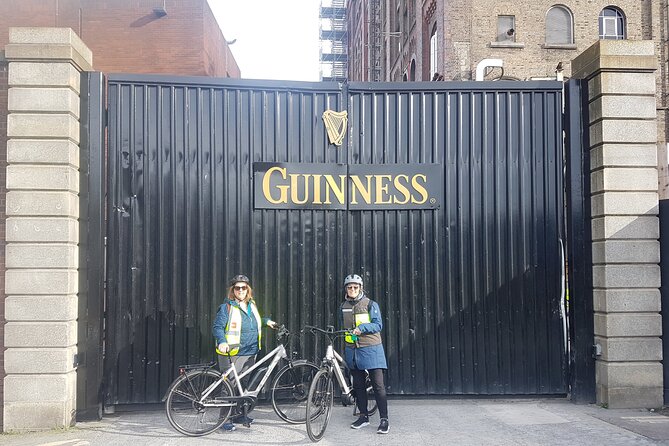
The route wraps back into history with Croppies Acre Memorial Park, where you’ll spend about five minutes. The stop focuses on folklore around a mass burial grave connected to victims of the 1798 rebellion. You’ll also look for details tied to Collins Barracks and the National Decorative arts and Military Museum, plus you get a view of the Guinness Brewery across the River Liffey.
This ending works because it brings back the theme from earlier: neighborhoods, industry, resistance, and memory are all braided together. Ending with a river view also makes the whole ride feel complete. You get imagery you can’t easily replicate from photos taken inside buildings.
The guide plus the bike and the souvenir video: what you’re actually paying for
At $120.14 per person, the value here is less about one standout museum and more about the full package. You get a bike, a private guide, and a structured route that keeps you from guessing where to stop and what to notice. That structure is worth money in Dublin, where the distance between key sights can be short in straight lines but annoying in real walking time.
The best “non-sightseeing” perk is the souvenir video later, including captioned photos from your route. That’s the part that sticks for people who hate trying to remember details from day trips. It turns your ride into a story you can replay.
Also, your guide helps with photos. That means you’re not left playing photographer for your whole group, especially at viewpoints where the light can change quickly. If you travel as a couple or small group, this helps you get actual memories instead of half-blurry selfies.
Price and timing: who this fits and how to plan your day
The tour runs about 2 hours 30 minutes to 3 hours 30 minutes, depending on pace and how much time you spend at each stop. That’s a solid chunk for a bike tour that mixes brief history pauses with longer viewpoint moments.
It’s also a smart plan if you like to travel efficiently. The route is packed with major areas—city center landmarks, Kilmainham, the river cycleway, and a park segment—so you’re not spending your whole day in one neighborhood.
Because this is popular, it’s often booked about 59 days in advance. If your schedule is fixed (or you’re traveling in a busy season), you’ll save stress by reserving early instead of gambling on last-minute availability.
Who should book this Dublin historical heritage bike tour
This is a great fit if you want:
- A guided “see-and-understand” day in central Dublin without spending hours planning stops
- A private experience where your guide can adjust to your group’s pace
- A mix of famous sites and street-level details like Swift’s connections and the suffragette story
It’s less ideal if you hate cycling outdoors or expect lots of indoor time. The tour also runs only with good weather, and snacks aren’t included, so you’ll want to plan your food around the ride.
Should you book it?
If you want Dublin’s highlights with a guide who adds meaning to what you’re seeing, I’d book this. The combination of private pacing, photo support, and a route that blends city monuments with safer river and park cycling is a strong value.
But if you’re unsure about physical comfort on a bike route or you’re traveling without flexibility for weather, consider keeping your day light and be ready to adjust.
FAQ
How long is the private Dublin historical and heritage bike tour?
It runs about 2 hours 30 minutes to 3 hours 30 minutes.
How much does the tour cost?
The price is $120.14 per person.
Is this a private tour?
Yes. It’s a private tour/activity, and only your group participates.
Do I get picked up?
Pickup may be possible if you are staying within 1 km of the meeting point. Otherwise, you’ll walk to the start point of the tour.
Where does the tour start and end?
It starts at Bike Stop Dublin, 37 Capel St, North City, Dublin, D01 X2E5, Ireland, and ends back at the meeting point.
What’s included, and is food provided?
The tour includes use of a bicycle. Snacks, refreshments, and drinks are not included.
What physical level is needed?
It’s listed for travelers with a moderate physical fitness level.
What happens if the weather is bad?
The experience requires good weather. If it’s canceled due to poor weather, you’ll be offered a different date or a full refund.
More Dublin Bike Tours




More Tours in Dublin



More Tour Reviews in Dublin


Fresh off the cobbles: the latest Dublin reviews
- Dublin Private Airport Transfer to Ireland
★ 4.5 · 3 reviews - Private Chauffeur Service From Dublin Airport to Killarney
★ 5.0 · 3 reviews - Ireland: 3-Day West Coast Explorer Tour
★ 5.0 · 3 reviews - From Dublin: 4-Day Southern and Western Coast Tour
★ 4.3 · 3 reviews - Dublin : Street Art Walking Tour
★ 5.0 · 3 reviews - Spring Tonic Foraging Tour
★ 5.0 · 3 reviews
Historical Tours, compared.
 ★ 5.0Dublin Historical Centre Food Tour with 8 Food Tastings & DrinksFrom $1251,718 reviews
 ★ 5.02-Hour Historical Walking Tour from DublinFrom $22875 reviews
 ★ 4.7Historical 2-Hour Guided Walking Tour of DublinFrom $22865 reviews
 ★ 4.5Dublin to Cork, Blarney Castle & Cóbh Heritage Centre by trainFrom $195510 reviews
 ★ 4.8Jeanie Johnston Tall Ship Irish Famine History TourFrom $16431 reviews
Wicklow’s Historic Gaol Day TourFrom $14355 reviews
★ 4.8Jeanie Johnston Tall Ship Irish Famine History TourFrom $16431 reviews
Wicklow’s Historic Gaol Day TourFrom $14355 reviews
 ★ 4.3Dublin’s Haunted History Walking TourFrom $31345 reviews
 ★ 5.0Deliciously Dublin: The Artisan Donut Walking & History TourFrom $70329 reviews
Browse the lists this tour appears in