
Reviewed · WALKING TOURS
Small Group Bucket List Sights Walking Tour with a Local Guide
Dublin rewards slow wandering, but this tour gives you a smart head start. In just about 2 hours, you’ll hit the big downtown landmarks with a local guide who connects buildings to the city’s shifting politics and religions. I like that it stays small-group friendly and keeps the pace brisk enough to finish with energy.
My favorite part is how the route turns famous stops into stories you can picture fast, from Viking origins to Tudor-era street shape. One thing to plan for: entry into some major sights is not included, so if you want interiors, you may need extra tickets or time later.
In This Review
- Key highlights at a glance
- A 2-Hour Walk That Gets You Oriented in Central Dublin
- Meeting on Wood Quay and Finishing at Trinity College Green
- Christ Church Cathedral: Vikings, Normans, and Whiskey-Era Stone
- St. Patrick’s Cathedral and the Guinness-Family Renovation Story
- Dubh Linn Gardens and the Viking Long-Boats on the River
- Dublin Castle: The British Government Seat Behind Mixed Architecture
- City Hall and the National Flag Lesson You Can Actually See
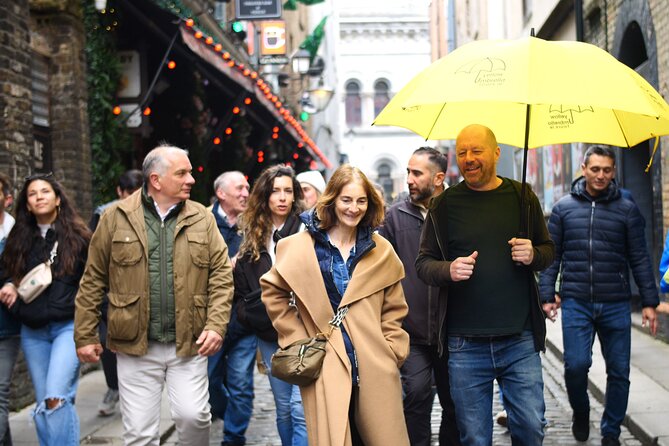
- Temple Bar’s Tudor-Era Street Logic and Pub District Origins
- Millennium Bridge: Views That Connect Celts to the Silicon Docks
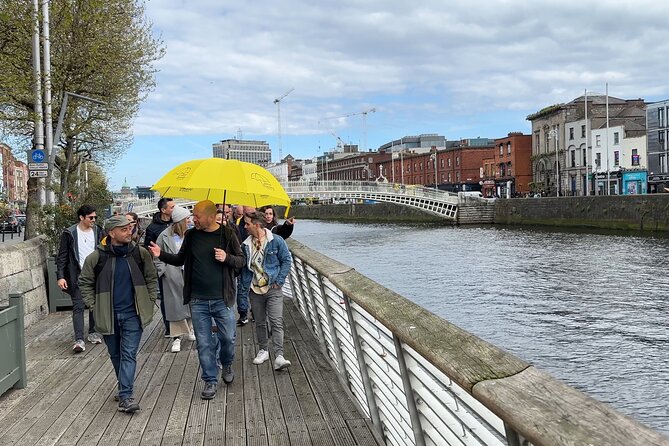
- Ha’penny Bridge and the Legend of the Shaking Bridge
- Merchant’s Arch: Crown Alley Contrasts and Stephenson Tower
- College Green’s Government Buildings, Plus a Hello to Molly Malone
- Trinity College Dublin: Ending at the Book of Kells Connection
- Who This Tour Fits Best (and Who Should Rethink It)
- Value Check: Why It Works at About $20.52 for Two Hours
- Should You Book This Small Group Dublin Walk?
- FAQ
- What is the duration of the walking tour?
- How much does the tour cost?
- How many people are in the group?
- What language is the tour offered in?
- Where do I meet and where does the tour end?
- Is admission included for the main sights?
- Which stops are included on the route?
- Do I need a printed ticket?
- Can I cancel for a refund?
Key highlights at a glance
- Local guide storytelling that links each landmark to Dublin’s political and social changes
- Quick-stop format (about 10 minutes per stop) that helps you get your bearings fast
- Major sights without the hassle of figuring out what matters and why
- Bridges with big backstory: Liffey crossings, shaking bridge lore, and contrasts across the river
- Great value for the money, especially for a first morning in the city
More Dublin walks at an easy pace
- Dublin Highlights and Hidden Gems Guided Walking Tour★ 5.0 · 6,020 reviews
- Dublin: Highlights and Hidden Gems Walking Tour★ 4.9 · 2,140 reviews
- 1916 Rebellion Walking Tour★ 5.0 · 1,605 reviews
- 90 Minute Dublin Walking tour and Sightseeing tips★ 5.0 · 916 reviews
A 2-Hour Walk That Gets You Oriented in Central Dublin
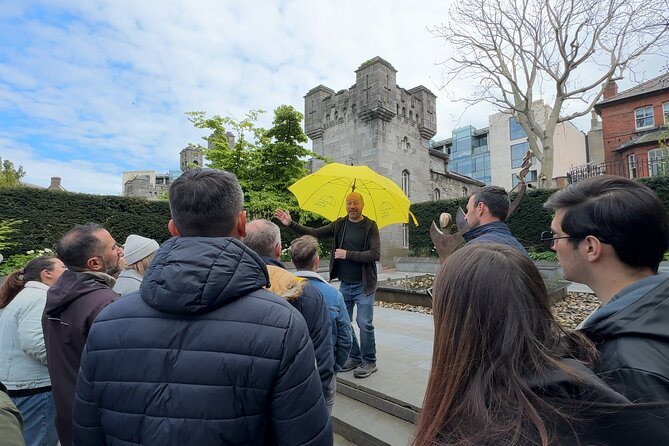
This tour is built for people who want the main Dublin sights without committing to a full day of museums and long lines. You get a guided route through central neighborhoods, and because the group is capped at 25 people, the conversation stays workable instead of turning into a lecture to the crowd.
What makes it especially useful is the way the stops chain together. You’re not just seeing one pretty cathedral after another. The guide is aiming to help you understand how Dublin became what it is today—Vikings, Normans, British rule, and Irish identity all show up in the same few square blocks. That means you can return later to the places you care about most, with better context.
The other big win is that you’re outdoors for most of the time, so it feels like an active morning. Reviews also point to guides who keep energy up and encourage questions, which is exactly what you want on a short walk.
Meeting on Wood Quay and Finishing at Trinity College Green
The tour starts at 121 R137, Wood Quay (near public transportation). You’ll finish at Fox House, 37 College Green, outside the front gate of Trinity College Dublin—right where you’d want to be if you’re continuing on to the campus or the nearby sights.
It runs in English and uses a mobile ticket, which is handy if you don’t want to fuss with printed vouchers. The schedule is straightforward: it’s an approximately 2-hour walk starting at 10:00 am.
One small practical note: the stops are intentionally short—around 10 minutes each. That’s great for coverage, but if you’re hoping for long time inside every building, you’ll need to plan a second visit on your own.
Christ Church Cathedral: Vikings, Normans, and Whiskey-Era Stone
Christ Church Cathedral is the opener, and it sets the theme: Dublin’s past keeps getting rebuilt on top of itself. The guide explains how it began in wood by the Vikings, then was recast in stone by the Normans, and later renovated in the 19th century with money from whiskey trade.
That matters for your trip because it changes how you look at cathedrals. You stop treating it like one single moment in time. Instead, you see it as a timeline. The exterior alone becomes a clue to who held power and what wealth shaped the city.
Drawback to note: you typically won’t be entering the cathedral on this tour, and admission isn’t included. If you want to go inside, budget time (and possibly extra money) for that afterward.
St. Patrick’s Cathedral and the Guinness-Family Renovation Story
Next is St. Patrick’s Cathedral, named after Ireland’s patron saint who, in the traditional tale, drove snakes off the island. Here the tour highlights the 1860s renovation by the Guinness family, including Sir Benjamin Lee Guinness.
This stop is a good example of how the route mixes legend and real-world change. Even if you’ve heard the St. Patrick story before, hearing about how a major family’s wealth shaped the building gives you a more grounded way to understand what you’re seeing.
As with the first cathedral, plan for the same limitation: admission is not included, and your time at the site is brief. Still, even a quick stop can be worthwhile because the guide frames what to notice and how the cathedral fits into Dublin’s larger identity.
More guided Dublin outings with a local


Dubh Linn Gardens and the Viking Long-Boats on the River
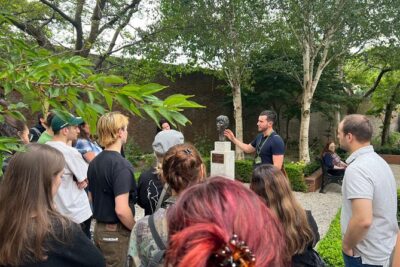
Dubh Linn Gardens is where the tour slows down emotionally, even if the clock doesn’t. The highlight here is the connection to the Vikings’ arrival in the 9th century, when long boats were moored in the area.
You’ll also hear about the Chester Beatty Library, which sits within this quieter green space. It’s a pause from the busiest streets, and it helps you picture what Dublin’s waterfront might have looked like before it became today’s city center.
This stop is also free, so you’re not forced into extra decisions. The value is mostly interpretive: you’re learning how the geography ties into the story.
Dublin Castle: The British Government Seat Behind Mixed Architecture
Dublin Castle is one of those places that looks like multiple eras stacked together. The guide explains that it was the center of British government in Ireland for about 700 years, and you can see that layering in the medieval, Georgian, Gothic, and modern architecture.
For me, this stop is one of the most important because it’s where the tour turns from “nice buildings” into “systems of power.” Even if you’re not a history nerd, it’s hard not to see why institutions like this mattered.
Like the cathedrals, admission isn’t included. So think of this as an exterior-and-context stop. If you want more, Dublin Castle is the kind of place where a separate ticket later can make sense.
City Hall and the National Flag Lesson You Can Actually See
Outside Dublin Castle you’ll reach City Hall, where the guide shares the significance of Ireland’s national flag—described as representing peace between Catholic and Protestant, and between North and South.
This isn’t just a trivia moment. It’s a reminder that the symbolism in Dublin isn’t locked in museums. It’s public, everyday, and tied to the city’s modern identity.
This stop is free and works well for a quick mental reset after heavier political architecture. It also sets you up for the next neighborhood shift as you move toward Temple Bar.
Temple Bar’s Tudor-Era Street Logic and Pub District Origins
Temple Bar is where Dublin’s “bucket list” brand meets the reality of planning and conquest. The guide explains how Temple Bar’s layout connects to the Tudor conquest of Ireland, and then you naturally end up in the area that’s now known for lively pubs and nightlife.
Here’s why that context is useful: you can enjoy the atmosphere without assuming it’s all just modern tourism energy. You’ll start noticing that the neighborhood is built on older city structure.
This part of the tour is free. The “con” is simply that the vibe here can get busy, so you may want to keep your expectations realistic: this stop is about understanding the area’s story, not about quiet contemplation.
Millennium Bridge: Views That Connect Celts to the Silicon Docks
Crossing the Millennium Bridge gives you a split view of Dublin’s layers. The guide frames the east side as a place where the Celts built their settlement about 2,100 years ago and the west side as where ideas inspired the Silicon Docks (named from American influence in more recent decades).
That’s a lot of time travel for one river crossing, and it’s exactly why bridges are great tour anchors. From the Liffey, you can see how old and new Dublin sit side by side.
This stop is not included with admission, since it’s outdoors and quick. Expect photos, city skyline moments, and a guided explanation that helps you interpret what you’re looking at.
Ha’penny Bridge and the Legend of the Shaking Bridge
Then you cross back over the iconic Ha’penny Bridge. The tour connects the bridge’s name to the Duke of Wellington and also shares that you can thank Harland & Wolff for the fact that the bridge no longer shakes when you walk over it.
It’s one of those Dublin details that’s funny and specific, and it works because it makes you pay attention while you’re walking. Small movements become part of the story, and you end up remembering the bridge because of the mechanism.
This stop is free and quick. If you like playful local lore mixed with facts, you’ll enjoy this segment.
Merchant’s Arch: Crown Alley Contrasts and Stephenson Tower
At Merchant’s Arch, the tour leans into Dublin’s contrast. The guide points out how areas around Crown Alley and Merchant’s Arch sit on one end, while Stephenson Tower—a brutalist, heavy-looking presence—sits at the other.
This is a neat reality check: Dublin didn’t just grow by adding medieval charm. It also accepted modern design and modern density, sometimes in ways that feel like opposites.
Again, no admission is involved here. Your value is in learning how the city’s shape and styles reflect its changing identity.
College Green’s Government Buildings, Plus a Hello to Molly Malone
You’ll reach College Green, where the guide explains that the surrounding buildings tied to government and finance and that Dublin saw itself as the second city of the empire.
Then there’s a quick stop for Molly Malone Statue, the famous hello point for anyone who wants the classic Dublin photo and a friendly nudge into the city’s storytelling tradition.
Both stops are free. The main drawback is time: you get a quick look at big-scale architecture, not a long sit-down to absorb every detail. Still, it’s the right rhythm for a morning walk.
Trinity College Dublin: Ending at the Book of Kells Connection
The tour finishes at Trinity College Dublin, right on College Green outside the front gate at Fox House. The guide highlights Trinity as home to the famous Book of Kells exhibition.
Even if you don’t plan to go inside right away, ending here is a smart choice. It places you at a natural next step for many visitors: campus walks, nearby shops, and the exhibition option if you want it.
Since admission isn’t included, you’ll need to decide separately if Trinity is worth your extra time and ticket. For many people, it’s a perfect way to turn a guided introduction into your first self-directed afternoon.
Who This Tour Fits Best (and Who Should Rethink It)
This is a strong fit if you want:
- A first-morning Dublin orientation with context, not just photos
- A small group where Q&A can actually happen
- A guided route that covers major central landmarks in a tight window
It’s also a good choice if you like your history in practical pieces. The tour connects each site to Dublin’s bigger political and social shifts, so your understanding builds as you walk.
Who might want something else? If you’re the type who needs long time inside churches, castles, and exhibits, this won’t replace those visits. The stops are short (roughly 10 minutes each), and admission tickets are not included for several major stops. You’ll likely want to come back to the places that catch your attention.
One more consideration: because it’s a walking tour, you’ll want comfortable shoes. The route is designed for most people, but the experience depends on walking and short pauses.
Value Check: Why It Works at About $20.52 for Two Hours
At $20.52 per person, the value comes from three things working together: duration, coverage, and guidance quality.
First, it’s about 2 hours. You’re not spending most of your day commuting or waiting. Second, you cover a dense set of central Dublin icons—Christ Church, St. Patrick’s, Dublin Castle, key bridges, College Green, and the Trinity finish. Third, the guide component matters. Reviews highlight guides such as Peter and Martin as energetic, engaging, and willing to answer questions, along with helpful tips for what to do next.
Add in that many stops are free (like Dubh Linn Gardens and City Hall area points), and you’re not hit with constant extra costs just to learn what you’re seeing.
Should You Book This Small Group Dublin Walk?
If you’re spending limited time in Dublin, I’d book this. It gives you exactly what a first-time visit needs: a guided map of the city’s major landmarks plus the stories that explain how the place got made.
Book it if you want a fun morning with a local guide, good conversation, and a route that makes it easier to explore on your own afterward. It’s also a smart starting point if you plan to visit Trinity or other major sights later.
Skip or plan differently if you already know you want deep interior time at cathedrals or castle rooms. This tour is about orientation and outside context. Treat it as your Dublin launchpad, then choose one or two interior stops for more time on your own.
FAQ
What is the duration of the walking tour?
The tour is approximately 2 hours.
How much does the tour cost?
The price is $20.52 per person.
How many people are in the group?
The tour has a maximum of 25 travelers.
What language is the tour offered in?
The tour is offered in English.
Where do I meet and where does the tour end?
Meet at 121 R137, Wood Quay, Dublin. Finish at Fox House, 37 College Green, Dublin 2, outside the front gate of Trinity College Dublin.
Is admission included for the main sights?
No. Admission ticket is not included for some major stops like Christ Church Cathedral, St. Patrick’s Cathedral, and Dublin Castle. Some other stops are free.
Which stops are included on the route?
The walk includes Christ Church Cathedral, St. Patrick’s Cathedral, Dubh Linn Gardens, Dublin Castle, City Hall, Temple Bar, Millennium Bridge, Ha’penny Bridge, Merchant’s Arch, College Green, Molly Malone Statue, and Trinity College Dublin.
Do I need a printed ticket?
No. It uses a mobile ticket.
Can I cancel for a refund?
Yes. You can cancel up to 24 hours in advance for a full refund. If you cancel less than 24 hours before the start time, the amount paid is not refunded.
More Dublin Walking Tours






More Tours in Dublin





More Tour Reviews in Dublin



Fresh off the cobbles: the latest Dublin reviews
- Dublin Private Airport Transfer to Ireland
★ 4.5 · 3 reviews - Private Chauffeur Service From Dublin Airport to Killarney
★ 5.0 · 3 reviews - Ireland: 3-Day West Coast Explorer Tour
★ 5.0 · 3 reviews - From Dublin: 4-Day Southern and Western Coast Tour
★ 4.3 · 3 reviews - Dublin : Street Art Walking Tour
★ 5.0 · 3 reviews - Spring Tonic Foraging Tour
★ 5.0 · 3 reviews
Walking Tours, compared.
 ★ 5.0Dublin Highlights and Hidden Gems Guided Walking TourFrom $296,020 reviews
 ★ 4.9Highlights and Hidden Gems Walking TourFrom $272,140 reviews
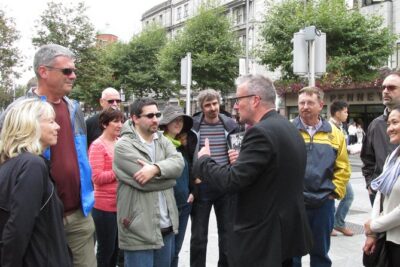 ★ 5.01916 Rebellion Walking TourFrom $271,605 reviews
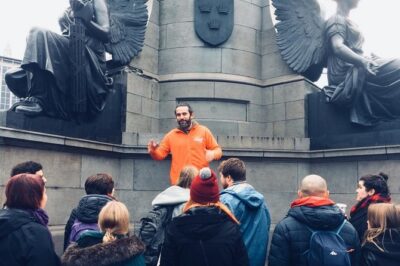 ★ 5.090 Minute Dublin Walking tour and Sightseeing tipsFrom $21916 reviews
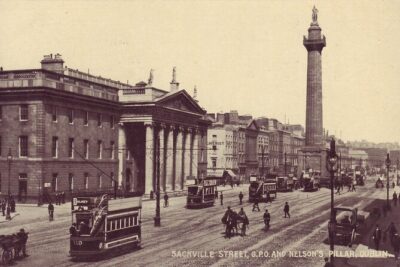 ★ 5.02-Hour Historical Walking Tour from DublinFrom $22875 reviews
 ★ 4.7Historical 2-Hour Guided Walking Tour of DublinFrom $22865 reviews
 ★ 5.0Dublin Traditional Irish 3 Course Meal Walking Tour with LocalFrom $107755 reviews
 ★ 4.9Mythology, Folklore and Legends Walking TourFrom $27703 reviews
Browse the lists this tour appears in