

Reviewed · HISTORICAL TOURS
Women in Irish History Feminist Dublin Walking Tour with Guide
Dublin gets a new perspective on this walk. This Women in Irish History tour links famous women to five major Dublin landmarks, from political power to public memory. It’s a smart way to see the city while learning how Irish women pushed back, organized, and changed the story.
What I like most is the guide style. Adam Ladd keeps the mood lively, with humor and a natural pace that feels like a good conversation, not a lecture. I also like that the route is built around free-to-enter stops, so you’re not nickel-and-dimed just to follow the lesson.
One thing to consider: the schedule is flexible because discussions can run long. Plan your afternoon with a little cushion, and note that food and drinks aren’t included, so bring water if you need it.
In This Review
- Key things to know before you go
- How the Women’s History Walk Through Dublin works
- Dublin Castle: Veronica Guerin and Suffragette Footprints
- St Stephen’s Green: Constance Markievicz and the Irish Revolution
- Leinster House: Laws That Took Rights Away
- Trinity College Dublin: A Liberal Blackspot in Catholic Ireland
- Molly Malone Statue: From Song to Street Memorial
- Meet Adam Ladd and the non-preachy storytelling style
- Price, Pickup, and Value for a Private Group
- Pacing, Weather, and Practical Tips for a 2.5-hour walk
- Should you book this Women in Irish History tour?
- FAQ
- How long is the Women in Irish History Feminist Dublin Walking Tour?
- Is this a private tour?
- What group size is the tour designed for?
- Where does the tour start and where does it end?
- Do you get hotel pickup?
- Is the tour in English?
- Are food and drinks included?
- Is there an admission ticket cost for the stops?
- Are service animals allowed?
- What is the cancellation policy?
Key things to know before you go

- Veronica Guerin at Dublin Castle: a memorial stop that turns a well-known name into something real and local
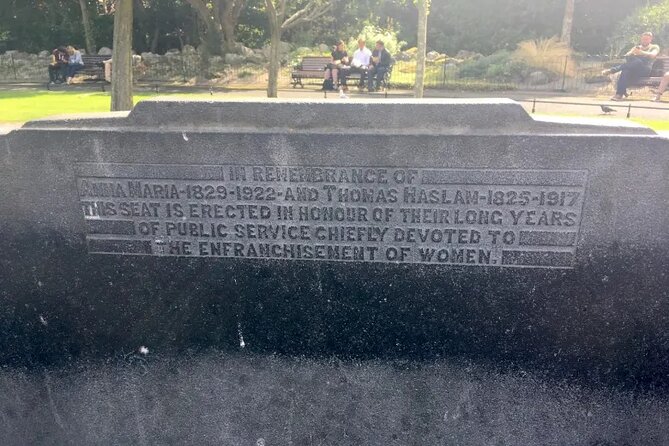
- Irish Suffragettes and the fight for rights: you’ll see commemorations tied to women’s campaigning
- Constance Markievicz in St Stephen’s Green: the park becomes part of the Irish revolution story
- Leinster House and law that restricted women: history here is not just names, it’s policy
- Trinity College founded in 1592: plus a look at why the campus stood out in its wider era
- Molly Malone made physical: a statue that connects song, legend, and Dublin street culture
More Dublin walks at an easy pace
- Dublin Highlights and Hidden Gems Guided Walking Tour★ 5.0 · 6,020 reviews
- Dublin: Highlights and Hidden Gems Walking Tour★ 4.9 · 2,140 reviews
- 1916 Rebellion Walking Tour★ 5.0 · 1,605 reviews
- 90 Minute Dublin Walking tour and Sightseeing tips★ 5.0 · 916 reviews
How the Women’s History Walk Through Dublin works
This is a private walking tour for up to 15 people, which matters. You’ll get more give-and-take than you would on a big group bus tour. Since it runs about 2 hours 30 minutes, you’re not trying to cover all Dublin—just the parts that explain how women shaped (and were shaped by) Irish public life.
The route is also practical. The starting point is easy to find: the Molly Malone Statue on Suffolk St, Dublin 2. The tour ends back at the same spot, so you’re not left figuring out how to get home after you finish your walking lesson.
Most stops are marked as admission ticket free for this experience. That’s a real value point: you can spend your money on a good meal afterward, not on multiple site tickets mid-walk. Also, it’s offered in English, and it includes an expert local guide plus hotel pickup.
If you’re the kind of person who likes context—why things happened, not just who did them—this tour is built for you.
Dublin Castle: Veronica Guerin and Suffragette Footprints
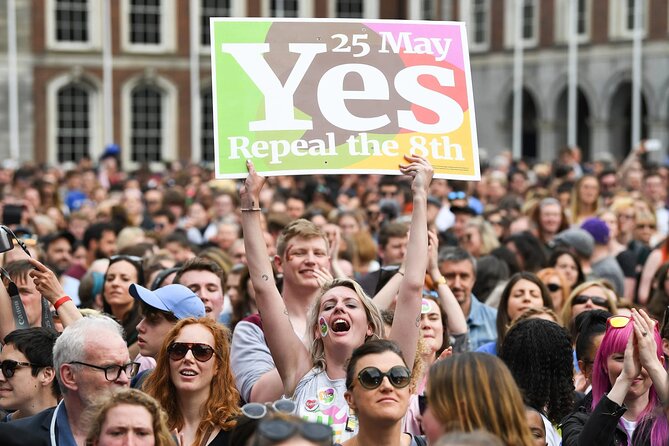
Dublin Castle is the kind of place where it’s easy to think you’re just touring old stone. The tour flips that. You start here because it’s been part of Ireland’s story for centuries, and women’s history shows up in specific, concrete ways.
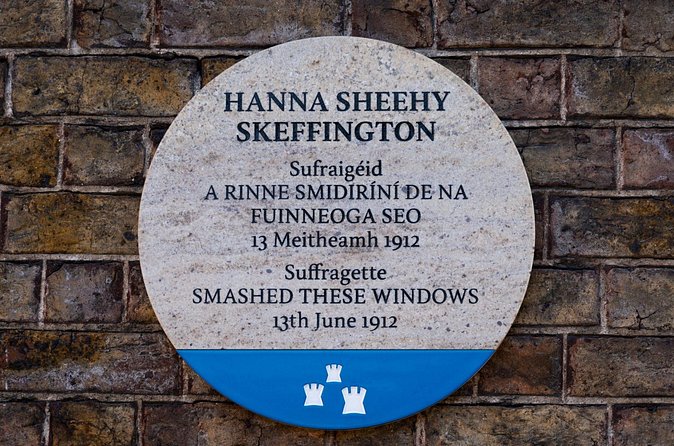
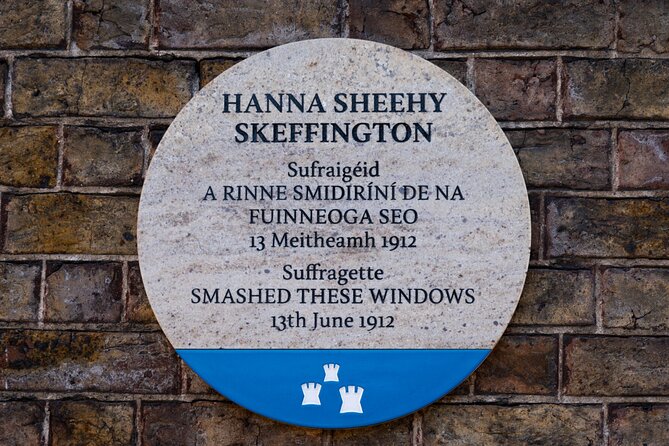
You’ll spend about 25 minutes at the castle area, with free entry. The highlights are twofold: you’ll see the memorial dedicated to journalist Veronica Guerin, and you’ll learn about a plaque connected to the Irish Suffragettes. Those stops help you connect modern readers to earlier campaigns for rights. It’s not abstract, it’s literally placed on the buildings and in the public record.
A bonus: the way Adam Ladd frames these moments makes the site feel less like a museum and more like a living timeline. You get the sense of how public spaces in Dublin were used to remember people, influence opinion, and mark history as it unfolded.
One practical note: castles can feel crowded in certain areas and weather can change quickly in Dublin. Wear comfy shoes and expect you’ll be standing, reading, and listening.
St Stephen’s Green: Constance Markievicz and the Irish Revolution
Next is St Stephen’s Green, a public park you can almost walk through without thinking too hard. Here, you’ll get a reason to slow down. The tour allots about 25 minutes and notes free entry.
This is where Constance Markievicz enters the story, along with the broader role of women during the Irish revolution. Markievicz is one of those names people hear, but the value on this stop is how the guide ties her to the idea of women moving from public visibility into political action.
St Stephen’s Green also works well as a break in the walk. After Dublin Castle’s formal setting, the park gives you a calmer stage for these ideas. You can look around, catch your breath, and still follow the thread of women’s involvement in national change.
If you’re trying to learn more than dates, this park stop is a good one. It helps you connect political history with everyday space—where people gathered, looked, argued, and lived.
Leinster House: Laws That Took Rights Away
Then you head to Leinster House, home of the Irish Parliament. Time here is shorter—around 20 minutes—but the point is sharp. When the state came into being, it enacted repressive laws that removed rights from women, and the tour makes sure you understand the political stakes.
This stop is valuable for a simple reason: it reminds you that progress isn’t automatic. Women’s history isn’t only about protests and speeches. It’s also about statutes, authority, and who gets power in writing.
You’ll learn how the shift from earlier movements to formal state systems affected women’s rights. Even if you know a little already, this is the kind of stop that adds weight. It turns the revolution-era stories into the consequences that followed.
One caution for expectations: this part is about policy and outcomes, not just dramatic moments. If you prefer your history in action-heavy scenes, you may still enjoy it, but it’s more “how the system worked” than “who fought where.”
More guided Dublin outings with a local


Trinity College Dublin: A Liberal Blackspot in Catholic Ireland

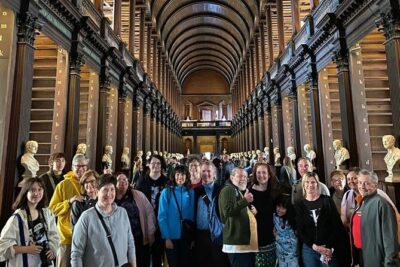
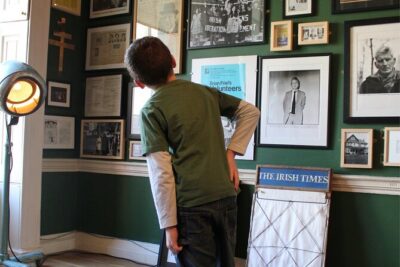
From politics-by-law to politics-by-culture, the tour moves to Trinity College Dublin, founded in 1592. You’ll have about 20 minutes and the stop is listed as free admission.
Here’s the angle that makes it interesting: Trinity is described as a liberal blackspot in a conservative, 20th-century catholic Ireland. In other words, the story isn’t just the buildings. It’s the tension between what was socially expected and what certain institutions allowed.
The tour also connects Trinity to modern Irish voices and leadership. It points out that Trinity produced our two female presidents and highlights contemporary female novelists Sally Rooney and Claire Keegan. That gives you a clear bridge between history lessons and who you might read today.
This is also a nice stop if you like seeing how education shapes public life. Schools and universities can be quiet places, but they can also act like accelerators—training future leaders, thinkers, and writers who later influence national conversation.
Trinity can be a busy campus environment. Bring your best “slow down and look” mindset. The value is in what the guide points out and how you connect it back to women’s changing roles over time.
Molly Malone Statue: From Song to Street Memorial
You end back at the Molly Malone Statue, but the tour doesn’t treat it like a quick photo spot. It’s given time—about 20 minutes—and the story is clear and fun.
The statue commemorates the legendary Molly Malone from the famous Irish song. The song’s figure is said to have sold shellfish on Dublin streets in the 17th century, and the statue turns that mix of folklore and memory into a visible landmark you can’t miss.
This is a different kind of women’s history. It’s not parliament and plaques. It’s street culture, language, and how a city tells stories about the women in it. You learn how public art can preserve identity—even when the facts and myths get tangled together over centuries.
It’s also a smart way to finish the walk on a note that feels human. Before you wrap up, you’ve just covered institutions and laws. Molly Malone brings you back to the everyday Dublin that people lived in, worked in, and sang about.
If you like combining “big picture” history with small details you can see, this stop is a highlight.
Meet Adam Ladd and the non-preachy storytelling style
A big reason this tour works is the delivery. Adam Ladd’s approach is described as professional, funny, and heavy on useful anecdotes you can’t usually pick up from guidebooks. The tone matters: the tour aims for insight without sounding like a lecture.
The pacing is also part of the value. The stops come with longer discussions where you can ask questions and connect dots—suffragette activism, revolution-era roles, legal changes, and institutional education. The result is that you’re not just collecting names. You’re building a way to think about how change happens.
That said, the flexible timing is real. Each stop’s allotted time can stretch because the guide spends time unpacking ideas with you. If you have tight dinner reservations or a show later, keep a buffer.
Price, Pickup, and Value for a Private Group

The price is $476.57 per group for up to 15 people, and it includes hotel pickup and a private tour with a local guide. That’s not cheap on its face, but it can become a solid deal depending on how you group up.
Here’s the math you should consider: if you had a full group at 15 people, you’d be roughly looking at about $32 per person. If you’re a smaller group, the per-person cost rises. Either way, what you’re paying for is one guide for your group, plus pickup and a structured route through high-impact sites.
Also, because the itinerary is built around sites marked admission ticket free, you avoid extra costs that often stack up on walking tours. This can be one of those purchases that feels better once you subtract the “hidden” expenses you’d otherwise pay.
Pacing, Weather, and Practical Tips for a 2.5-hour walk
This tour is designed for walking, but it’s not a marathon. It’s about 2 hours 30 minutes, with each stop timed around 20 to 25 minutes. Still, the guide’s discussions can stretch those blocks, so don’t schedule something that starts right after the tour ends.
Wear comfortable shoes. You’ll be spending real time in outdoor public spaces and near major attractions. Dublin weather is changeable, so bring a light layer and something that can handle a drizzle.
Food and drinks are not included, which is important. If you’re doing this early in the day or mid-afternoon, plan a snack before or after. Water helps too, especially if the conversation keeps you standing longer than expected.
For logistics comfort: pickup is offered, and the tour is near public transportation. Service animals are allowed, and most people can participate.
If you like asking questions, bring them. This tour is set up for back-and-forth. If you stay quiet, you’ll still get the story, but you’ll get more value when you engage.
Should you book this Women in Irish History tour?
Book it if you want a focused, narrative walk through Dublin, and you care about how women’s roles show up in public life—from commemoration and activism to law and education. You’ll likely enjoy it most if you like stories with context and a guide who explains without turning it into a sermon.
Skip it only if you want a purely sightseeing tour with minimal standing time and no discussion. This one leans into conversation, and you’ll feel it in the pacing. Also, if your budget is tight and you’d rather pay site by site, the group price can feel steep until you divide it by the number of people sharing the tour.
For me, the decision comes down to this: you’re paying for a private guide who can connect Veronica Guerin, Irish Suffragettes, Constance Markievicz, Leinster House, Trinity College, and Molly Malone into one clear arc. That combination is hard to recreate on your own in the same time window.
If that sounds like your kind of Dublin, this is a strong pick.
FAQ
How long is the Women in Irish History Feminist Dublin Walking Tour?
It lasts about 2 hours 30 minutes.
Is this a private tour?
Yes. It’s a private tour, and only your group participates.
What group size is the tour designed for?
The price is listed per group up to 15 people.
Where does the tour start and where does it end?
It starts at the Molly Malone Statue on Suffolk St, Dublin 2, and it ends back at the meeting point.
Do you get hotel pickup?
Yes. Hotel pickup is included, and pickup is offered.
Is the tour in English?
Yes. It’s offered in English.
Are food and drinks included?
No. Food and drinks are not included.
Is there an admission ticket cost for the stops?
The stops listed for the itinerary show admission ticket free.
Are service animals allowed?
Yes, service animals are allowed.
What is the cancellation policy?
You can cancel for free up to 24 hours in advance for a full refund. If you cancel less than 24 hours before the start time, you won’t receive a refund.
More Dublin Walking Tours






More Tours in Dublin





More Tour Reviews in Dublin



Fresh off the cobbles: the latest Dublin reviews
- Dublin Private Airport Transfer to Ireland
★ 4.5 · 3 reviews - Private Chauffeur Service From Dublin Airport to Killarney
★ 5.0 · 3 reviews - Ireland: 3-Day West Coast Explorer Tour
★ 5.0 · 3 reviews - From Dublin: 4-Day Southern and Western Coast Tour
★ 4.3 · 3 reviews - Dublin : Street Art Walking Tour
★ 5.0 · 3 reviews - Spring Tonic Foraging Tour
★ 5.0 · 3 reviews
Historical Tours, compared.
 ★ 5.0Dublin Historical Centre Food Tour with 8 Food Tastings & DrinksFrom $1251,718 reviews
 ★ 5.02-Hour Historical Walking Tour from DublinFrom $22875 reviews
 ★ 4.7Historical 2-Hour Guided Walking Tour of DublinFrom $22865 reviews
 ★ 4.5Dublin to Cork, Blarney Castle & Cóbh Heritage Centre by trainFrom $195510 reviews
 ★ 4.8Jeanie Johnston Tall Ship Irish Famine History TourFrom $16431 reviews
Wicklow’s Historic Gaol Day TourFrom $14355 reviews
 ★ 4.3Dublin’s Haunted History Walking TourFrom $31345 reviews
 ★ 5.0Deliciously Dublin: The Artisan Donut Walking & History TourFrom $70329 reviews
Browse the lists this tour appears in