
Reviewed · WALKING TOURS
Dublin Private Walking Tour | 3 hour Highlights & Hidden Gems
Dublin hits different when you walk it. This private 3-hour Dublin highlights-and-stops walk with licensed guide David strings together the landmarks you already know with a few places most people miss.
It’s personal, paced well, and built around how Dublin actually feels on foot.
I love the way David brings dates, street details, and architecture into the story without turning it into a lecture. I also love that you leave with practical next steps: a digital PDF full of cafe, restaurant, pub, and traditional music recommendations, plus orientation tips so you can navigate Dublin fast.
One possible drawback: this is mostly an outdoor walking route with exterior views at key stops. If you’re hoping for lots of indoor-ticket time, you’ll want to plan that separately since paid entries aren’t the focus.
In This Review
- Key highlights and why they matter
- A 3-hour private walk that gives you Dublin’s true shape
- Starting at Molly Malone and building your Dublin map fast
- Dublin Castle’s medieval power, then Molly Malone’s song-spun fame
- Trinity College Dublin and College Green: architecture you can actually read
- Temple Bar, Ha’penny Bridge, and St Stephen’s Green at a comfortable pace
- Powerscourt Townhouse Centre and Dubh Linn Gardens: quiet corners with meaning
- The Great Irish Famine memorial and Wolfe Tone’s statue: what Dublin remembers out loud
- Dame Lane, Parliament House, and Dublin’s music walls: politics meets culture
- Price and value: what you’re really paying for at $144.03 per person
- Who should book this Dublin private walking tour
- Should you book it?
- FAQ
- How long is the Dublin private walking tour?
- Is this tour private?
- What language is the tour offered in?
- Where does the tour start and end?
- Can I choose a different ending point?
- Is pickup available?
- Are entrance tickets included?
- What’s included besides the guide?
- What’s not included?
- What’s the cancellation window?
Key highlights and why they matter

- A 100% private tour with dedicated attention for your group only
- Guide David’s energy and storytelling, including songs and photos carried during the walk
- Route built from “big names” plus quieter stops, like Dubh Linn Gardens and Powerscourt Townhouse Centre
- Clear, practical Dublin help: city navigation tips and a recommendations PDF
- Memorial and politics stops that explain why Dublin’s public art and monuments matter
More Dublin walks at an easy pace
- Dublin Highlights and Hidden Gems Guided Walking Tour★ 5.0 · 6,020 reviews
- Dublin: Highlights and Hidden Gems Walking Tour★ 4.9 · 2,140 reviews
- 1916 Rebellion Walking Tour★ 5.0 · 1,605 reviews
- 90 Minute Dublin Walking tour and Sightseeing tips★ 5.0 · 916 reviews
A 3-hour private walk that gives you Dublin’s true shape
This is the kind of tour that helps you understand Dublin, not just check off buildings. You’ll see the classic hits—castles, bridges, colleges, and streets named in songs—but the route also moves into the quieter corners where the city’s character shows up.
With a private setup, you can ask questions and adjust the pace. That matters in a city where some sights are easy to rush past. Here, the walking rhythm is gentle enough to actually look up, read details, and connect the dots between places.
Also, you’re not left on your own after the final stop. The tour includes a digital PDF for where to eat and drink, and it’s not limited to the tourist traps. You get Dublin orientation tips too, which is handy if it’s your first time in Ireland.
Starting at Molly Malone and building your Dublin map fast
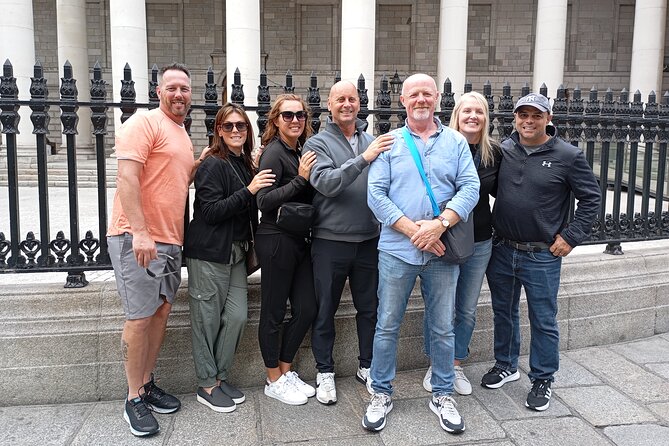
The tour starts at the Molly Malone Statue on Suffolk St, right in the Dublin 2 area. That’s a smart starting point because it’s in the middle of the action—easy to orient yourself, and close enough to major sights that your time doesn’t get swallowed by transit.
From there, the route flows through the most iconic central neighborhoods at a walking pace. You’re given direction on navigating Dublin and using transport, but the walk itself also does the mapping for you. After a few stops, you’ll feel where the city’s “center of gravity” sits—especially once you start hitting river crossings and major squares.
If you want a flexible end point, you can ask to finish somewhere that matches your next plan. The tour normally ends at College Green, but it can be adjusted if your schedule is tight—Christ Church Cathedral is one of the examples given.
Dublin Castle’s medieval power, then Molly Malone’s song-spun fame
You start the story where Dublin’s authority began. Dublin Castle has roots back to medieval times, with the first stone laid in 1204. It was once the seat of British rule and administration in Ireland. Even when you’re just viewing from the outside, it’s the kind of place that makes you understand why politics mattered here—and why Dublin history shows up in the streets, not just museums.
David’s approach is practical: he gives you a timeline you can hold onto. That makes later stops—memorials, proclamations, political statues—click into place instead of feeling like separate topics.
Then you shift to Molly Malone, tied to Dublin’s unofficial singing anthem. This statue has become the most visited and photographed in Dublin. What’s interesting isn’t just the fame. It’s how quickly a mythic character turns into a real landmark—how songs become maps, and maps become meeting points.
Even if you’ve seen the statue in photos, being there with context changes it. You’re not just looking at a character—you’re seeing how Dubliners built identity through everyday storytelling.
Trinity College Dublin and College Green: architecture you can actually read

Next, you walk into one of Ireland’s most famous educational spaces: Trinity College Dublin. It was founded in 1592 by Queen Elizabeth I and is Ireland’s oldest university. You’ll stroll the campus grounds on an exterior walk, focusing on what makes it visually memorable.
Trinity’s reputation isn’t only academic. The campus is known for its architecture and atmosphere, and it has been recognized by Forbes as one of the most beautiful places in the world to visit. Whether or not you care about rankings, the point is simple: it’s a standout streetscape in the heart of the city.
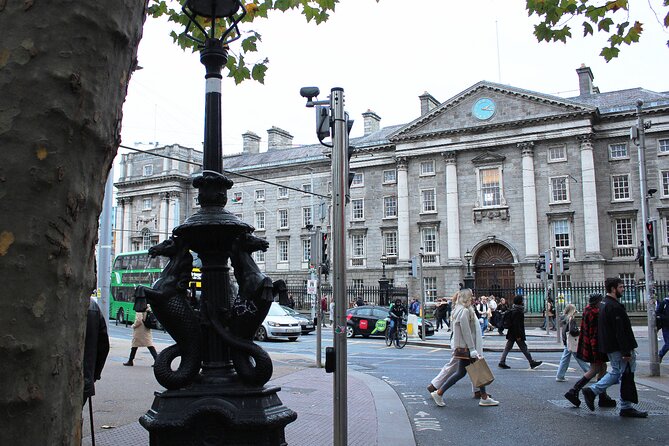
From there, you connect to College Green, a three-sided plaza that sits at a strategic intersection between major landmarks. On the north side is the Bank of Ireland building, originally Ireland’s Parliament House. That’s not a vague detail—it’s a reminder of how Dublin’s institutions shifted over time, and how buildings keep being reused for new power.
College Green also sits next to Trinity College on one side, while the south side hosts monuments tied to Irish history and examples of Georgian and Victorian architecture. If you’ve ever felt downtown Dublin looks “old,” this is where you learn why. The style isn’t random. It’s a timeline you can walk.
Tip for you: bring your phone camera and take a few slow photos here. You’ll spot details you miss when you’re rushing.
A handful more Dublin outings we would happily send a friend to





Temple Bar, Ha’penny Bridge, and St Stephen’s Green at a comfortable pace
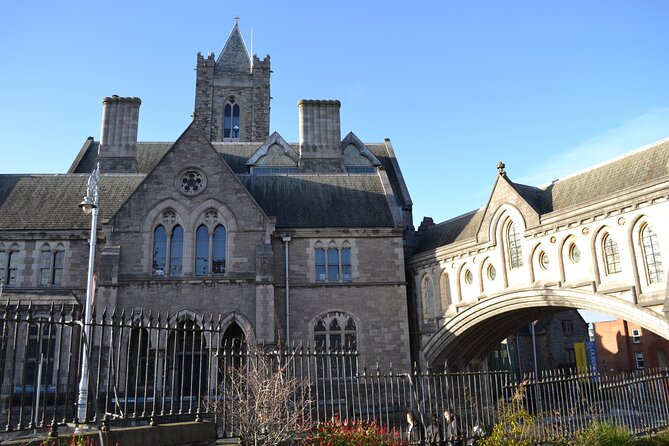
Temple Bar is famous, but it’s not just one pub. It’s an area of about 28 acres—a compact zone of lanes, eateries, and public houses where traditional music and local culture are part of daily life.
You’ll spend time here on foot, moving through the side streets rather than treating it like a single stop. That’s important because Temple Bar’s charm is in the mix: architecture, pubs, street life, and the stories people attach to specific corners.
Then the route turns to the river with Ha’penny Bridge. This is Dublin’s oldest foot bridge, linking the south and north of the city. It’s also known as one of the oldest wrought iron bridges in the world, with more than 200 years of history.
The real value of the bridge stop is the view logic. You’re positioned to understand river geography in a way that doesn’t require a map. Look east and west from the crossing and the city starts making sense as a layout, not a pile of sights.
Finally, you get a breather at St Stephen’s Green. The park covers about 22 acres and includes gardens, flower beds, lakes, and wildlife. You’ll also see sculptures and monuments scattered through walking paths, so it’s not only a rest stop—it’s another layer of storytelling in outdoor form.
This is a good moment to slow down. If your feet get tired, you can sit for a minute and still feel like you’re part of the tour’s flow.
Powerscourt Townhouse Centre and Dubh Linn Gardens: quiet corners with meaning
Not every great Dublin moment is a headline. Powerscourt Townhouse Centre is an example of that. Built in the 18th century as a residence for the wealthy Richard Wingfield, the 2nd Viscount Powerscourt, and Lady Elizabeth, it originally served as a social hub for Dublin’s elite. Now it’s a beautiful center that many visitors miss.
This stop works because it interrupts the usual “tour loop.” You get a taste of how different social worlds once lived in Dublin—and how those spaces can survive by shifting purpose over time.
Then you head to Dubh Linn Gardens, tucked into the heart of the city. The garden is known for its brickwork and Celtic patterns, and it’s the kind of place you’ll remember because it feels personal and crafted rather than just decorative.
If you like photos, this is a great place to slow down and frame details. If you prefer peace, it’s also a nice mental reset between louder streets and heavier memorial stops.
The Great Irish Famine memorial and Wolfe Tone’s statue: what Dublin remembers out loud

After the softer garden stops, the tour becomes more serious—on purpose.
Edward Delaney’s Famine Memorial is a powerful tribute to over one million victims of the Great Irish Famine of 1845. It uses haunting sculptures of emaciated figures to symbolize starvation and suffering, and it reminds you how those events fueled one of the largest Irish diaspora populations in the world.
This isn’t a casual stop. It’s one of those places where context matters, because the sculptures only hit fully when you understand what they represent. David’s guidance helps you connect the memorial to the broader national story.
Then you meet the Theobald Wolfe Tone Statue. Tone is commemorated for his role in Ireland’s quest for greater autonomy and independence from British rule, and he’s regarded as the father of Irish nationalism. The monument links to the 1798 rebellion—another key moment in Dublin’s political timeline.
These stops give you a Dublin that isn’t just postcard scenery. You’ll understand why certain names and monuments appear repeatedly across the city: they’re there because the city still carries their weight.
Dame Lane, Parliament House, and Dublin’s music walls: politics meets culture
Dame Lane brings you to the Easter Rising story. You’ll look at a copy of the original Irish Proclamation, issued April 24, 1916 during the uprising against British rule. The proclamation declared an independent republic and outlined fundamental rights, including equal citizenship and respect for everyone’s rights.
That document is a cornerstone text for modern Ireland, and having it explained in the street context helps you understand how “history” becomes real. It’s not only dates and names. It’s the idea that ordinary city locations can become stages for major change.
Next comes Parliament House, also connected to the Bank of Ireland. The building contains the original House of Lords (now part of Bank of Ireland), constructed in the early 18th century. The most exciting part is that you may be able to enter the House of Lords and see how it looked about 250 years ago—entry depends on times and openings.
If the door is closed, you still get value from the exterior and context. But if it’s open, this is the kind of moment where your brain goes quiet. You finally see scale and design details you can’t capture from a distance.
Finally, you shift from politics to culture at the Wall of Fame, a tribute to legendary Irish bands and singers who shaped Irish and world music. It’s the kind of stop that makes Dublin feel alive again. You go from national struggle to songs people actually sing and share.
Price and value: what you’re really paying for at $144.03 per person
At $144.03 per person for about three hours, this tour sits in the “serious planning” tier of Dublin experiences. It isn’t the cheapest way to walk downtown, but it’s also not trying to sell you overpriced ticket bundles.
The value is in what’s included:
- A certified, licensed guide for a private 3-hour experience
- Expert historical overview that connects landmarks instead of listing them
- Dedicated personal attention (only your group)
- Digital recommendations for cafes, restaurants, pubs, and traditional music venues
- Dublin orientation tips to help you move around efficiently
For many people, the biggest cost is not money—it’s time and confusion. A good private guide saves you from spending your limited Dublin hours figuring out what to see next, where to eat, and what’s worth your energy.
This is also a good choice if you want your tour in English and you don’t want to gamble on finding your own connections. And since group discounts are offered, it can get easier to justify if you’re traveling with more than one person who wants the same walk.
Who should book this Dublin private walking tour
This fits best if you:
- Want a guided route that mixes big landmarks with calmer corners
- Like history, politics, and culture, but prefer it explained in plain street-level terms
- Appreciate a guide like David who shows up prepared, with facts, dates, and extras like songs and a portfolio of photos
- Value a tour that hands you recommendations you can use the same evening
It may not be ideal if:
- You want mostly indoor attractions and timed admissions as the center of the day
- You’re traveling with very young kids (it’s not recommended for children under 5)
- You need step-free access details spelled out in advance, since the route is described as walking with general participation notes
Should you book it?
If you’re deciding between a self-guided stroll and a guided private walk, I’d lean toward booking. You’ll cover central Dublin efficiently, and the tour’s strength is how it connects the landmarks—castle to proclamation, bridge to park, music to public memory.
Book it if you want your guide to do the heavy lifting of interpretation and also help with practical choices for food and music afterward. Skip it only if your day is built around indoor ticketed sights and you don’t care much about context.
FAQ
How long is the Dublin private walking tour?
It’s approximately 3 hours.
Is this tour private?
Yes. It’s a 100% private experience, so only your group participates.
What language is the tour offered in?
The tour is offered in English.
Where does the tour start and end?
It starts at the Molly Malone Statue on Suffolk St (Dublin 2) and normally ends at College Green.
Can I choose a different ending point?
Yes. Guests can choose an end point convenient to their itinerary (examples mentioned include Christ Church Cathedral).
Is pickup available?
Pickup is offered. The tour can meet you at hotels listed, from a city center accommodation, or at the Central Meeting Point at the Molly Malone Statue.
Are entrance tickets included?
No. Entrance into ticketed or paid attractions isn’t included. Some stops are free/external, and entry to Parliament House is subject to times and openings.
What’s included besides the guide?
Included items are the certified guide, expert historical overview, digital PDF recommendations for food/pubs/music venues, and Dublin orientation advice for navigating the city and transport.
What’s not included?
Food and drink, and entrance into ticketed/paid attractions.
What’s the cancellation window?
You can cancel for a full refund up to 24 hours in advance.
More Dublin Walking Tours






More Tours in Dublin





More Tour Reviews in Dublin



Fresh off the cobbles: the latest Dublin reviews
- Dublin Private Airport Transfer to Ireland
★ 4.5 · 3 reviews - Private Chauffeur Service From Dublin Airport to Killarney
★ 5.0 · 3 reviews - Ireland: 3-Day West Coast Explorer Tour
★ 5.0 · 3 reviews - From Dublin: 4-Day Southern and Western Coast Tour
★ 4.3 · 3 reviews - Dublin : Street Art Walking Tour
★ 5.0 · 3 reviews - Spring Tonic Foraging Tour
★ 5.0 · 3 reviews
Walking Tours, compared.
 ★ 5.0Dublin Highlights and Hidden Gems Guided Walking TourFrom $296,020 reviews
 ★ 4.9Highlights and Hidden Gems Walking TourFrom $272,140 reviews
 ★ 5.01916 Rebellion Walking TourFrom $271,605 reviews
 ★ 5.090 Minute Dublin Walking tour and Sightseeing tipsFrom $21916 reviews
 ★ 5.02-Hour Historical Walking Tour from DublinFrom $22875 reviews
 ★ 4.7Historical 2-Hour Guided Walking Tour of DublinFrom $22865 reviews
 ★ 5.0Dublin Traditional Irish 3 Course Meal Walking Tour with LocalFrom $107755 reviews
 ★ 4.9Mythology, Folklore and Legends Walking TourFrom $27703 reviews
Browse the lists this tour appears in