
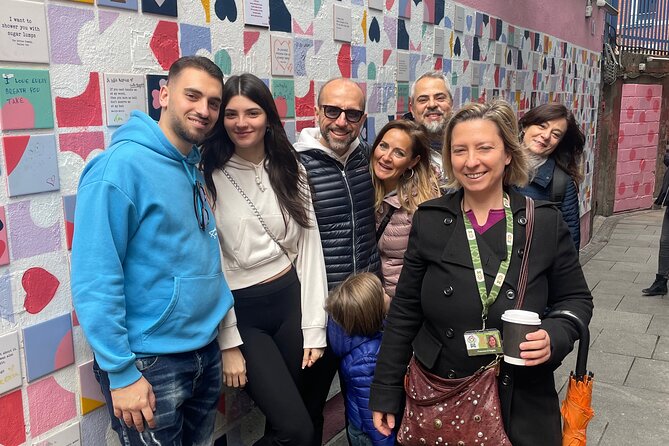
Reviewed · WALKING TOURS
Private Walking Tour in Dublin
Dublin makes more sense on foot. This private walk strings together college life, rebellion, and iconic views, so you get a quick but real sense of how the city grew. I like the private format because it stays focused on your group and your pace.
I also like the mix of must-see sights with a smart balance of free stops and places where you’ll want to budget for entry tickets. The one drawback to plan for: several big names on the route are not included, so you may spend extra if you want to go inside everything.
In This Review
- Key highlights at a glance
- Private Walking Tour Dublin in 2–3 Hours: a smart first step
- Trinity College Dublin and literary ghosts: seeing the school as a living city
- The GPO Museum and the Spire: rebellion history plus a skyline moment
- Ha’penny Bridge to Temple Bar: the Liffey’s best shortcuts and pub culture
- Viking Wood Quay and Christ Church: where medieval Dublin starts
- St Patrick’s Cathedral and Dublin Castle: spiritual power meets British rule
- George’s Street Arcade to Molly Malone: shopping-era style and an Irish anthem
- Price, pace, and who this private Dublin walk fits
- Should you book this private walking tour in Dublin?
- FAQ
- How long is the private walking tour in Dublin?
- What is the price per person?
- Is the tour offered in English?
- Are admission tickets included for the sights?
- Where does the tour start and where does it end?
- What is the cancellation policy if plans change?
- Is the tour dependent on weather, and can I bring a service animal?
Key highlights at a glance
- Trinity College Dublin as a living city, not just a landmark
- GPO Museum with visible bullet marks tied to the 1916 Easter Rising
- The Spire as a quick, memorable skyline marker for the millennium
- Ha’penny Bridge and the Liffey as the easiest way to feel Dublin’s rhythm
- Viking-era Wood Quay showing how old Dublin really is
- Dublin’s cathedral double-header at Christ Church and St Patrick’s
More Dublin walks at an easy pace
- Dublin Highlights and Hidden Gems Guided Walking Tour★ 5.0 · 6,020 reviews
- Dublin: Highlights and Hidden Gems Walking Tour★ 4.9 · 2,140 reviews
- 1916 Rebellion Walking Tour★ 5.0 · 1,605 reviews
- 90 Minute Dublin Walking tour and Sightseeing tips★ 5.0 · 916 reviews
Private Walking Tour Dublin in 2–3 Hours: a smart first step
If you have limited time in Dublin, this is the kind of tour that helps you stop bouncing around randomly. You start in the College Green area, then work your way through the city’s big eras—education and literature, rebellion and independence, medieval church power, and modern Dublin culture—without turning the day into a maze of buses and surprises.
What makes the route feel efficient is the way it connects neighborhoods. You’re not just looking at attractions in isolation. You’re walking across Dublin’s layers: where the Vikings settled, where the medieval city shaped its identity, and where later events pushed Ireland toward freedom from British rule. The result is that your second day in town feels easier, because you’re no longer seeing everything as separate dots on a map.
This is also a true private walking tour, meaning it’s only your group. That matters more than it sounds. It tends to translate into less waiting around, easier questions, and more room for a guide to adjust to your interests. I especially like that the experience can work for families too—there’s a record of guides being accommodating for kids around ages 6 and 8—so you’re not stuck on a strict schedule where questions must die at the curb.
The tour is listed at about 2 to 3 hours, so it won’t exhaust you, but it does require comfy walking shoes. And you’ll want decent weather. This experience requires good weather, and if it’s canceled for poor conditions you’ll be offered a different date or a full refund.
Trinity College Dublin and literary ghosts: seeing the school as a living city
You begin at Trinity College Dublin on College Green. This stop is timed for about 20 minutes, and admission is not included. That means you’ll get the big-picture feel of the campus and its importance, but you should treat entry into specific interior spots as optional based on what you want to spend.
Here’s why Trinity is worth your attention even if you’re not a student: it’s described like a city within the city. More than 20,000 people work and study there, and that scale changes how the area feels. It’s not a quiet museum campus. It’s an active, everyday Dublin institution.
And Trinity is tied to some of Ireland’s most famous writers and characters—Oscar Wilde, Bram Stoker, and Jonathan Swift are specifically associated with its alumni legacy. Even if you only know one of those names, you’ll feel the idea: Dublin’s literary identity isn’t a theme. It’s stitched into the geography.
Practical tip: if you want to go beyond photos and get deeper into Trinity’s interior, you’ll need separate admission tickets. If you’d rather keep momentum, focus on learning the campus story and save indoor time for later. Either approach works, and a good guide helps you choose based on your energy.
The GPO Museum and the Spire: rebellion history plus a skyline moment
Next you head to the GPO Museum, an elegant Georgian building tied to a big turning point. The GPO is presented as a symbol of freedom from the British Empire. The key event is the 1916 Easter Rising, when members of the Irish Volunteers and Irish Citizen Army seized the building on Easter Monday.
One of the most striking details here is that you can still see bullet marks in the front pillars. That kind of physical reminder does something that textbook history can’t. It makes the story feel less abstract and more real, because you’re standing near the evidence.
This stop is about 15 minutes, and admission isn’t included. You’ll likely get strong context on the sidewalk and an orientation for what you’d see inside if you choose to pay for entry. If you’re the type who likes to get inside everything, budget time and money. If you’d rather keep your day moving, you can still come away with a clear picture.
Then it’s a quick jump to The Spire, officially called The Monument of Light. This one is free and timed around 5 minutes, so think of it as a fast photo-and-facts stop. It’s the tallest modern art monument in the world, at 120 meters tall, with a 3-meter base diameter. It was built to celebrate the new millennium.
I like pairing the Spire with the GPO because it keeps your brain from getting stuck only in the 1800s and early 1900s. You get a rebellion story, then a modern marker that tells you Dublin still uses its public spaces to make statements.
Ha’penny Bridge to Temple Bar: the Liffey’s best shortcuts and pub culture
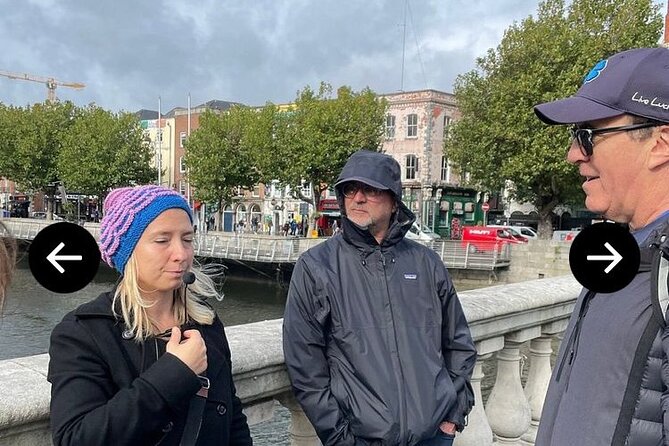
Now you cross into the photo-friendly Dublin zone: Ha’penny Bridge. Officially it’s named the Liffey Bridge, but the city calls it Ha’penny. It’s described as the first pedestrian bridge in Dublin, built in 1816.
The story behind the nickname matters. Ha’penny means half a penny, and for more than 100 years it was a tall bridge—so it carried a toll concept along with its distinctive presence. Even if you don’t remember the exact history of how the toll worked, the walk experience gives you a mental image of how Dublin’s street life used to operate.
This stop is brief—about 5 minutes—and admission is free. Still, it’s a useful pause because it connects your history stops with the daily city vibe.
From the bridge you move to Temple Bar, Dublin’s most famous cultural and nightlife district. This part is timed at about 15 minutes. You’ll explore the old neighborhood feel, get a look at famous pubs where traditional Irish music is played nightly, and see spots that are known for traditional Irish food.
One practical note: Temple Bar can be very busy later in the day. This walking portion is designed to give you orientation and taste, not force a long sit-down meal. If you’re hungry, you’ll know where to aim next—after you’ve already got the city’s layout in your head.
A handful more Dublin outings we would happily send a friend to




Viking Wood Quay and Christ Church: where medieval Dublin starts
When the tour heads to Wood Quay Amphitheatre, the tone gets even more interesting. The timing is about 15 minutes, and it’s free to view.
This is tied to archaeologists finding the biggest Viking settlements outside Scandinavia. The description connects it to work on the “new city hall,” where the discoveries were made at the feet of the hill culminating with Christchurch. The Vikings are described first as marauders and traders, but by 841 AD they permanently settled in Dublin.
That year lands hard because it makes Dublin feel older than most visitors expect. It’s not only medieval and Georgian stories. You’re talking about a major settlement over a thousand years back.
A short walk later brings you to Christ Church Cathedral, timed around 15 minutes, with admission tickets not included. This cathedral is located in the medieval district, and it’s described as originally a Viking church. That continuity—Vikings to medieval church to today—is the kind of layered detail that makes a city tour worth paying for.
Christ Church is said to have hidden treasures, including Strongbow’s tomb and a copy of the Magna Carta. Even if you don’t go inside, your guide can frame why these items matter and how they connect Dublin to broader European power networks.
St Patrick’s Cathedral and Dublin Castle: spiritual power meets British rule
Dublin then shifts from Viking roots into the next big theme: faith and authority.
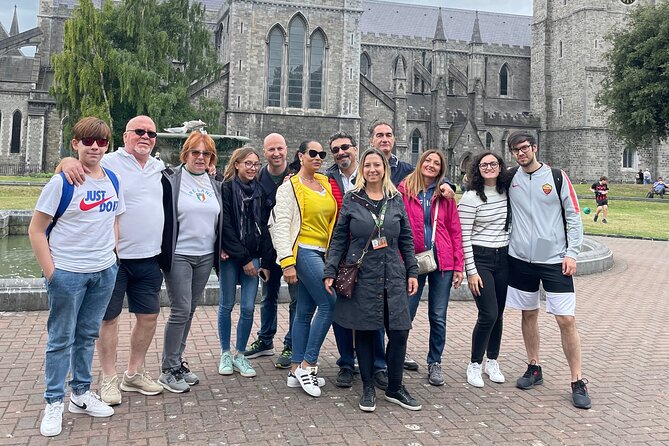
Saint Patrick’s Cathedral is in the heart of the Liberties, and the building timeframe is given as completed between 1225 and 1270. It honors Ireland’s patron saint, St Patrick. The tour framing includes the idea that St Patrick’s work involved baptizing the Irish Gaelic people, converting them to Christianity. The cathedral is described as a Gothic jewel with treasures, including Jonathan Swift’s tomb and others.
This stop is also about 15 minutes and admission is not included. If you love churches, you might feel tempted to squeeze more time inside. If you don’t, you can still take away strong context from the exterior and nearby details, and you’ll still understand why this cathedral matters within Dublin’s story.
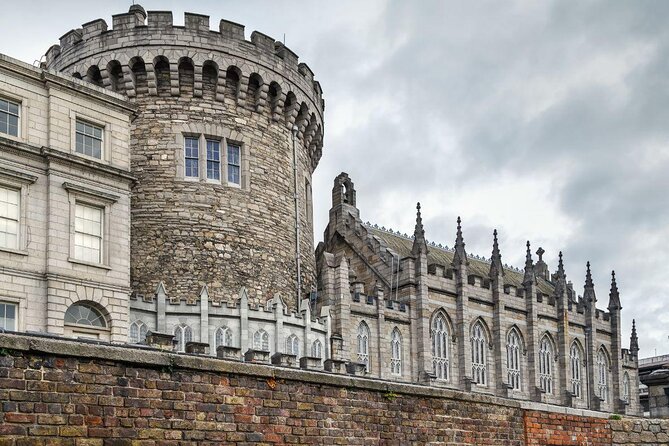
Then you move to Dublin Castle, timed at around 20 minutes, with entry not included. This is where the political story gets heavy. The castle served as the seat of the viceroy, the monarch’s representative in Ireland, and it’s described as the hub from which the English ruled Ireland for more than 700 years.
A useful detail here: the Record Tower is the only remaining piece of the original medieval castle. The other major architecture you’ll see is tied to 18th-century State Apartments. So your eyes can track change over time—old power shape, then later redesign.
If you’ve ever wondered why Dublin’s center feels both old and official, this stop explains it quickly. It also helps you make sense of later independence-era stories, because you see the long scaffolding of power.
George’s Street Arcade to Molly Malone: shopping-era style and an Irish anthem
By the time you reach George’s Street Arcade, you’re into a different flavor of Dublin: Victorian-era shopping life. This stop is brief—about 5 minutes—and admission is free.
The arcade is described as Dublin’s oldest shopping centre, part of South city market buildings, and it’s also tied to near 140 years of operation. The point isn’t that you need to buy anything. It’s that you get to see a distinctive indoor street that still feels like a working part of the city.
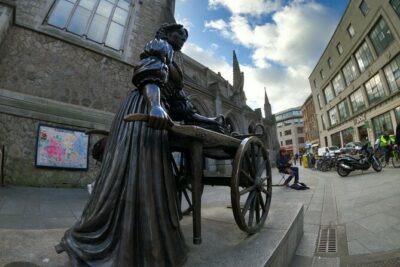
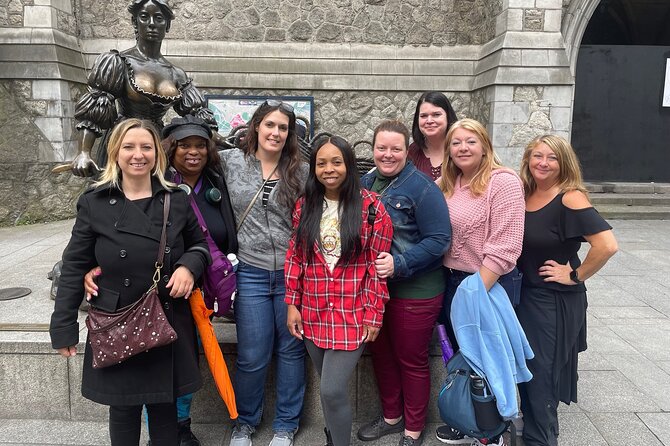
Finally, the tour ends at the Molly Malone statue on Suffolk St. You’ll finish in front of the statue. The Molly Malone story is pop culture with a history twist: the statue was unveiled in 1988 to celebrate Dublin’s first millennium. Molly Malone is linked to the famous song, described as Dublin’s unofficial anthem.
And then there’s the fun question of reality. It’s stated that it’s not known whether Molly Malone ever existed, with one theory suggesting the character was based on a real woman who died in Dublin in 1699. That ambiguity is exactly what makes the statue work. It’s not about fact-checking. It’s about Dublin’s ability to turn a story into a landmark.
Price, pace, and who this private Dublin walk fits
The price is $90.11 per person, and the tour runs about 2 to 3 hours. A lot of visitors feel the price makes sense for two reasons.
First, you’re paying for a private experience. That means your questions don’t compete with a busier crowd’s schedule. It’s easier to steer the focus—especially if you’re the kind of person who asks, Why did Dublin change this way? Second, you’re covering a route that groups major highlights in a compact window: Trinity, GPO, the Spire, Ha’penny Bridge, Temple Bar, Viking-era Wood Quay, Christ Church and St Patrick’s, Dublin Castle, George’s Street Arcade, and Molly Malone.
If you’re visiting Dublin for the first time, this route gives you something most self-guided walking doesn’t: a threaded narrative. You don’t just stand at monuments. You get the connections between events, structures, and what Dublin chose to remember.
The one consideration is ticket budgeting. Admission tickets are not included for several of the big-name stops—Trinity College Dublin, GPO Museum, Christ Church Cathedral, St Patrick’s Cathedral, and Dublin Castle. The free stops (like the Spire, Ha’penny Bridge, and the Temple Bar area) keep the tour from becoming only a line of paying entrances, but you should still plan for optional add-ons if you want indoor time.
It’s also a weather-dependent activity, and that makes sense: it’s a walking tour. Wear layers, carry water, and keep an eye on the sky. If the experience gets canceled due to poor weather, you’ll be offered a different date or a full refund.
As for who it suits best: this is ideal for first-timers, history-minded visitors who want the main threads without hours of museum time, and families who want a guided pace. The tour has a track record of accommodating children, and because it’s private, it’s easier to pause for what your group needs.
Should you book this private walking tour in Dublin?
Yes—if you want a fast, organized introduction to Dublin that doesn’t feel like a checklist. This is the kind of walk that helps you understand why specific places matter, from Viking Wood Quay to the political weight of Dublin Castle, with quick cultural stops like Temple Bar and a satisfying end at Molly Malone.
I’d skip it only if you already know Dublin deeply and prefer long, independent museum time. Otherwise, the value is strongest when you’re trying to build a foundation fast: you get major landmarks, clear context, and a route that keeps moving.
If you do book, consider planning entry tickets in advance for the sites you care about most, and don’t overstuff your day afterward. After this walk, Dublin starts to make sense—and that makes everything else you do feel smarter.
FAQ
How long is the private walking tour in Dublin?
The tour is listed for about 2 to 3 hours.
What is the price per person?
The price is $90.11 per person.
Is the tour offered in English?
Yes, it’s offered in English.
Are admission tickets included for the sights?
No. The tour notes that admission tickets are not included for some stops (including Trinity College Dublin, GPO Museum, Christ Church Cathedral, St Patrick’s Cathedral, and Dublin Castle). Some other stops are listed as free.
Where does the tour start and where does it end?
It starts at Trinity College Dublin, College Green, Dublin 2 and ends in front of the Molly Malone statue at Suffolk St, Dublin 2.
What is the cancellation policy if plans change?
Cancellation is free if you cancel up to 24 hours in advance for a full refund. If you cancel less than 24 hours before the start time, the amount paid is not refunded.
Is the tour dependent on weather, and can I bring a service animal?
Yes. The experience requires good weather. Service animals are allowed.
More Dublin Walking Tours






More Tours in Dublin





More Tour Reviews in Dublin



Fresh off the cobbles: the latest Dublin reviews
- Dublin Private Airport Transfer to Ireland
★ 4.5 · 3 reviews - Private Chauffeur Service From Dublin Airport to Killarney
★ 5.0 · 3 reviews - Ireland: 3-Day West Coast Explorer Tour
★ 5.0 · 3 reviews - From Dublin: 4-Day Southern and Western Coast Tour
★ 4.3 · 3 reviews - Dublin : Street Art Walking Tour
★ 5.0 · 3 reviews - Spring Tonic Foraging Tour
★ 5.0 · 3 reviews
Walking Tours, compared.
 ★ 5.0Dublin Highlights and Hidden Gems Guided Walking TourFrom $296,020 reviews
 ★ 4.9Highlights and Hidden Gems Walking TourFrom $272,140 reviews
 ★ 5.01916 Rebellion Walking TourFrom $271,605 reviews
 ★ 5.090 Minute Dublin Walking tour and Sightseeing tipsFrom $21916 reviews
 ★ 5.02-Hour Historical Walking Tour from DublinFrom $22875 reviews
 ★ 4.7Historical 2-Hour Guided Walking Tour of DublinFrom $22865 reviews
 ★ 5.0Dublin Traditional Irish 3 Course Meal Walking Tour with LocalFrom $107755 reviews
 ★ 4.9Mythology, Folklore and Legends Walking TourFrom $27703 reviews
Browse the lists this tour appears in